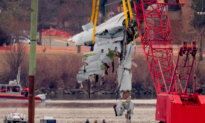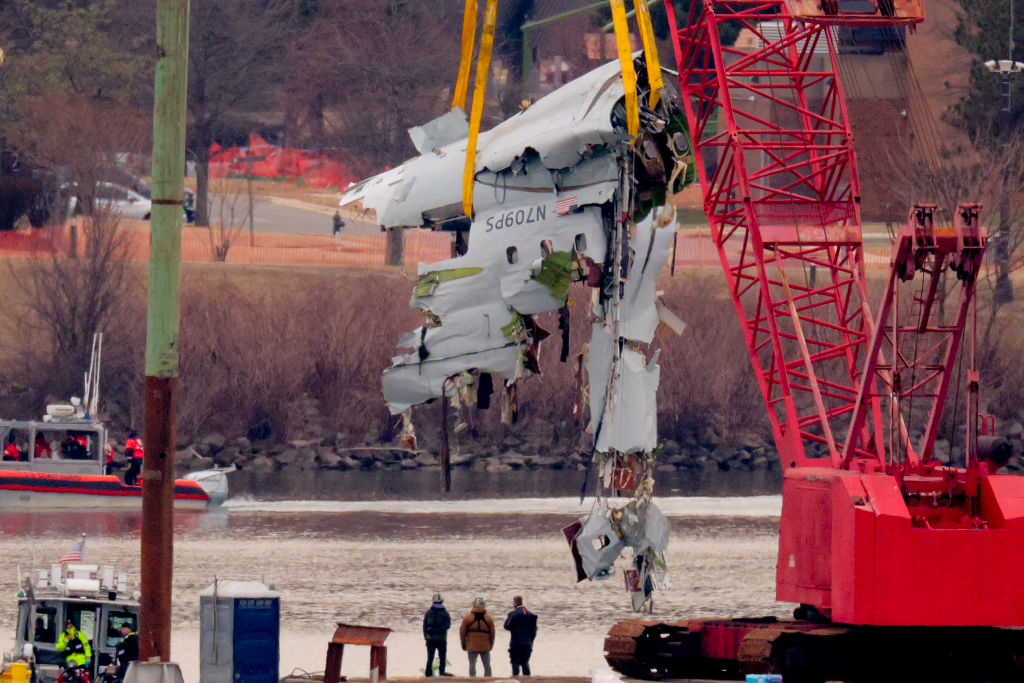

The U.S. Army said systemic failures led to a collision between an American Airlines regional jet and a military helicopter that killed 67 people near Ronald Reagan Washington National Airport in January 2025.
The crash, the deadliest aviation disaster on U.S. soil in more than two decades, happened as the jet came in to land, sending both aircraft into the Potomac River. Everyone aboard the American Airlines jet, flying from Wichita, Kansas, and the U.S. Army Black Hawk helicopter died. Victims included 28 young members of the figure skating community.
The Army’s investigative report, which identified failures in air traffic control, helicopter routes, training, and safety practices, was completed in May and released on Thursday following pressure from the families of the victims.
Lt. Gen. Michael McCurry wrote in the 50-page report that there had been “breakdowns across all layers of conflict management.”
The Army found that the air traffic controller gave the helicopter crew incomplete information about the approaching passenger jet and failed to warn the jet’s pilots about the helicopter. After the crash, the FAA banned controllers from relying on pilots to maintain visual separation in busy airspace.
The report singled out two failed radio transmissions that contributed to the helicopter crew not identifying the jet. The military pilots’ night-vision goggles also restricted their view, making it hard to spot the plane amid the city lights.
The military investigation also identified a pattern of helicopter crews failing to meet semiannual minimum flight-hour requirements. It also found that many helicopters in the Army battalion, including the Black Hawk involved in the collision, did not have Traffic Alert and Collision Avoidance Systems.
The National Transportation Safety Board (NTSB) said in a January report that the Federal Aviation Administration should not have allowed helicopters to fly near the airport without safeguards to prevent collisions with civilian airliners.
A helicopter route in the approach path of the airport runway didn’t ensure enough separation between helicopters and planes landing on the airport’s secondary runway, and the route wasn’t reviewed regularly, the NTSB said at the time. The route’s poor design was a key factor in the crash, along with air traffic controllers relying too much on pilots to see and avoid other aircraft.
Sam Lilley was first officer on the American Airlines flight. His father, Tim Lilley, a former Army Black Hawk pilot, said the Army’s redacted report leaves important questions unanswered.
“The Army owes the families and the American public a full accounting of how these risks were allowed to persist, who was responsible for the decisions that allowed them to persist and what will be done to make sure this never happens again,” he said.
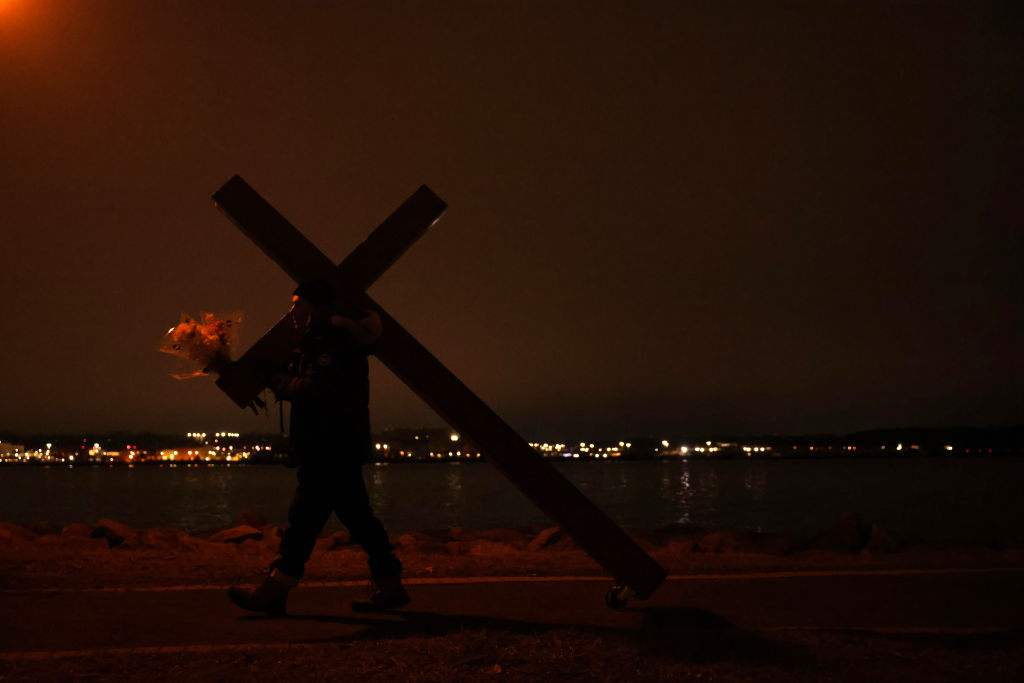 Dan Beazley rolls a cross while holding flowers after a candlelight vigil held for the victims of the DCA flight collision at Rivergate City Park in Alexandria, Va., on Feb. 5, 2025. (Kayla Bartkowski/Getty Images)
“It’s a simple concept anyone can understand: aircraft should be able to see each other in the sky. The technology is proven. All that’s required is the political will to do the right thing,” the group said.
“Both investigations are complete, and both make clear that collision avoidance technology must be part of the solution. There is nothing left for Congress to wait for.”
The House and Senate have passed separate aviation safety bills but have not yet agreed on a final version.
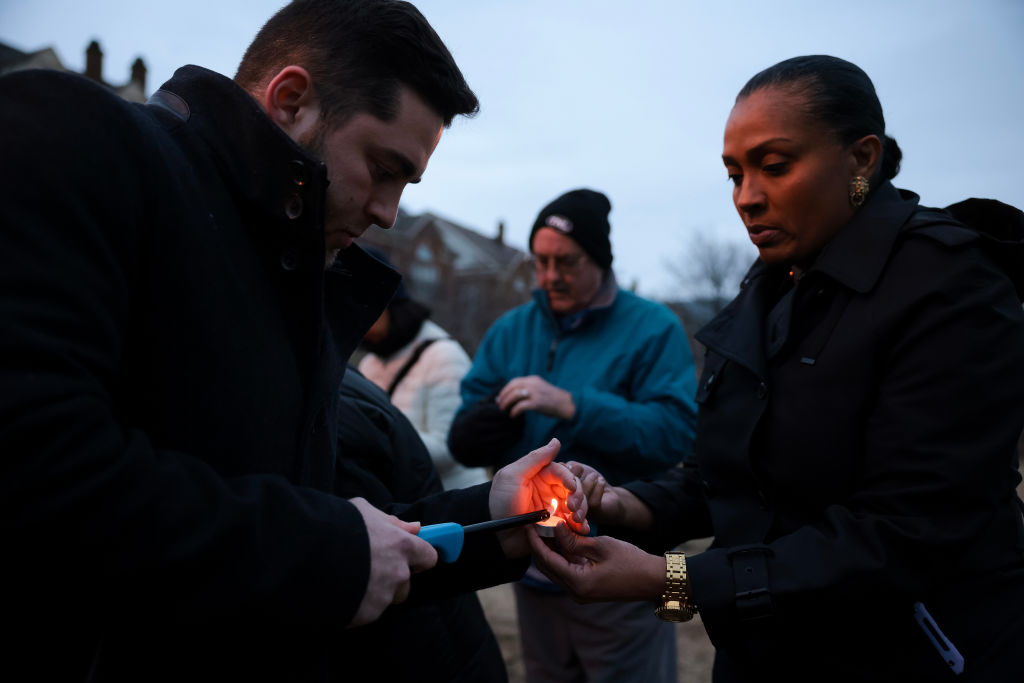 People light candles during a candlelight vigil held for the victims of the DCA flight collision at Rivergate City Park in Alexandria, Va., on Feb. 5, 2025. (Kayla Bartkowski/Getty Images)
“The U.S. Army extends its deepest condolences to the families, friends, and loved ones carrying the unimaginable weight of that loss,” the Army said in a statement. “We are fully committed to ensuring that no other family ever has to endure a tragedy like this.”
It said its report did not replace or supersede the NTSB’s report, adding that it made its own recommendations for changes to its aviation policies.
The Army said it has strengthened helicopter crew training and inspected and reconfigured 3,585 helicopters after discovering that the crashed Black Hawk’s ADS-B Out system, which broadcasts its location, hadn’t worked for some time.
The military is also improving its monitoring of safety risks and working with the FAA to share information about close calls.
The NTSB said in a letter to the Army last week it was pleased with the Army’s progress on most of the safety recommendations.
The Associated Press contributed to this report.
 Friends Read Free
Copy
Facebook
Tweet
Friends Read Free
Copy
Facebook
Tweet