

The head of the nation’s second-largest teachers union on May 27 called for a ban on digital learning environments for younger children and said artificial intelligence (AI) chatbots should not be available to any students under 16.
American Federation of Teachers President Randi Weingarten, speaking at the National Press Club event, said these restrictions are part of a “Devices Down, Eyes Up, Hands-On” initiative to boost teaching and learning in the AI era.
The proposed screen ban, which includes online assessments, would apply to students in pre-kindergarten through second grade. Weingarten said that she’s not calling for a total ban on AI or a “Chromebook bonfire,” but she said a balance is needed to harness the benefits of technology while mitigating the harms.
“We are at a crossroads that will define the future of work and society,” she said in a statement. “Without proper oversight and strong guardrails, there will be real dangers to our safety, privacy, climate and the very fabric of society.”
The challenge is navigating instruction and learning—developing critical thinking skills, problem solving, and applying knowledge, instead of allowing cognitive offloading—when so much information is just a prompt away, Weingarten said.
Her 10-point plan emphasizes project-based and career-connected learning across all grade levels. A focus on the well-being of students and their families and the protection of academic freedom and intellectual property are also important, she said.
Weingarten said this initiative will establish a new “gold standard” for safety and privacy in schools.
An independent research consortium is needed to study the effects of AI, screen time, and technology on students, she said.
She also advocated a “tech tax” to combat the adverse consequences of AI, such as job loss.
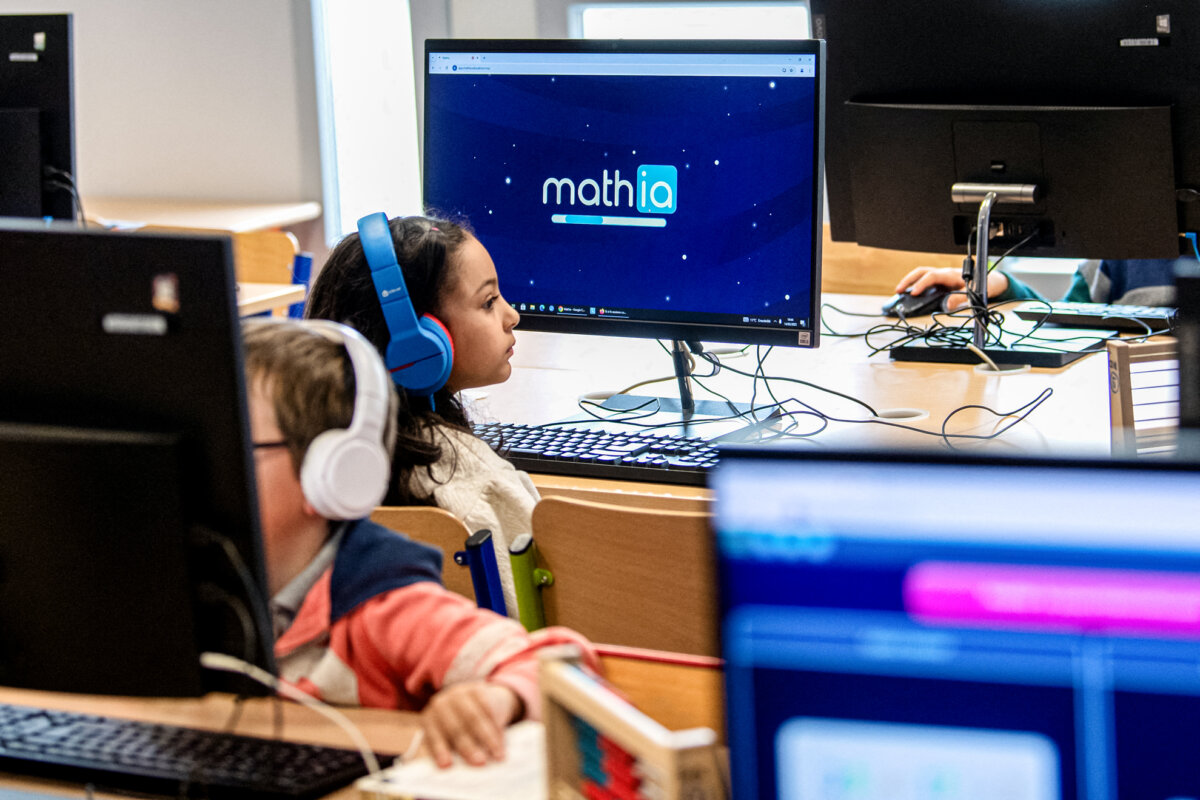
She said a plan for restricting screen-based learning and AI use in public schools should be championed as a positive, nationwide movement.
“We need a relentless, intentional focus on what our young people need: greater literacy, numeracy and civic engagement, and active learning that excites and engages them—all while ensuring their social and mental well-being and ability to form healthy relationships,” she said.
The American Federation of Teachers, which is also aligned with healthcare and other public service workers, has 1.8 million members.
The nation’s largest teachers union, the National Education Association, which has more than 3 million members, created an AI task force two years ago.
A task force report, released in June 2024, emphasized concerns about racial bias in large language learning models and the need to provide “safe and effective” AI access to all students, including those with disabilities.
“The lack of diverse representation in the development and evaluation of AI technology in education and the lack of clear and transparent data governance at every level of the education system are causes for alarm,” the report stated.
 Friends Read Free
Copy
Facebook
Tweet
Friends Read Free
Copy
Facebook
Tweet