

TUSKAHOMA, Okla.—Russell Fincher’s fight with a government agency is something of a David and Goliath tale. In Fincher’s story, Goliath has regulatory power over stones and slings, as well as superhuman strength.
In a legal saga that began in April 2023, the Bureau of Alcohol, Tobacco, Firearms, and Explosives (ATF) investigated Fincher for allegedly violating the agency’s rules on recordkeeping, and added a felony charge for providing a box of pistol ammunition to a prohibited person.
The part-time pastor and school teacher enjoyed attending gun shows. His hobby led him to become a licensed firearms dealer, in the belief that it would help him avoid trouble.
Fincher is one among many Americans who have found themselves caught up in a legal system overseen by federal agencies that write and enforce their own rules. Although recent Supreme Court decisions have weakened the system considerably, those without the money for a costly battle against the government are opting for plea deals and moving on with their lives irrevocably changed.
Fincher’s first instinct was to protest that he had only sold one box of shells. The agency told him that he was lucky he was facing only one charge. There were 50 bullets in the box. The implication was clear: If he did not cooperate, he could face 50 charges.
Threatening to add multiple charges is a common tactic in the administrative law system, according to Paul Larkin, a senior legal research fellow at The Heritage Foundation.
“None of the criminal statutes address that problem,” Larkin told The Epoch Times. “Courts just have to try to figure that out. And what the government does is threaten you with an outrageous penalty for what is really one crime.”
Fincher called an attorney in Dallas who gave him a sobering message.
“He said, ‘You could spend $140,000 and still lose,’” Fincher told The Epoch Times.

He thought about his wife and their two middle school-aged children. He thought about losing their home and savings in what would likely be a vain attempt to avoid prison. He decided the risk to his family was too great, and in May 2024, he entered a plea deal to avoid potential jail time and hefty fines.
According to Larkin and other experts, Fincher’s story is common.
They say federal administrative agencies operate outside the guidelines of Article 3 of the U.S. Constitution. Article 3 established the U.S. Supreme Court and laid the foundation for lesser courts. It also enshrined the right to a trial by a jury. That right was later sealed in the Seventh Amendment.
However, the administrative law system is not covered by these constitutional principles. This means that government agencies often—depending on the agency and the regulations they are enforcing—have the sole power to charge, prosecute, adjudicate, and sentence those who transgress their rules and policies.

And although recent court cases have limited the power of the administrative law system, critics say only those with substantial means can afford to challenge federal agencies in the judicial court system.
The Epoch Times reached out to the White House for comment, which directed questions on possible reform of the system to the Department of Justice. In an email to The Epoch Times, a Justice Department spokesperson said the department had “no comment.”
The ATF did not respond to requests for comment from The Epoch Times.
‘The Other End of the Barrel’
Fincher said he has been criticized for taking the ATF’s deal.
“They’re like, ‘I can’t believe you signed that plea deal, you became a coward,’” Fincher told The Epoch Times. “It’s easy to say that on the other end of the barrel, when it’s not your home and family.”
Critics say the administrative law system bullies and threatens people into admitting to violations without regard for their right to present their own cases.
“In its worst excesses it is completely unconstitutional,” Peggy Little, senior litigation counsel for the New Civil Liberties Alliance, told The Epoch Times.
“We have a pact in the Constitution that we are to be governed by laws passed by Congress, not rules made by unelected administrators and bureaucrats,” she said.

Administrative law has been a concept for almost as long as there has been government.
In his book “Is Administrative Law Unlawful?” Philip Hamburger, author and New Civil Liberties Alliance CEO, said the genesis of administrative law in the United States can be traced back to the English monarchy, which claimed a divine right to rule over the people.
Over time, that right morphed into the idea that experts should be given the responsibility of leadership. The logic was that an expert class had the knowledge and experience needed to make the best decisions.
Winning Would Bankrupt Him
Paul Renfroe of Destin, Florida, has been dealing with another federal agency, the Securities and Exchange Commission (SEC), since two investigators entered his office in 2017.
The SEC was formed to oversee the stock market. According to its website, the SEC’s mission is “based on a simple and straightforward concept: everyone should be treated fairly and have access to certain facts about investments and those who sell them.”
At the time of the initial encounter, Renfroe, his then-teenage son, and a business partner were developing new computer games. Renfroe’s son designed the games; the partner handled business strategy. Renfroe found investors.
Investigators told Renfroe that they had opened a “routine investigation” and demanded his business records. At first Renfroe refused, referring them to his attorney. He soon learned that SEC investigators do not have to show probable cause the way law enforcement would in a criminal investigation.
According to Renfroe, the SEC examined his business activities, including records, emails, text messages, and even transcripts of his local radio show.
Renfroe said the process cost him $250,000 in legal fees.
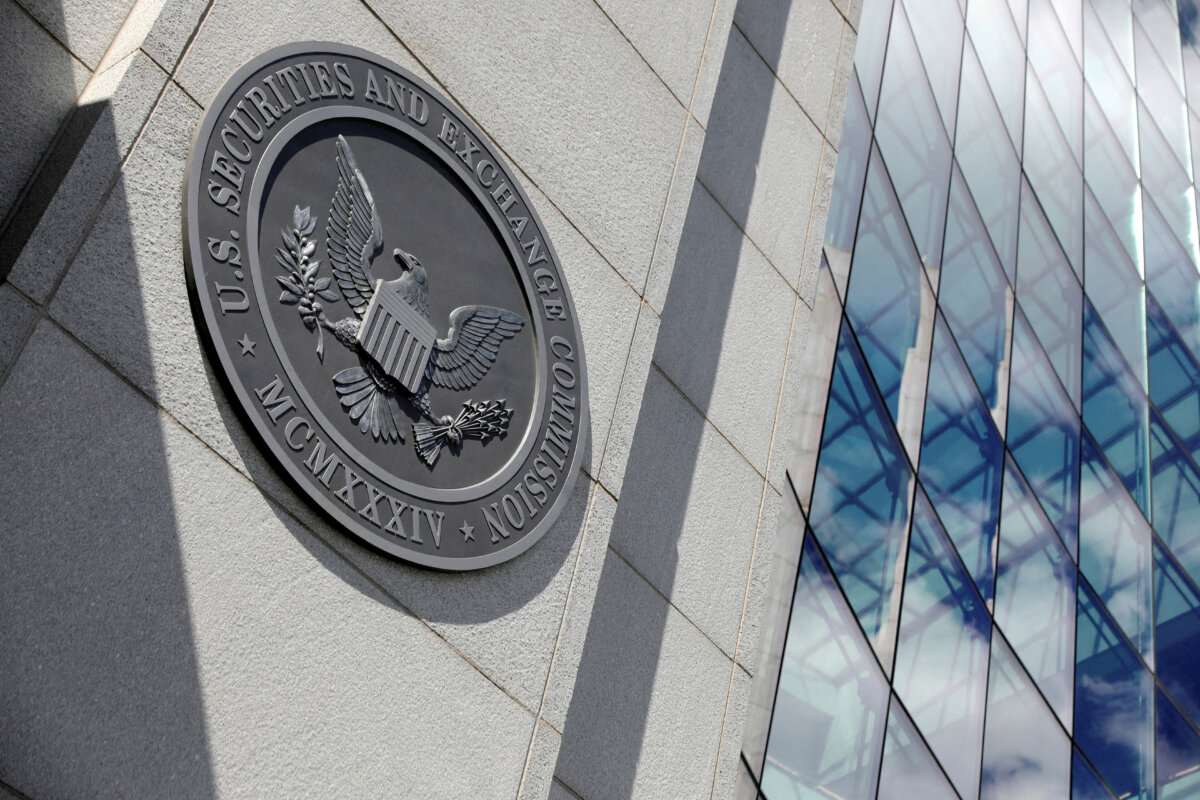
Ultimately, Renfroe was accused of illegally selling securities and failing to inform his investors of disciplinary actions the government had taken against him in the past.
According to court records, Renfroe had raised $1.2 million for the computer game company. He received a salary of approximately $45,000. Most of the rest was used to pay employee salaries and to cover company expenses. There is no indication in the court record that Renfroe used any investor money to enrich himself.
Renfroe said the SEC refused to consider 30 affidavits of support from investors stating that they understood the risk they were taking and expected the company to be profitable if it was allowed to continue operation.
The SEC did not respond to requests for comment from The Epoch Times.
Renfroe said lawyers told him that he could expect up to $500,000 in legal fees, on top of what he had already spent.
Like Fincher facing the ATF, Renfroe said that even winning would bankrupt him. So he cut his losses and made a plea bargain deal with the SEC.
“How do you go up against the federal apparatus when they’ve bankrupted you?” Renfroe asked The Epoch Times.
Little said it is almost impossible for an average small business or individual to prevail against a federal agency, regardless of the facts of a case. In addition to massive legal bills, the average case takes years to work through the system, she said.
“There’s a reason why they settle; they can’t afford the $12 million and 12 years of hassle to prevail,” Little said.
Renfroe said he is currently paying off $180,000 in SEC fees plus the legal bills he accumulated. He said the investors lost their money, but not because of the business’s failure.
“On all their publicity and website, [the SEC says] their duty is to protect the investors,” Renfroe said. “Well, did they protect my investors? No, they cost my investors [$2.5 million]. That’s the big lie.”

Legal Challenges
Part of the problem, Larkin said, is that the metric for success in most legal venues is the conviction rate. In criminal and constitutional courts, where prosecutors, judges, and defense lawyers are separated, conviction rate can be a fair measure.
But in the administrative system, in which a single agency may have its own investigators, prosecutors, and administrative law judges, a high conviction rate may not say as much about whether the system is working.
The Supreme Court appears to agree.
In its June 27, 2024, decision in SEC v. Jarkesy, the Supreme Court held that the SEC’s system denied the defendant—a hedge fund manager who was accused of securities fraud—his Seventh Amendment right to a trial by jury.
After the SEC had found George Jarkesy liable for $300,000 in civil penalties, he sought review of the SEC’s decision in the U.S. Court of Appeals for the Fifth Circuit.
Supreme Court Justice Neil Gorsuch wrote in the majority opinion that a system that allows a single agency to handle all aspects of a legal case is manifestly unfair.
“Going in, then, the odds were stacked against Mr. Jarkesy,” Gorsuch wrote. “According to one report … the SEC won about 90 percent of its contested in-house proceedings compared to 69 percent of its cases in court.”
That is not the only case in which the high court sided with businesses and individuals over the government.
The Supreme Court’s January 2024 decision in Loper Bright Enterprises v. Raimondo was hailed by legal experts as a game changer, and the American Bar Association called the decision a “seismic shift.” In that case, the court reversed its stance on “Chevron deference.”
Under the doctrine of Chevron deference, in cases involving ambiguous questions of law, the courts would defer to a federal agency based on its expertise.
But in Loper Bright, the high court held that courts are required to exercise their independent judgment and not simply defer to an agency because a statute is ambiguous.
Critics of Chevron deference have celebrated Loper Bright and other recent decisions limiting the power of administrative agencies. But Little said the impact of those decisions only goes so far.
Regardless of the law, she pointed out, when it comes to the administrative court system, cash is king. Many defendants simply cannot afford the lengthy process of contesting an administrative ruling, she said.
“Only the ultra-rich can afford to prevail,” she said.
Lives Irrevocably Changed
Neither Fincher nor Renfroe will answer questions about whether they believe that they are actually guilty or not guilty.
Fincher’s agreement prohibits him from disputing any of the ATF’s conclusions.
Under his Alford plea, Renfroe neither admits nor denies guilt. He is also prevented from making certain comments regarding his case.
Both men said the cases have irrevocably changed their lives. Despite the settlements, they have difficulty finding work and are prohibited from engaging in certain activities.
The ATF confiscated guns worth thousands of dollars from Fincher, even though none of the guns were connected to any criminal activity. The agency returned some of them so that they could be sold. But many more are likely gone forever, he said.
Renfroe said he and his wife are dealing with stress-related health issues and struggling to get by on Social Security and savings. When it comes to working in insurance or investments, Renfroe said, he is considered radioactive.
They are hoping that a nonprofit public interest law firm will be willing to take up their case. Renfroe’s wife, Diana, said that ultimately, their greatest loss is not their finances but their reputation. Regardless of what people know of their stories, they cannot get out from under the cloud of being investigated by the government.
If nothing else, she said, she hopes that their case is instructive.
“God knows and he can give us back what we lost,” she said. “I would hope in this lifetime, but maybe not. But at least we could help stop this for other people.”
 Friends Read Free
Copy
Facebook
Tweet
Friends Read Free
Copy
Facebook
Tweet