STURGIS, S.D.—Clarence “Pappy” Hoel wanted to promote his Indian Motorcycle dealership in Sturgis, South Dakota, in 1936. So he built a half-mile dirt oval track and invited a few like-minded gearheads to race their machines on it—cars included.
That informal race was so well-received that on Aug. 14, 1938, nine racers and an unknown number of spectators gathered for the first annual Black Hills Motor Classic.
The first races were organized and managed by the Jackpine Gypsies, the local motorcycle club started by Hoel. The Gypsies still sponsor motorcycle competitions in conjunction with the rally.
Little did they know in 1938 that their dirt track race would grow into the largest motorcycle rally in the world.
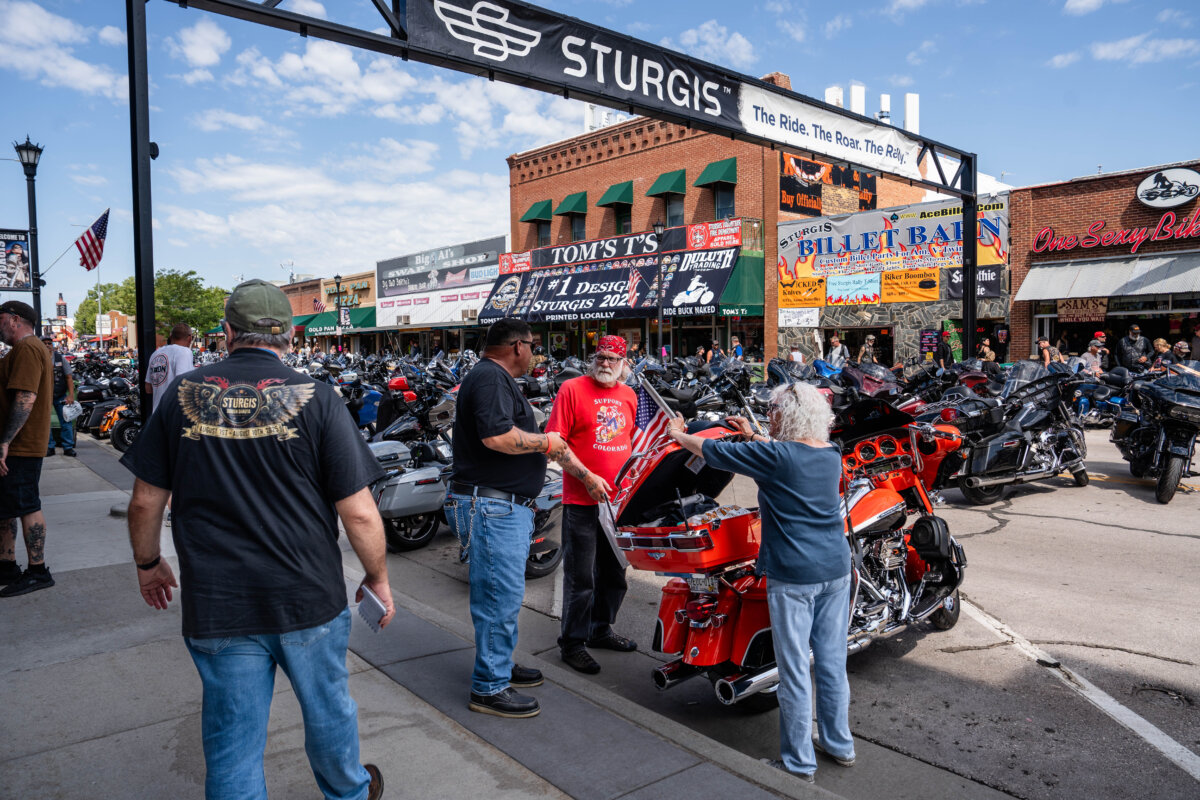
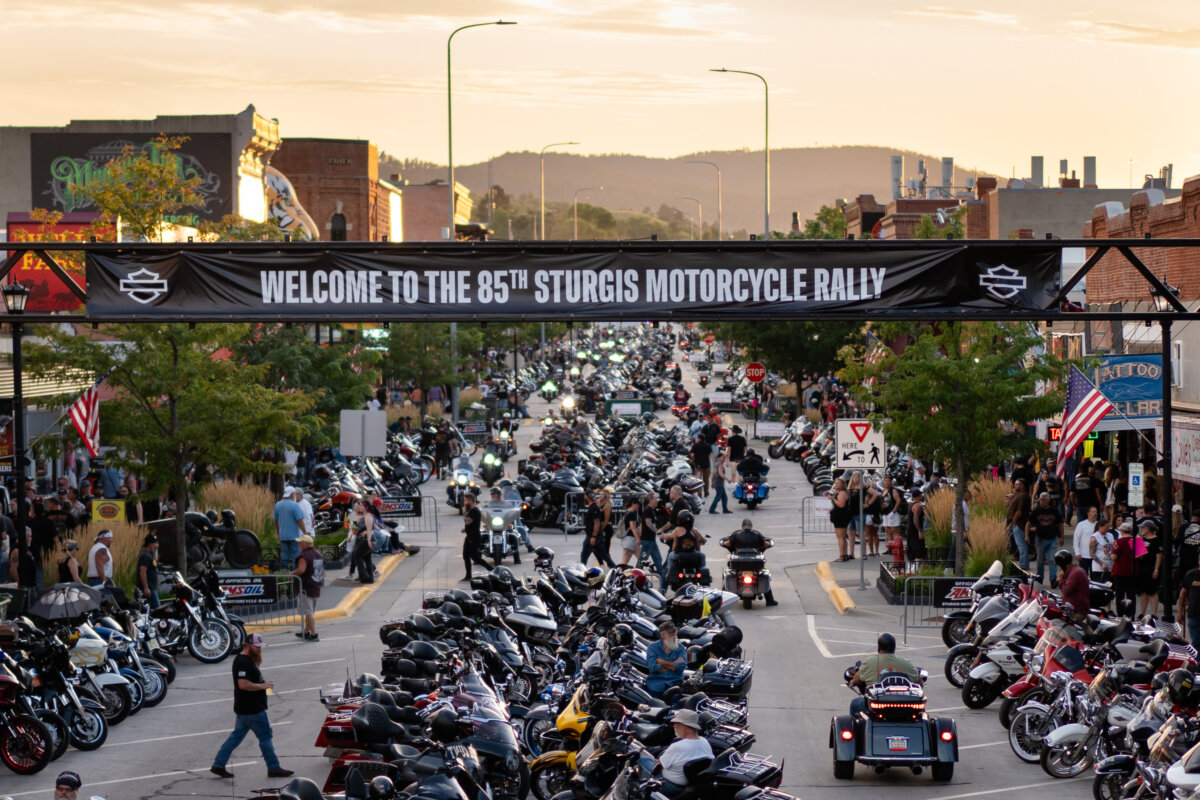
Over the first 10 days of August, an estimated 500,000 visitors descended on the town of about 7,000 people for the 85th Sturgis Motorcycle Rally. Like rally attendees in years past, they will spend the week high on exhaust fumes and basking in the glory of their favorite form of transportation.
In the decades since Hoel’s first race, the rally has become a series of parties, concerts, competitions, and exhibitions sponsored by local businesses and clubs. As the crowds have grown, the rally has spread from its epicenter, Main Street in downtown Sturgis, to cover hundreds of miles in western South Dakota and eastern Wyoming.
The 85th annual Sturgis Motorcycle Rally is a far cry from rallies of the past.
Today, sleek, shiny, factory-built custom motorcycles, ridden by middle-aged professionals and the upwardly mobile, cruise the main drag. This was once the domain of rough-hewn bikers astride choppers they built themselves from parts picked up at swap meets or handcrafted in backyard workshops and garages.
To be sure, some old-school bikers still cruise Main Street as part of the ongoing parade. But they are a little older, a little grayer, and a little more docile than in years past.
Steve Lemke counts himself among that number. The 73-year-old from Cannon Falls, Minnesota, described himself as a politically conservative Christian, a retired carpenter, and a lifelong motorcycle enthusiast.
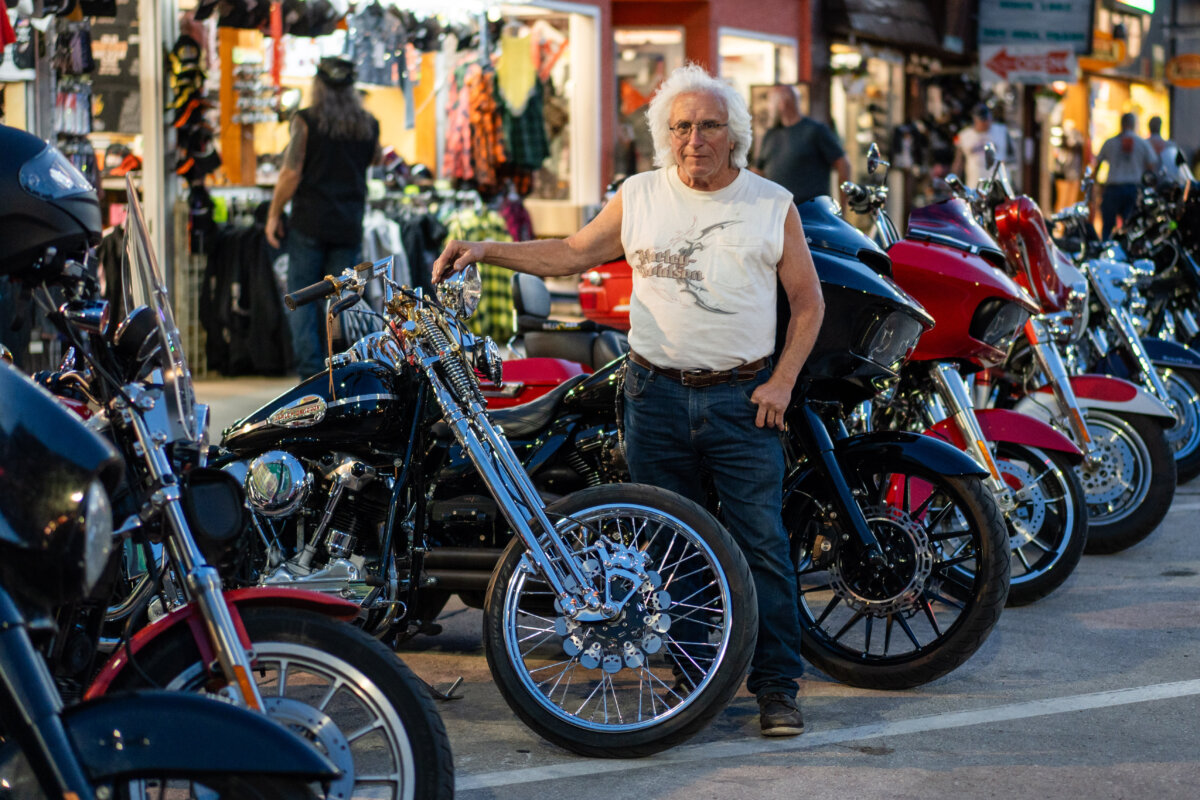
The 2025 rally is Lemke’s 40th. His first was in 1968, when he was 16.
On the fourth night of the rally, Lemke stood next to his 1946 Harley-Davidson chopper and watched the bikes roll slowly by. He recalled his first rally. He said that in 1968, he was a naive 16-year-old with a lifelong love of motorcycles wandering the campgrounds around Sturgis.
“It was pretty rough in the ’70s,” Lemke told The Epoch Times. “We heard of guys getting shot. But it’s evolved into families with white tennis shoes, not biker boots so much.
“It’s gotten bigger.”
From the 1960s through the early 2000s, these bikers cruised the streets of Sturgis showing off their rides and looking for friends. Some slept in town. Others retreated to the campgrounds around Deadwood, Spearfish, and the surrounding areas.
They would hold their own motorcycle rodeos in addition to the races sponsored by the Jackpine Gypsies. These ad hoc competitions featured games such as the “wienie bite,” in which a female passenger stands on the motorcycle’s foot pegs and tries to bite a hot dog suspended from a string overhead as the motorcycle passes underneath.
Or, they might have pitted their motorcycles against one another in “run-what-you-brung” drag races.
During the rallies, six blocks of downtown Sturgis are closed to vehicles with more than three wheels that do not have handlebars. A national insurance company and an outdoor sporting goods retailer have vendor space alongside custom parts manufacturers and motorcycle dealers.
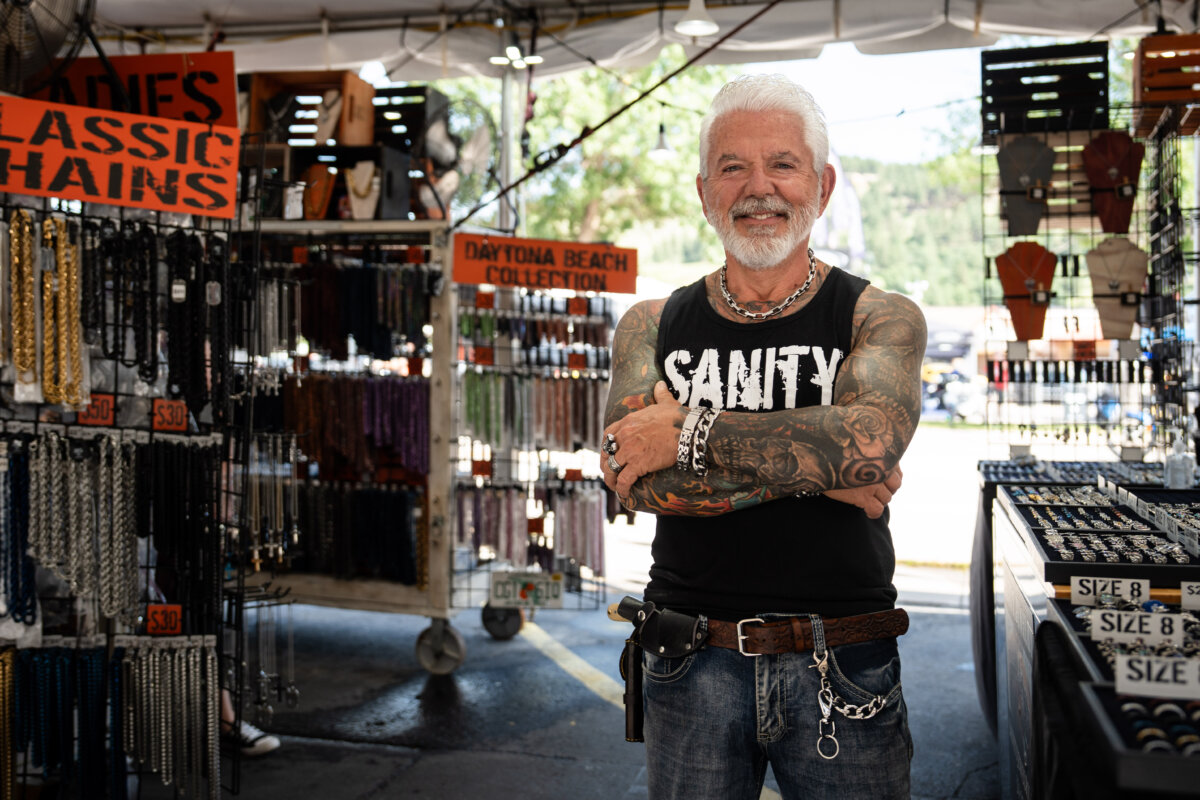
Mark Hinds is the owner of Sanity Jewelry, which makes stainless steel jewelry for bikers. The heavily tattooed businessman gives the impression that he would be as comfortable in a corporate boardroom as he is on his motorcycle. He said the rally has changed for the better.
“I think the way [the rally is] evolving is better, not worse,” Hinds told The Epoch Times. “I think it’s better because it involves more people.
“You can still go do that old-school rally stuff. They don’t all have to be that way. Some of them have to be OK for families to go to. I think they’re evolving into that. I don’t know if I’m in the majority or minority, but I love the direction Sturgis is headed.”
Lemke said the event has evolved as the biker culture it celebrates has evolved.
U.S. biker culture can be traced back to the end of World War II. Many returning GIs could not adjust to the sedate, suburban culture waiting for them. They were searching for the adrenaline rush and camaraderie of combat.
Some found it in the power and rush of riding a Harley-Davidson motorcycle.
Before long, the image of the leather-clad outlaw on a motorcycle was cemented in the public consciousness.
Films such as 1953’s “The Wild One,” starring Marlon Brando, and 1969’s “Easy Rider,” with Peter Fonda and Dennis Hopper, reinforced the stereotype of the counterculture anti-hero.
Harley-Davidsons had also gained a reputation for being unreliable and prone to breaking down.
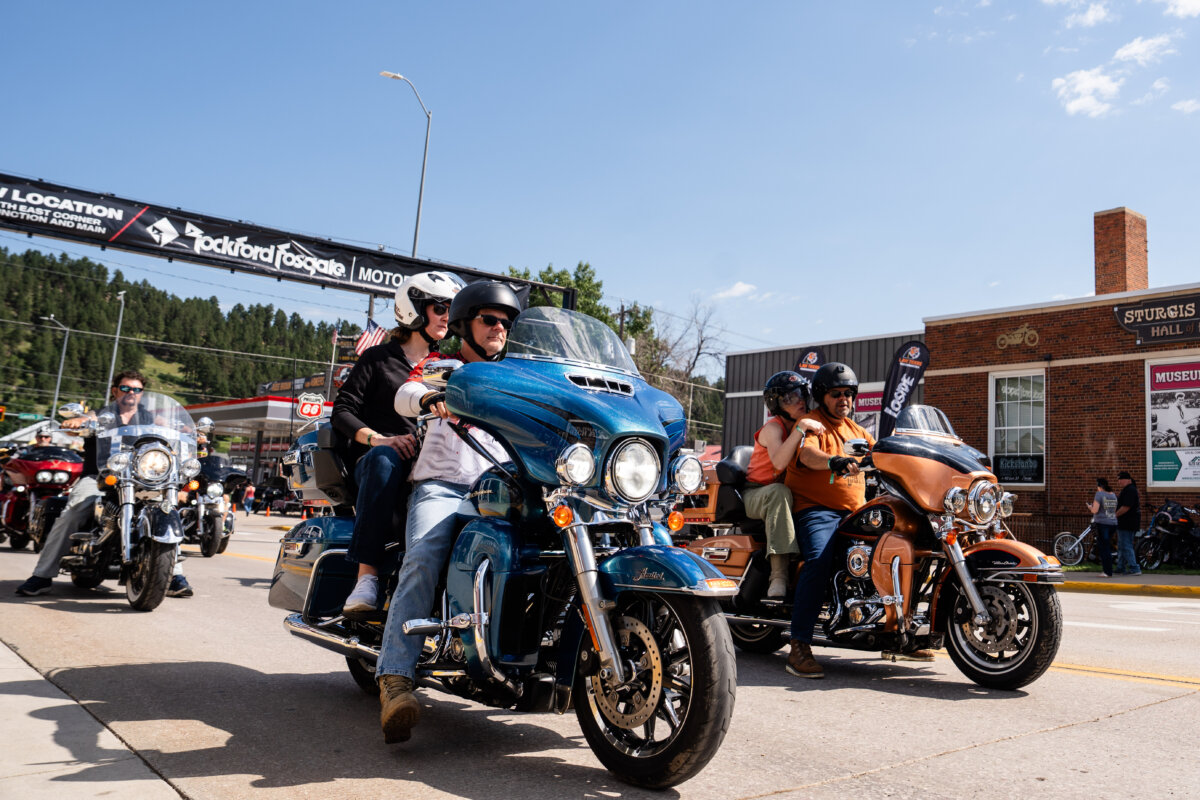
This, combined with competition from smaller, faster, and easier-to-maintain Japanese motorcycles, almost did the Milwaukee-based company in. The imports were more socially acceptable than the bigger, louder U.S. bikes.
But in 1981, Willie G. Davidson, grandson of company cofounder William A. Davidson, bought the company. Once he had control, he began redesigning the motorcycles to capitalize on the bike’s historic reputation as a cruiser.
The company also hired engineers to redesign the iconic V-twin motorcycle engine, making it reliable and easier to maintain.
Rather than try to compete with dirt bikes and scooters, Harley-Davidson went back to its roots but incorporated modern technology. Davidson, an artist and designer, designed some of the company’s most popular motorcycles, including the Super Glide, Low Rider, and XLCH Sportster.
The company also stopped trying to compete with the imports. Instead, it marketed its product as a U.S. classic. A growling, powerful, slick bit of two-wheeled Americana.
Before long, people who spent their workdays wearing business casual were donning denim and leather for the weekends. Harley-Davidson motorcycles became status symbols while retaining their aura of rebellion.
Lemke said it signaled a fundamental change in U.S. biker culture.
“Now, it’s a lot of [the] younger generation, and they’re not driving them for the same reason,” Lemke said. “They’re … almost like, not into the Harley culture. Technology evolved, and I think people have kind of changed with that. I don’t know what came first, the people changing, or the technology.”
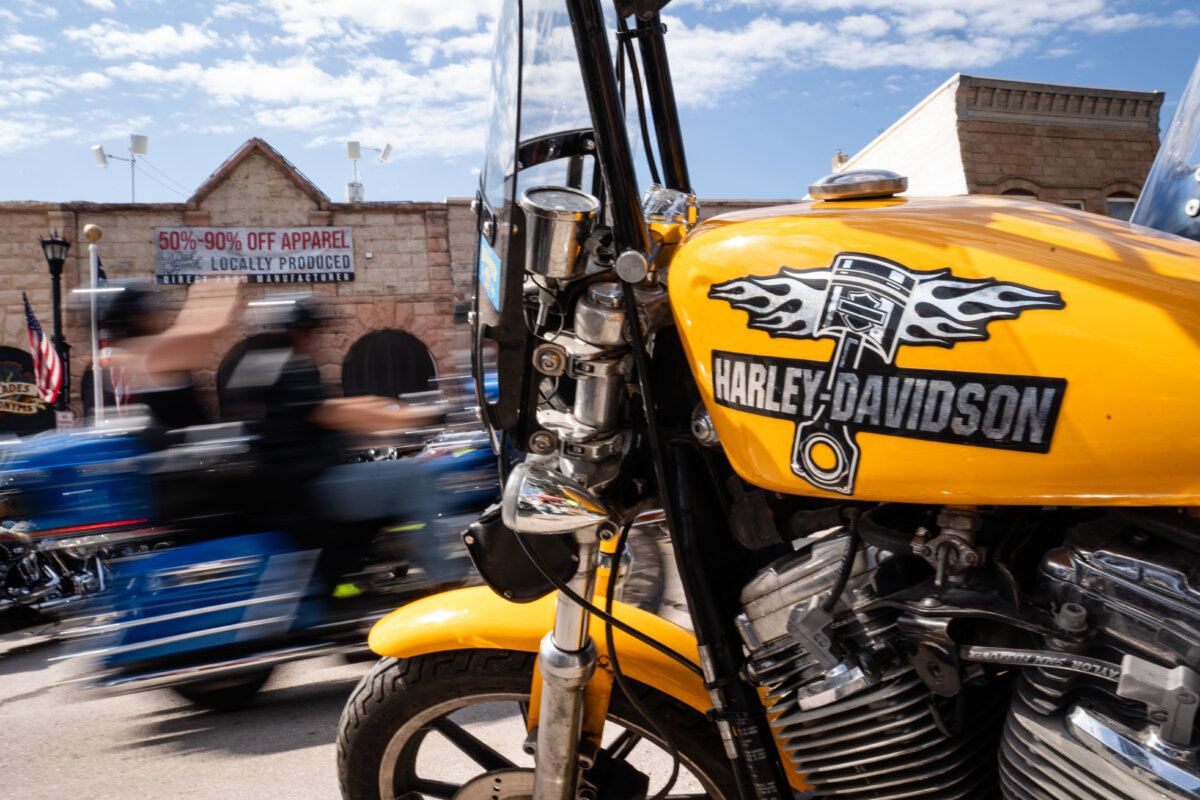
Eric Pettit is part of that younger generation. Like many riders, Pettit started his love affair with motorcycles as a child riding dirt bikes. These days, he earns his living as a stunt rider pulling wheelies and doing burnouts at rallies and motorcycle dealerships around the country.
For Pettit, Sturgis is about more than motorcycles and parties.
“For me, personally, it’s the riding,” Pettit told The Epoch Times. “It’s continuing the roots of motorcycle riding at the American base level. There’s motorcycles all over the world, but it’s different here, and I think that Sturgis really embodies what it’s about in America.”
Rally attendees come from all 50 states and several foreign countries. Some, such as Cory Coles, a 69-year-old truck driver from Coalgate, Oklahoma, will be coming for the first time.
Coles said he has ridden motorcycles since he was a boy. He has been to rallies, both large and small.
Sitting outside a Harley-Davidson dealership in Sherman, Texas, two months before the rally, Coles said the trip to Sturgis would be the culmination of his motorcycle experiences.
The Oklahoma biker said he planned to cruise up and down Main Street before parking to watch the passing parade.
“It’s like a big, giant party. … People that you don’t even know become your friends,” Coles told The Epoch Times. “It’s just like any other ride that there is, except [it’s] more extravagant.”
Since its founding, the rally has been held every year, except for two years during World War II. In 2020, town officials considered canceling the rally because of the COVID-19 pandemic. But local businesses and motorcyclists from around the country made it clear that they were gathering no matter what.
For U.S. bikers, Sturgis is more than a small town in western South Dakota. The name is akin to Mecca for Muslims or St. Andrews for golfers. But for most of the year, Sturgis is not much different from other small towns.
When it is not hosting the largest gathering of motorcyclists in the world, Sturgis is a small tourist spot at the edge of the Black Hills. An online community video shows that Sturgis is like many other small U.S. towns. The video boasts of the town’s proximity to a range of outdoor activities, its modern hospital, its public schools, and its quality of life.
According to the website Data USA, the town’s economy is built mostly on the service and hospitality industries. And, according to town officials, that includes preparations for the annual onslaught.
Kevin Forrester is serving his first term as mayor. He said that, on balance, the rally is a good thing for not only the town, but also the region. The influx of riders is an important part of the area’s economy that just keeps growing.
He said the event now covers hundreds of miles and dozens of communities. Public officials have learned how to accommodate the crowd while serving their full-time residents.
State, county, and local law enforcement officers come to Sturgis for temporary positions with the Sturgis Police Department, which normally has a 12-officer patrol division.
Public Works employees work overnight shifts to ensure that the streets are clean and the infrastructure is working each morning. Local businesses, community organizations, and property owners have developed their strategies for either profiting from the rally or keeping a low profile until it is over.
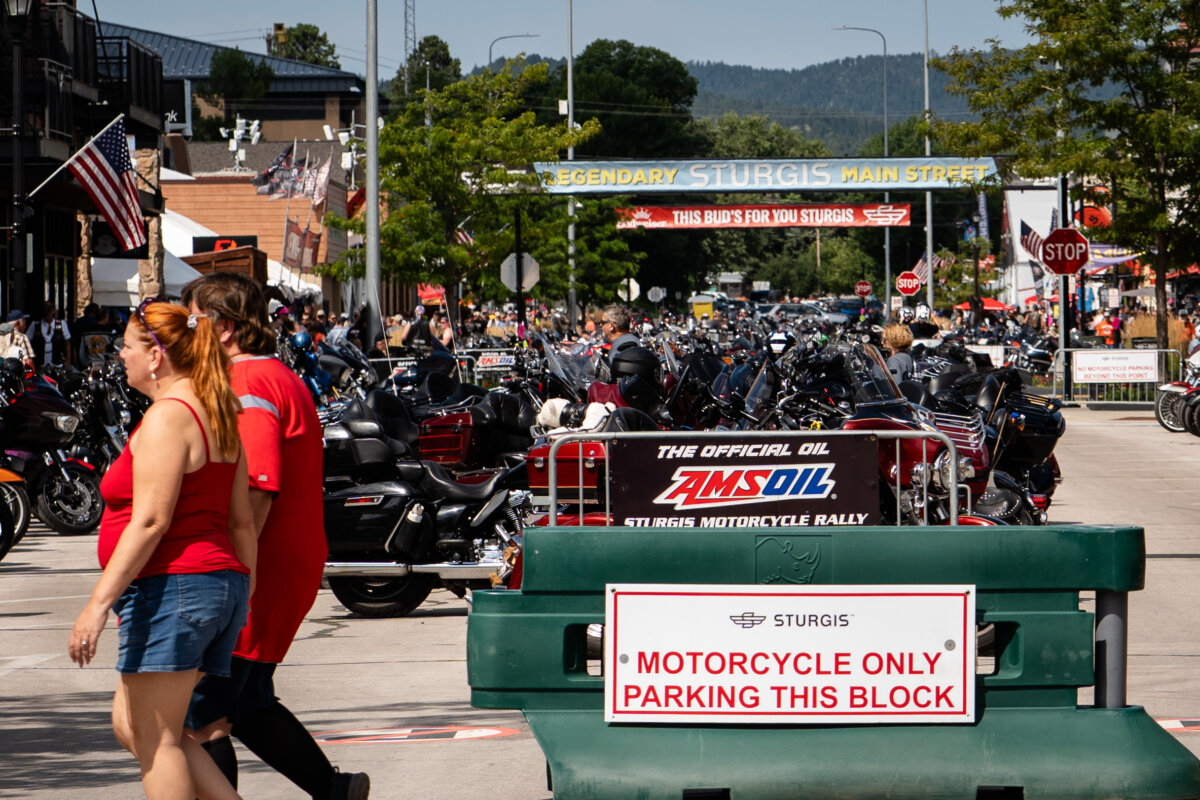
“Managing the balance, so that everybody that is involved with the rally, from our city residents, our visitors, our staff, [so] everyone has a good experience … sometimes gets challenging,” Forrester said.
Kerry Tate is a semiretired helicopter pilot from Vilonia, Arkansas, who cut his teeth racing dirt bikes and hot rod cars. He got his first Harley-Davidson in 1999 and made his first trip to Sturgis that year.
He said that regardless of their lifestyle, age, or station in life, the majority of rally attendees are there for the same reason.
“They’re nice and they’re friendly,” Tate told The Epoch Times. “Everybody’s just sharing their love of two wheels.”
 Friends Read Free
Copy
Facebook
Tweet
Friends Read Free
Copy
Facebook
Tweet