
President Donald Trump’s top trade officials say the administration’s far-reaching tariff program will remain intact even if the Supreme Court curtails the president’s use of emergency economic powers, signaling that the White House has already mapped out alternative authorities to preserve its signature trade action.
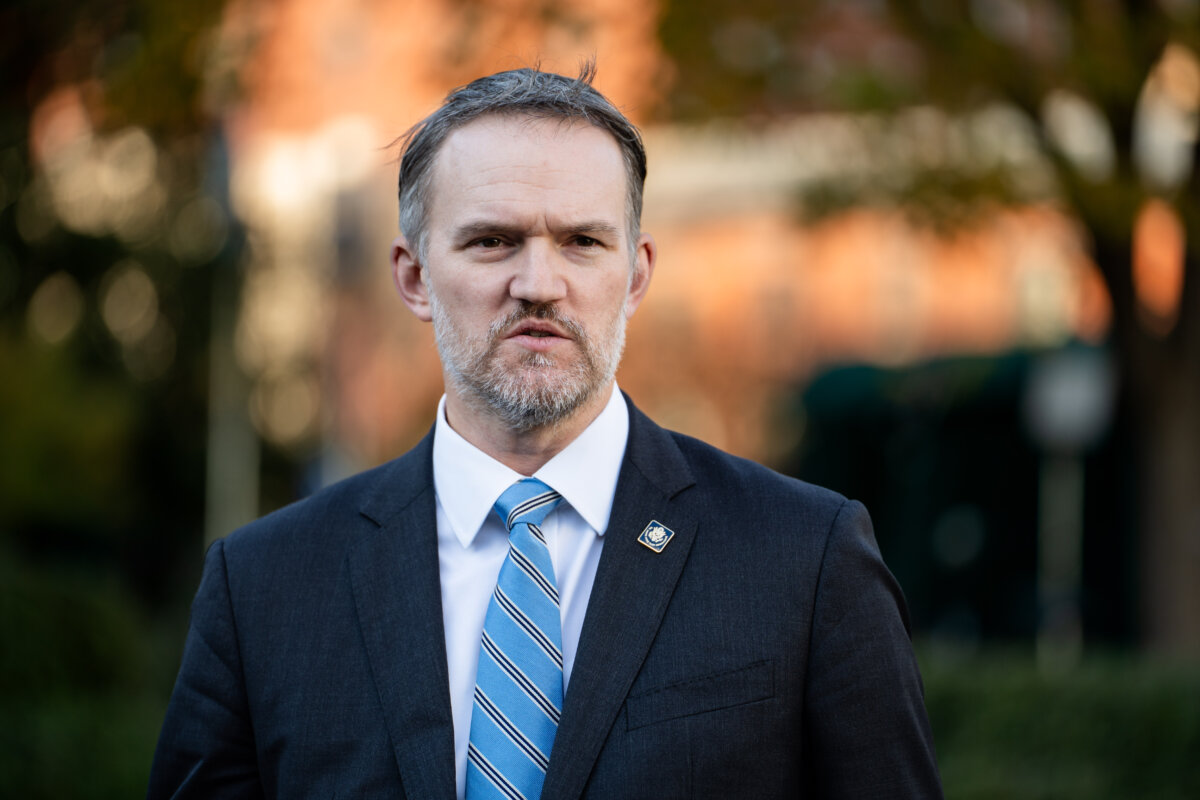
In a Dec. 5 appearance on Politico’s “The Conversation” podcast, U.S. Trade Representative Jamieson Greer said the administration has prepared fallback tools for years and made clear that Trump’s tariff architecture will endure regardless of the legal outcome.
“We’ve been thinking about this plan for five years or longer,” Greer said, adding that while the administration expects to win in court, it does not believe that tariffs themselves are at risk.
“Tariffs are going to be a part of the policy landscape going forward,” he stated.
Trump imposed many of this year’s tariffs under the International Emergency Economic Powers Act (IEEPA), a 1977 statute that allows presidents to regulate imports after declaring a national emergency. Several lower courts have ruled that the administration exceeded that authority, prompting companies to sue for refunds and forcing the White House to appeal to the Supreme Court.
The justices heard arguments last month in a case that could narrow the scope of how broadly presidents may use the emergency economic powers law for trade actions.
When asked whether the White House is prepared to keep the tariffs in place even if the Supreme Court limits IEEPA, Greer declined to detail the backup plan, but made clear that one exists. Pressed on whether the administration has alternative authorities ready, he replied: “Of course.”
He also rejected the idea that the legal fight threatens the strategic trajectory of U.S. trade policy.
“First of all, you don’t change 70 years of trade policy overnight,” he said. “And second of all, when some people say, ‘Oh, well, this is chaos. What’s your strategy?’, what they really want to know is, can we go back to how it was before? And that’s not going to happen.”
Greer’s comments reinforce statements made days earlier by Treasury Secretary Scott Bessent, who told The New York Times that the administration could “recreate the exact tariff structure” even if IEEPA were curtailed.
The Treasury chief said the government could instead rely on Section 301 and Section 122 of the 1974 Trade Act and Section 232 of the 1962 Trade Expansion Act—a suite of authorities that would allow the president to impose duties on national-security or unfair-trade grounds.
Bessent also said the administration can impose tariffs permanently and urged countries that have negotiated tariff relief with Trump to “stick with” their deals irrespective of the Supreme Court ruling.
The convergence of Greer’s and Bessent’s statements suggests the administration is trying to reassure both domestic and international audiences that the tariff regime will not unravel due to litigation.
Their comments also come as Trump’s newly released National Security Strategy frames economic security as a pillar of national security, expanding the role of tariff tools in protecting supply chains, pressuring adversaries, and supporting U.S. industrial capacity.
While Greer did not cite the strategy directly, the document reinforces the administration’s broader argument that tariffs are integral to American power rather than temporary bargaining chips.
“The United States will reindustrialize its economy, ‘re-shore’ industrial production, and encourage and attract investment in our economy and our workforce, with a focus on the critical and emerging technology sectors that will define the future,” the strategy document states.
“We will do so through the strategic use of tariffs and new technologies that favor widespread industrial production in every corner of our nation, raise living standards for American workers, and ensure that our country is never again reliant on any adversary, present or potential, for critical products or components.”
In his appearance on “The Conversation,” Greer said the administration has built a tiered-tariff system meant to pull supply chains closer to home, with China facing the steepest duties, Southeast Asia and India next, allies in the middle, and the lowest rates in the Western Hemisphere.
“You can really see almost like concentric rings,” he said, calling the layout a reflection of Trump’s view of tariffs as essential leverage to bolster America’s economic and national security.
 Friends Read Free
Copy
Facebook
Tweet
Friends Read Free
Copy
Facebook
Tweet