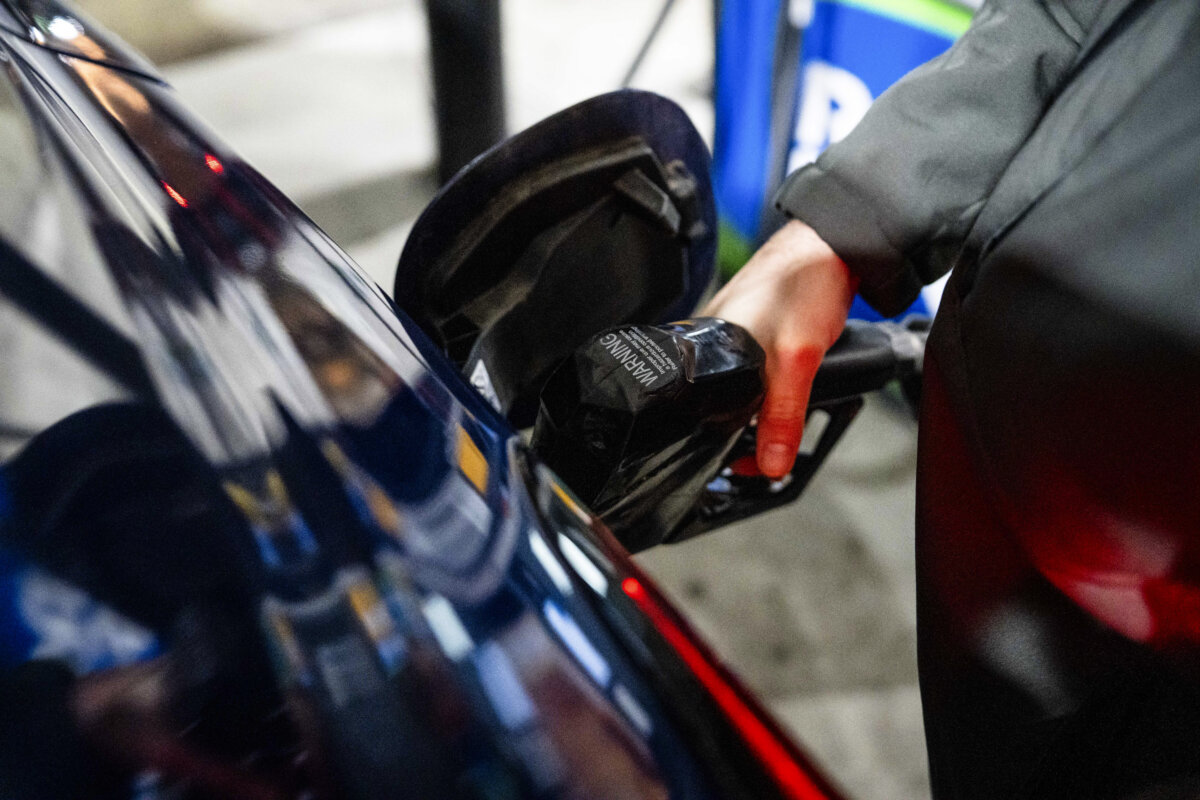

President Donald Trump said on April 23 that Americans may have to deal with higher gas prices “for a little while,” as the conflict with Iran continues despite an extended ceasefire.
During a press conference in the Oval Office, Trump was asked whether Americans should anticipate higher fuel costs for the foreseeable future. He did not specify a timeline but signaled it could last for some time.
Trump suggested that the situation could ultimately yield results that safeguard Americans’ safety by preventing Iran from having nuclear weapons, which could otherwise be used “to blow up one of our cities or blow up the entire Middle East.”
“I have to be honest, the stock market is at an all-time high right now. I thought it would have been down 20, 25 percent,” the president told reporters.
“I thought oil would go up to maybe $200 a barrel. And oil is a very different number than anyone thought. In fact, this country is much lower because we have all the oil we can use.”
Fuel prices have risen sharply since U.S.–Israeli military operations against Iran began on Feb. 28, and Tehran retaliated by firing missiles and drones at Israeli and U.S. assets across Gulf nations.
The national average price for a gallon of regular gasoline was $4.05 on Wednesday, up from $3.97 the previous month. The gas price was $3.17 per gallon a year ago, according to the American Automobile Association (AAA).
AAA data show the average national price for a gallon of diesel climbed to $5.46 on Wednesday, up from $5.59 a week before. The price was $5.34 last month and $3.56 a year ago.
Treasury Secretary Scott Bessent said on April 22 that relatively high gas prices will not last long, but any change depends on when the United States and Iran cease hostilities.
“I think the conflict will end, I think gasoline prices will come back to where they were or perhaps lower,” Bessent told the Senate Appropriations Committee.
On April 21, Trump extended a two-week ceasefire with Tehran, citing what he described as fractures within the Iranian leadership and a request from Pakistan’s prime minister. He said the ceasefire would remain in effect “until such time as their leaders and representatives can come up with a unified proposal.”
The initial ceasefire, which began earlier in April, was due to expire this week. Prior to the extension, Trump said that a U.S. delegation would head to Pakistan for another round of peace talks with Iranian officials, which Tehran rejected.
Iranian Ministry of Foreign Affairs spokesman Esmaeil Baghaei said on April 21 that “going to Islamabad must ensure [Iran’s] interests” and that “no final decision has been made yet to go to Islamabad,” according to Iran’s semiofficial Mehr News.
Jack Phillips contributed to this report.
 Friends Read Free
Copy
Facebook
Tweet
Friends Read Free
Copy
Facebook
Tweet