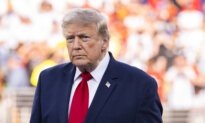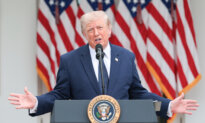

U.S. President Donald Trump said Sunday that he would deal with “the Russia threat” over Greenland, accusing Denmark of failing to do enough to secure the Arctic island.
Trump wrote on his Truth Social platform: “NATO has been telling Denmark, for 20 years, that ‘you have to get Russian threat away from Greenland.’ Unfortunately, Denmark has been unable to do anything about it.”
“Now it is time, and it will be done!!!” the U.S. president said, as the political dispute over the strategically located, mineral-rich island continued.
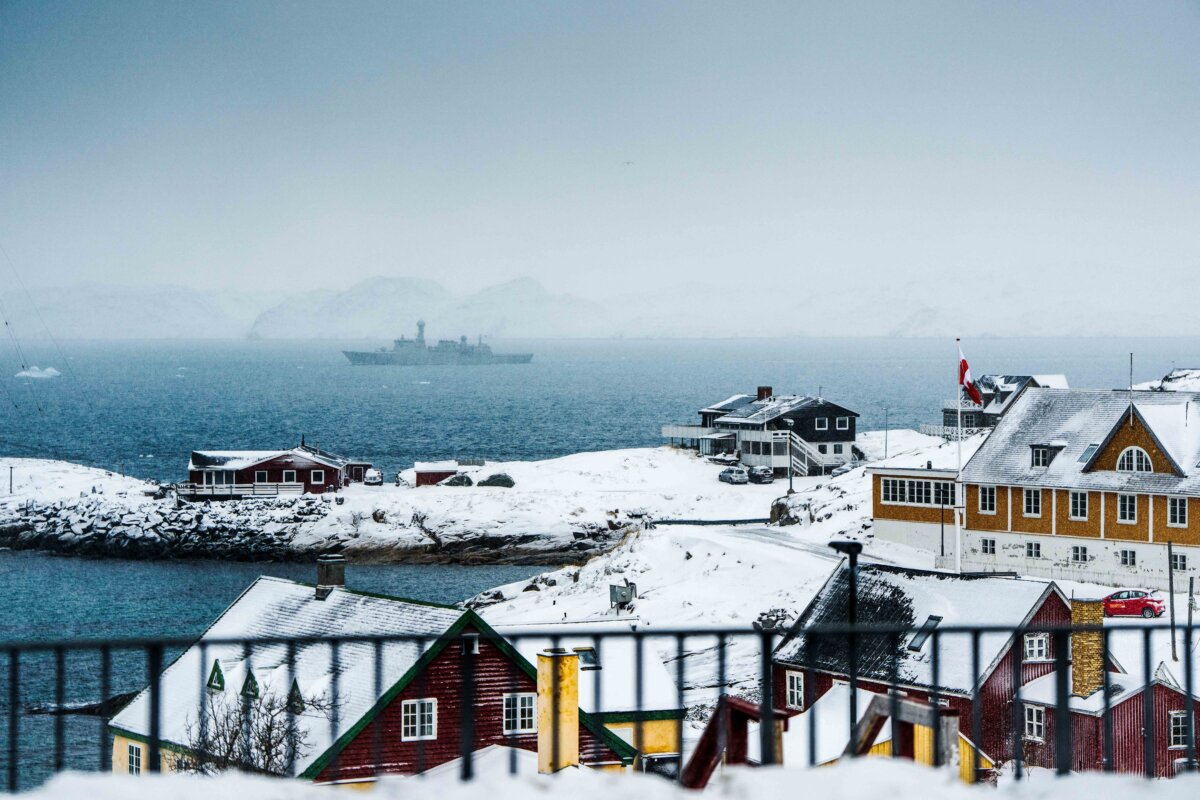
Trump has repeatedly stated his ambitions for the United States to take control of Greenland, a semi-autonomous territory of Denmark, for national security reasons.
The dispute escalated on Saturday when Trump said he would slap a wave of increasing tariffs on Denmark and other European allies who are opposed to his ambitions to acquire Greenland.
Trump has said repeatedly that China and Russia pose a threat to the United States in the Arctic region, with Greenland a key location because it sits along an intercontinental ballistic missile path from Moscow and, less directly along such a path, from China.
Greenland has been the frontier of American early warning systems over a nuclear attack since the days of the Cold War, with the first ballistic missile early warning system set up in 1960.
Russian Response
The Kremlin said Monday it was difficult to disagree with experts who said it would be historic if Trump succeeds in his ambition to take control of Greenland, Russian state media TASS reported.
“Here, perhaps, it is possible to abstract from whether this is good or bad, whether it will comply with the parameters of international law or not,” Kremlin spokesman Dmitry Peskov said.
“There are international experts who believe that by resolving the issue of Greenland’s incorporation, Trump will certainly go down in history.”
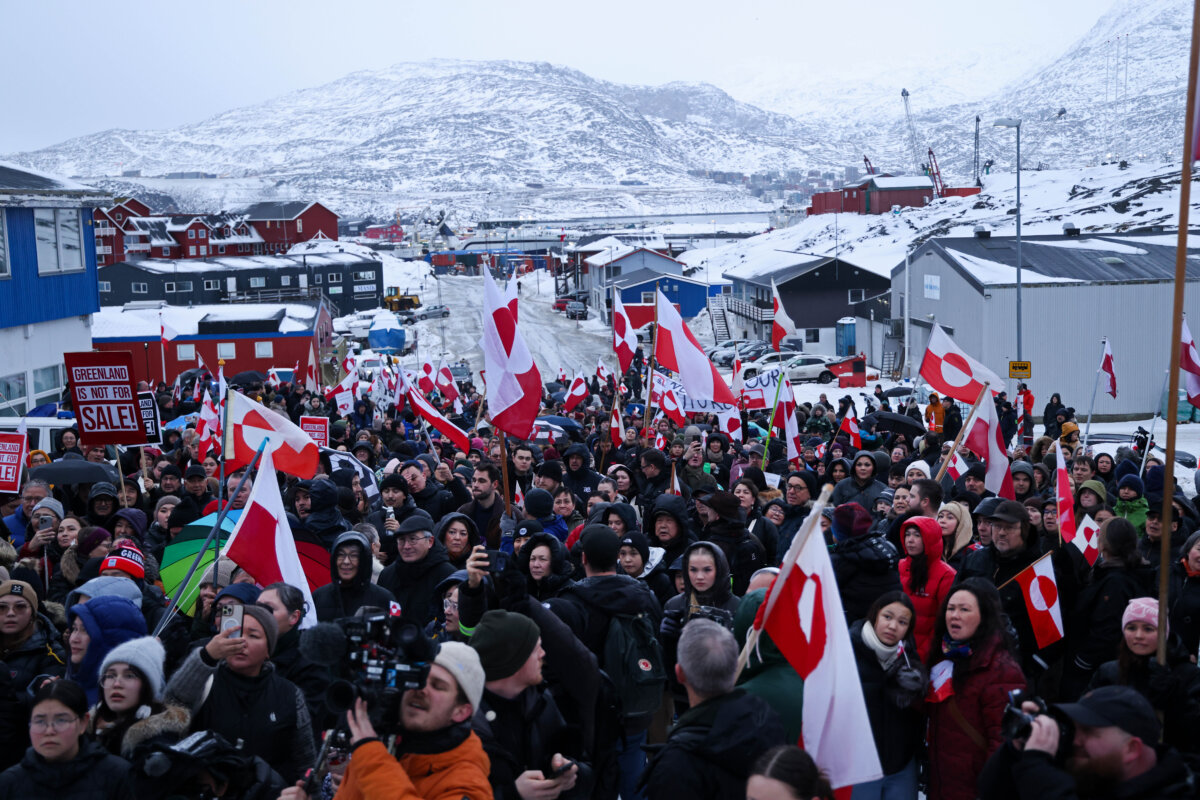
The governments of both Denmark and Greenland have repeatedly said the island is not for sale and that its people do not want to be part of the United States.
A January 2025 poll showed a majority of Greenlanders (56 percent) favor independence from Denmark, although the economy depends heavily on Danish subsidies. Just 6 percent of respondents said they wanted to be a part of the United States, although they were not asked about other kinds of deals with Washington.
Russia’s foreign ministry said last week that the Greenland dispute showed the double standards of Western powers, which claimed moral superiority, and that it was unacceptable for the West to keep claiming that Russia and China posed a threat to the Arctic island.
‘European Weakness’ Claim
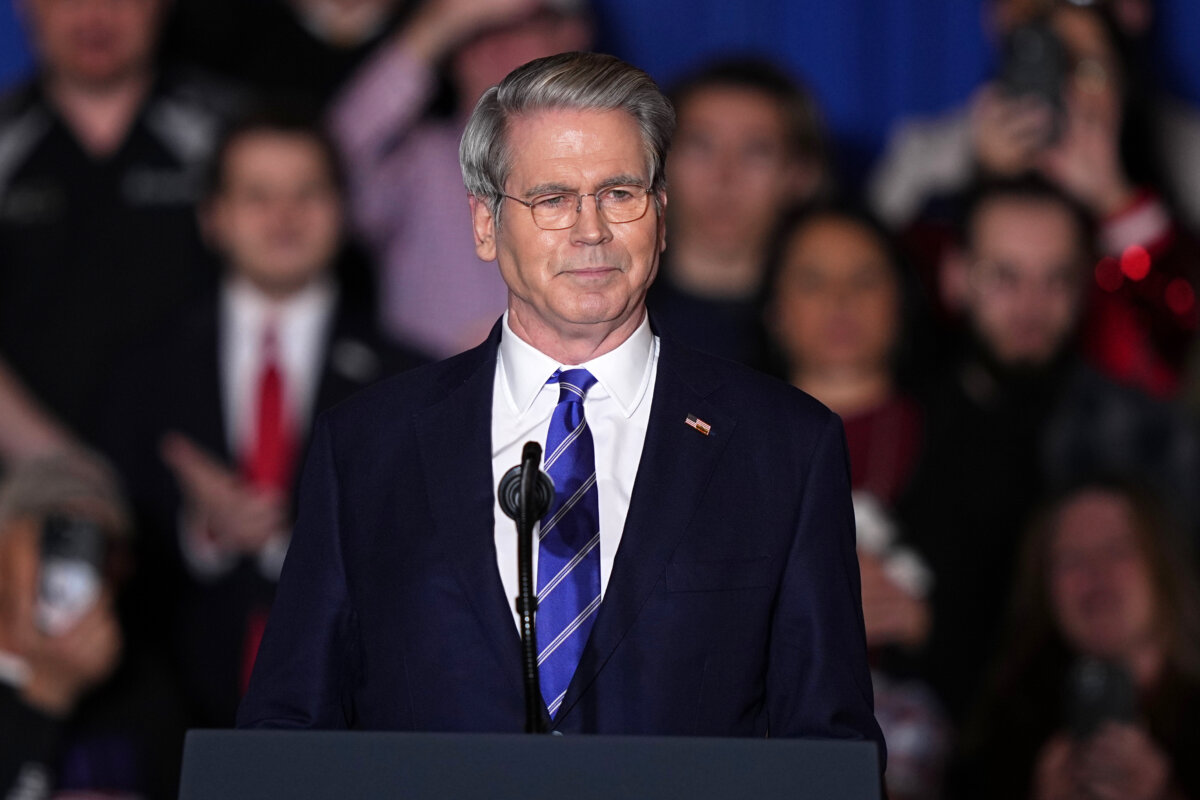
Treasury Secretary Scott Bessent said Sunday that European “weakness” necessitates Washington taking control of Greenland in the interests of global stability.
During an appearance on NBC’s “Meet the Press,” Bessent said taking control of Greenland is a vital move in a geopolitical chess match with Russia and China.
“We are the strongest country in the world,” Bessent said. “Europeans project weakness. The U.S. projects strength.”
Bessent said he believes European leaders will eventually “come around” to the idea of the United States controlling Greenland, which is the world’s largest non-continental island.
“I believe that the Europeans will understand that this is best for Greenland, best for Europe, and best for the United States,” he said.
Though geographically considered part of North America, Greenland has a long cultural association with northern Europe, having been part of the Nordic kingdoms of Norway and Denmark for hundreds of years.
The territory could not simply be purchased from Denmark in the way that Alaska was bought from imperial Russia in 1867, as Greenland has not been a Danish colony since 1953. The Arctic island has had home rule since 1979, and its right to full independence from Denmark should it become the will of Greenlanders has been recognized under international law since 2009.
Tariff Threat ‘Completely Wrong’
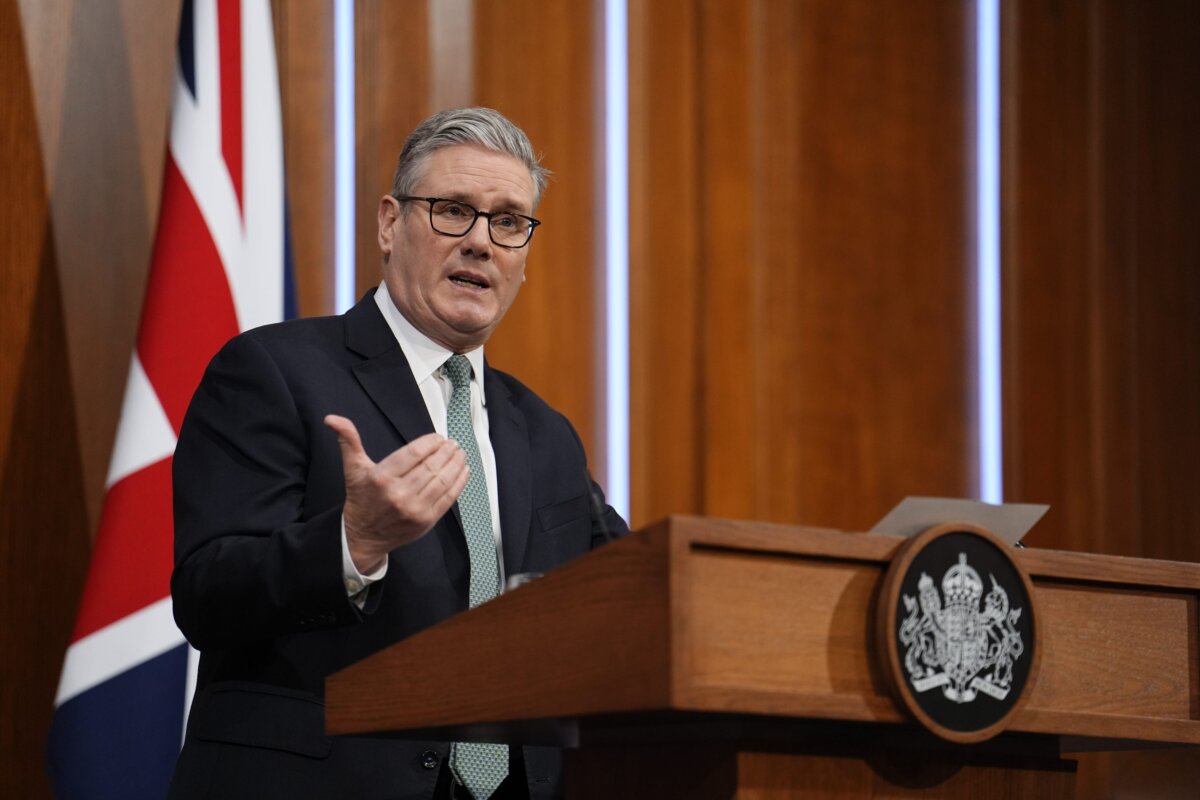
British Prime Minister Keir Starmer said the dispute over Greenland should be resolved through “calm discussion between allies” rather than through the threat of a trade war between allies.
Starmer played down the prospect of a United States invasion of the Arctic island, which a number of high-ranking U.S. officials, including House Speaker Mike Johnson (R-La.), have said is unlikely.
The prime minister said Trump was not serious about the prospect of using military force to annex the island, and indicated that Britain would not be drawn into a trade war over the dispute because this was “not the right way to resolve differences within an alliance.”
Trump said he would hit UK businesses with a 10 percent tariff “on any and all goods” sent to the United States beginning Feb. 1, increasing to 25 percent on June 1, until a deal is reached for Washington to control Greenland.
The U.S. president said the same tariffs would apply to Denmark, Norway, Sweden, Finland, France, Germany, and the Netherlands, all of which are NATO members.
Asked if he thought Trump was genuinely prepared to invade Greenland, Starmer told reporters: “I don’t, actually.”
Starmer reiterated his position that the future sovereignty of Greenland is entirely a matter for its people and for Denmark, adding: “The use of tariffs against allies is completely wrong.”
“It is not the right way to resolve differences within an alliance, nor is it helpful to frame efforts to strengthen Greenland security as a justification for economic pressure.”
The prime minister said he will speak to Trump about Greenland again “in the coming days.”
Trump is expected to travel this week to the World Economic Forum in Davos, Switzerland, but it has not been announced that Starmer will attend.

‘Strategic Ambiguity’
Amid criticism from some of his fellow Republicans, including chair of the U.S. Senate Homeland Security Committee, Rand Paul (R-Ky.), over the threat of tariffs being imposed on allies, Trump’s tactics have found support from others.
Paul, who has long been an opponent of U.S. intervention in foreign countries, told NBC on Sunday that using emergency powers to justify using force to take Greenland would be “ridiculous” because there is no emergency there.
Sen. John Cornyn (R-Texas) said he saw Trump’s tariff threat as a negotiating tactic.
“Sometimes he believes in strategic ambiguity and talks in terms that get people’s attention, but, ultimately, I think there’s a deal to be made,” Cornyn said on “Fox News Sunday.”
Other U.S. lawmakers, including Sens. Ted Cruz (R-Texas) and Chris Van Hollen (D-Md.), suggested that Greenland’s abundance of natural resources is a possible explanation for Trump’s keenness to acquire the territory.
While speaking on Fox News, Cruz cited the rare minerals that lie beneath the icy sheets of Greenland as one of the “enormous economic benefits” of having it, although he said that national security also was a factor.
Reuters contributed to this report.
 Friends Read Free
Copy
Facebook
Tweet
Friends Read Free
Copy
Facebook
Tweet