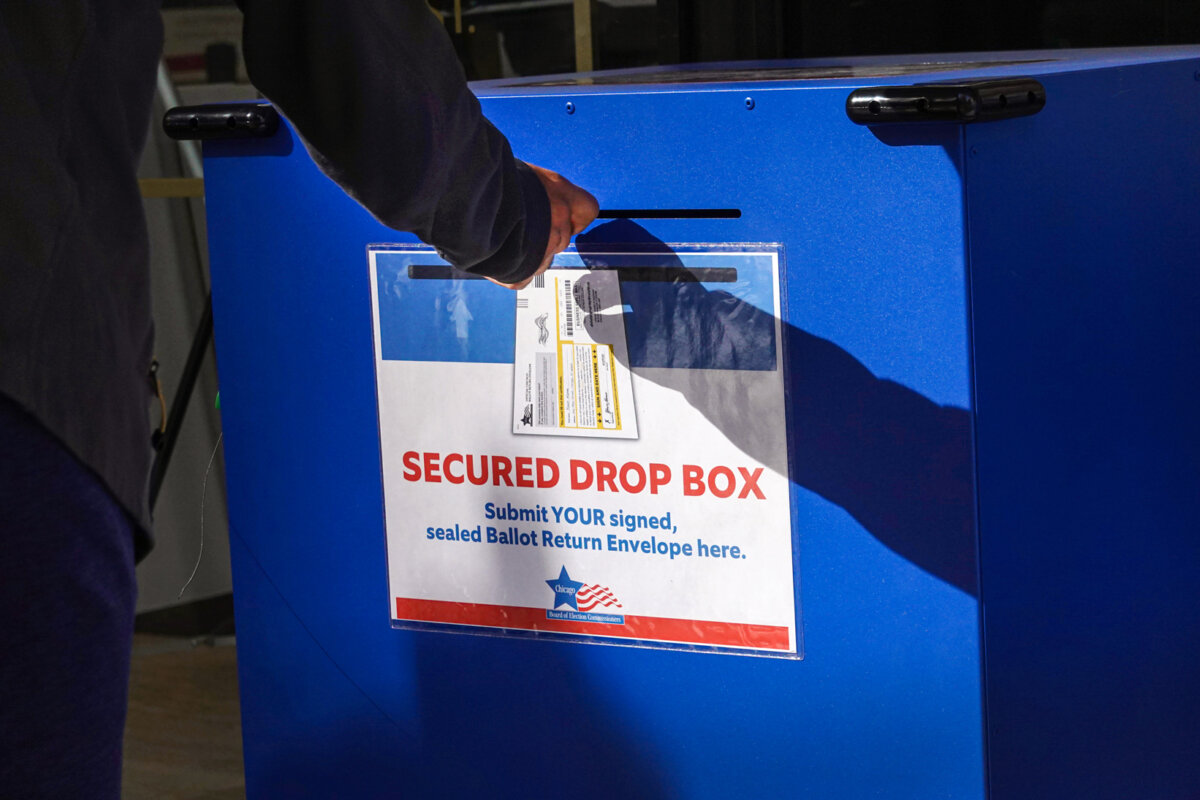


President Donald Trump wants to make mail-in ballots and electronic voting machines a thing of the past, calling for these voting methods to be replaced with paper ballots.
“Mail-in ballots are corrupt,” Trump told reporters on Aug. 18 during an Oval Office meeting with Ukrainian President Volodymyr Zelenskyy.
During that meeting, Trump announced that his lawyers were drafting an executive order to end mail-in voting. The move is sure to face challenges in federal court, particularly from states such as Oregon, Washington, and Hawaii, where elections are conducted almost entirely by mail.
Experts say the move into federal elections law pushes the limits of Trump’s constitutional authority, and that any such changes will likely need congressional approval.
Here’s what to know.
Mail-In Ballots, Electronic Voting
Mail-in ballots—ballots delivered to voters and returned by mail—have been used in the United States since the Civil War, when they were made available to soldiers fighting in the conflict. They continue to be the most common method used for voting by U.S. service members stationed abroad.
Mail-in voting is allowed in more than 30 states, and at least eight states and the District of Columbia have universal mail-in balloting. In 2024, 100 percent of ballots in Oregon and Washington state were cast by mail.
Since the 2020 election, when mail-in voting reached its highest level ever amid the COVID-19 pandemic, mail-in ballots have been under scrutiny by Trump and some other Republicans over allegations that the system had been abused to enable voter fraud.
“Elections can never be honest with mail in ballots/voting, and everybody, in particular the Democrats, knows this,” Trump wrote in a mostly all-caps post on Truth Social. “I, and the Republican Party, will fight like hell to bring honesty and integrity back to our elections. The mail-in ballot hoax, using voting machines that are a complete and total disaster, must end, now!!!”
Trump is also eying an end to electronic voting machines, which he called “Highly ‘Inaccurate,’ Very Expensive, and Seriously Controversial.”
Instead, he called for the use of paper ballots, a measure that has long been championed by critics of mail-in and electronic voting.
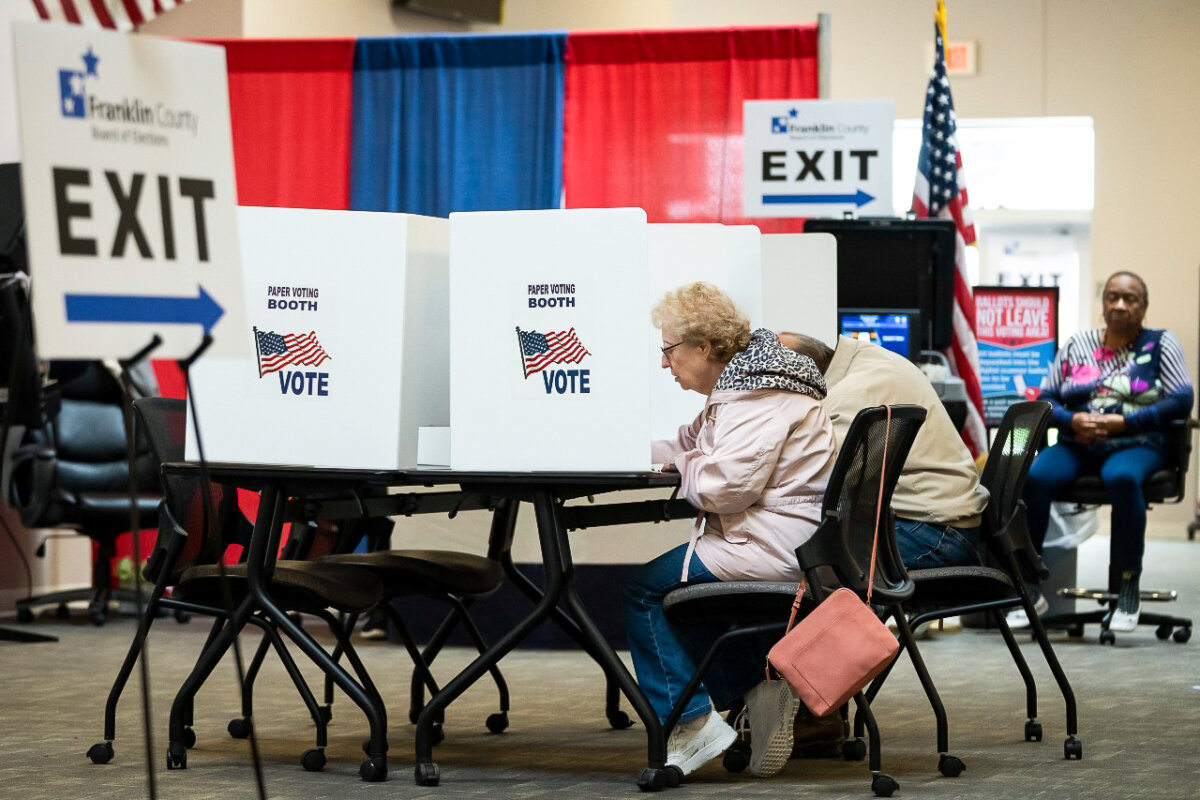
Trump said that watermark paper is “accurate and sophisticated” and 10 times less expensive than voting machines, and “leaves NO DOUBT, at the end of the evening, as to who WON, and who LOST, the Election.”
What Does the Constitution Say?
On Truth Social, Trump argued that states “are merely an ‘agent’ for the Federal Government in counting and tabulating the votes. They must do what the Federal Government, as represented by the President of the United States, tells them, FOR THE GOOD OF OUR COUNTRY, to do.”
Experts say they’re skeptical of Trump’s authority to carry out such changes unilaterally.
“The President has no power to dictate to states how they conduct national elections,” Rick Pildes, political science professor at New York University, told The Epoch Times.
He said such changes likely require congressional approval.
Under the U.S. Constitution’s elections clause, state legislatures are given broad power to determine the “times, places, and manner” of elections for congressional races, although Congress has the power to “make or alter such Regulations.”
Presidential elections are handled differently, with states historically being given broad authority to determine the process by which their slate of presidential electors are selected.
Although Congress has passed a series of changes to national election law—most prominently legislation such as the Voting Rights Act and the National Voter Registration Act—states have traditionally been given broad discretion over the particulars of how their elections are handled.
While Congress has broader authority to regulate national elections, Pildes said, it has historically been hesitant to do so.
“Congress has used that power very rarely, given the long-standing primary role state regulation has played in the way we conduct our national elections,” he said.
Florida State University political science professor Michael Morley was also skeptical.
“Elections are governed primarily by state law,” including “the rules governing absentee or vote-by-mail ballots,” he told The Epoch Times in an email.
“Congress has the authority to regulate the manner of voting in federal elections, but has not passed any statutes prohibiting the use of mail in ballots and is extremely unlikely to do so,” Morley said.
While any such overhaul could pass the GOP-controlled House, it would be far more difficult to overcome the 60-vote threshold required to get most legislation through the Senate.
Trump Seeks Broad Federal Election Reforms
Trump’s effort to get rid of mail-in ballots is only one of several recent actions made by the White House related to federal elections.
Recently, Texas Republicans, at Trump’s urging, have moved to redraw their state’s congressional maps to increase Republicans’ hold on the U.S. House delegation by five seats. California lawmakers have responded with a push to increase Democrats’ hold over California’s U.S. House delegation.
Trump has also issued a sweeping executive order related to elections.
In the March 25 directive, Trump invoked executive authority to overhaul election rules related to voter registration, election law enforcement, electronic voting machine security, voting deadlines, and foreign interference in U.S. elections.
He said the changes were intended to safeguard the vote against what he describes as “fraud, errors, or suspicion.”
After legal groups filed suit, claiming that the order exceeded presidential authority, a federal judge agreed in part with the plaintiffs, blocking implementation of much of the executive order, while allowing a directive to tighten mail-in ballot deadlines around the country to remain in force.
Trump also pushed for the passage of the SAVE Act, a major overhaul of federal election law that was passed by the House but floundered in the Senate, where it would have required support from Democratic lawmakers to pass.
 Friends Read Free
Copy
Facebook
Tweet
Friends Read Free
Copy
Facebook
Tweet