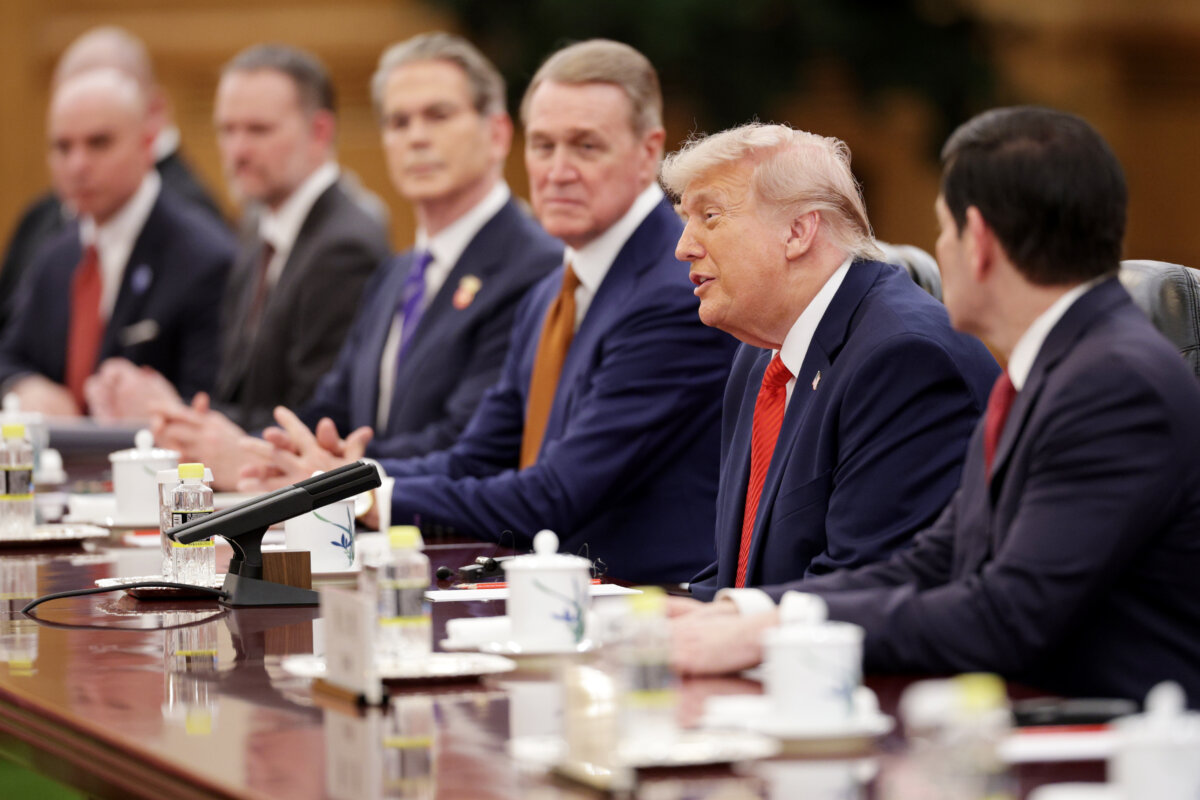


WASHINGTON—President Donald Trump will host Chinese leader Xi Jinping in Washington from Sept. 23 to Sept. 25.
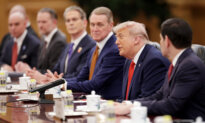
Discussions between the two leaders are expected to cover pressing global and bilateral issues, from rare earth shipments and trade frictions to tensions surrounding Taiwan.
Some critics have expressed concern about the Chinese Communist Party leader’s visit, citing the regime’s human rights record and its support for Iran.
The summit comes at a critical time, as Beijing’s rare earth export control suspension and the broader U.S.–China tariff truce are both set to expire on Nov. 10.
So all eyes will be on whether the two sides unveil an extension agreement.
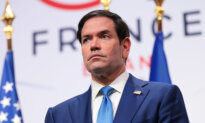
Secretary of State Marco Rubio defended Xi’s state visit amid criticism over lavish arrival ceremonies from lawmaker Sen. Roger Wicker (R-Miss.).
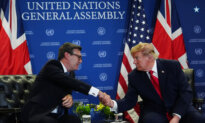
“The idea that we would not interact with them at the highest levels is irresponsible. It’s outrageous. We have to,” Rubio told reporters on Sept. 23 on the sidelines of the United Nations General Assembly in New York City.
“That doesn’t mean we don’t have strong disagreements. Of course we do. But even at the height of the Cold War, even in the midst of the threat of nuclear annihilation and life-ending on the Earth, the United States had communications and meetings often with Russian officials,” he said.
On Sept. 22, Wicker, chairman of the Senate Armed Services Committee, delivered remarks on the Senate floor, calling Xi “a brutal, unelected, and oppressive dictator.”
He mentioned the CCP’s “support for Iran, religious persecutions, and international coercion” and asked the president to raise these issues with his guest.
“The president might inquire about the purposes of China’s massive military build-up, or about China’s clear support for Iran,” he said.
“This summer, it was all over the press that China gave Iran satellite imagery intelligence, and that intelligence led to the death of American troops.”
U.S. lawmakers have urged Trump to raise the cases of wrongfully detained Americans and their families when he meets with Xi.
They are also pressing him to address prominent political prisoners in China, including Hong Kong businessman Jimmy Lai.
The president is expected to raise these issues during his meeting with Xi, as he has in previous meetings, a senior U.S. official told reporters during a call on Sept. 18.
Lawmakers also want Xi to address China’s overcapacity issue, as cheap exports flood foreign markets and threaten local industries.
“I think he knows he has a massive capacity problem, and he needs to figure out a way to cut his domestic capacity,” Sen. Bernie Moreno (R-Ohio) told The Epoch Times.
“In America, we make about 10 million cars. China makes almost 38 million, and their domestic market is going down 25 percent. So you can imagine, the amount of excess capacity is absurd. So he’s got to come to a reckoning.”
Taiwan is expected to be another key flashpoint at the upcoming Trump-Xi summit.
Beijing is demanding that Washington curb its military and diplomatic support for the island, warning in May that mishandling the issue could spark “clashes and even conflicts.”
China’s communist regime considers democratically governed Taiwan to be its province under its “one-China principle,” though Beijing has never ruled the island.
Despite Xi’s opposition, the Trump administration has signaled no shift in U.S. policy toward the island.
The United States has long maintained a “one-China policy” without recognizing Beijing’s sovereignty over Taiwan.
Washington has also been Taipei’s main arms supplier under the Taiwan Relations Act.
In December, the United States approved an $11.1 billion weapons package to Taiwan, the largest ever, to help the island counter growing Chinese military pressure.
China responded by sanctioning 20 U.S. defense firms and 10 executives on Dec. 26.
One of the targeted executives, Anduril Industries founder Palmer Luckey, dismissed the move, mocking the seizure of his “non-existent Chinese assets.”
Trump to Greet Xi With B-2 Bomber
Chinese leader Xi Jinping was last in Washington, D.C., during his official state visit in September 2015. Xi was greeted at Joint Base Andrews by then-Vice President Joe Biden.
In a rare diplomatic gesture, Trump will break White House tradition on Sept. 23 when he welcomes Xi and his wife, Peng Liyuan, on the tarmac at Joint Base Andrews.
The next day, Trump and First Lady Melania Trump will host the couple for an arrival ceremony on the State Floor of the White House, followed by a military review in the Rose Garden.
According to a schedule released by the First Lady’s office, the arrival ceremony will feature a flyover by a B-2 Spirit stealth bomber and four F-22 Raptor fighter jets.
The show carries diplomatic significance. China has pursued stealth bomber technology for years. Xi is expected to observe American military superiority firsthand, as Russian President Vladimir Putin did during his summit with Trump in Alaska in 2025.
Trump’s plan to greet Xi at the airport was a break from tradition, as U.S. presidents typically welcome foreign leaders at the White House.
Trump arrived in Beijing in May without a tarmac greeting.
In 1959, President Dwight D. Eisenhower greeted Soviet Premier Nikita Khrushchev at what was then Andrews Air Force Base when Cold War tensions between the United States and the Soviet Union were high.
In 2008, President George W. Bush also greeted Pope Benedict XVI upon his arrival at Andrews Air Force Base.
Similarly, in 2015, President Barack Obama welcomed Pope Francis on the tarmac.
 Friends Read Free
Copy
Facebook
Tweet
Friends Read Free
Copy
Facebook
Tweet