
A U.S. Air Force colonel shot down in the heart of Iran in April has credited his faith and his fellow service members for his survival of the ordeal.
In an interview with CBS News’ “60 Minutes” that aired on Sept. 13, the U.S. airman, identified only as mission call sign “Bravo,” shared the story of his rescue for the first time.
Bravo, a weapons systems officer, and his pilot, identified as “Alpha,” were stranded behind enemy lines during a nighttime mission over a mountainous area south of Isfahan on April 3, when their U.S. F-15E Strike Eagle fighter jet was hit by an Iranian shoulder-fired missile.
Bravo said the impact of the missile was like “getting hit by a freight train.”
Alpha ejected both service members from the F-15. However, Bravo’s ejection seat and parachute were damaged by the impact of the Iranian missile.
Bravo said that looking up and seeing no parachute while free-falling was “the most terrifying thing” he had ever seen.
“So I paused right then, and I prayed, ‘Lord, your will be done. But if I’m getting through this, I need help.’”
Citing a professional estimate, Bravo said he ultimately hit the ground while going between 70 and 100 miles an hour.
Asked how he survived the fall, Bravo said it was a “modern-day miracle.” Bravo suffered a broken back, a broken arm, a broken shoulder, a sprained ankle, and cuts to his head and face.
“I believe that it’s a testament to God’s provision in my life to bring me through that moment in a way that didn’t prevent injuries, but prevented any catastrophic injuries that would have affected my ability to survive,” he said. “And I’m grateful eternally for knowing that he was there with me.”
Following the F-15 crash, an Iranian news anchor announced that a bounty was being offered for the men’s capture.
Gen. Dan Caine, chairman of the Joint Chiefs of Staff, told CBS News that there was “clear intent” for Iranian ground forces to locate the two airmen.
Adm. Brad Cooper, commander of U.S. Central Command, said the United States tracked about 1,500 Iranians within a 10-mile radius.
After the crash, Bravo found himself in a desert valley with high cliffs on either side, he told CBS News. Despite his injuries, he then climbed a 7,000-foot ridgeline to reach a safer position.
The U.S. airman told CBS News that he was armed. In addition to being armed, he only had a survival vest with basic communications equipment, a minimal amount of water, and a couple of other survival tools.
Six hours after the F-15 crash, U.S. forces rescued Alpha. Bravo told CBS News that he witnessed the rescue operation. He said the rescue made him proud and was a “boon” to his survival.
The U.S. forces that rescued Alpha also attempted to locate Bravo, but were initially unsuccessful and had to withdraw from the area.
Secretary of War Pete Hegseth said the military had to make a “really tough decision” knowing that Bravo would remain in Iran for another day.
On the night of his first day stranded in Iran, Bravo was able to send a short message to U.S. forces, saying, “I’m hurt. I’m moving. God is good.”
Bravo told CBS News that his message was sent in recognition of how God had helped him survive the initial impact of the missile, his free-fall to the ground, and evading the Iranians searching for him.
To achieve the rescue, the CIA launched a deception campaign to confuse Iran’s forces and used top-secret technology to locate the downed airman.
U.S. bombers and drones also struck Iranian forces in the area ahead of the rescue mission.
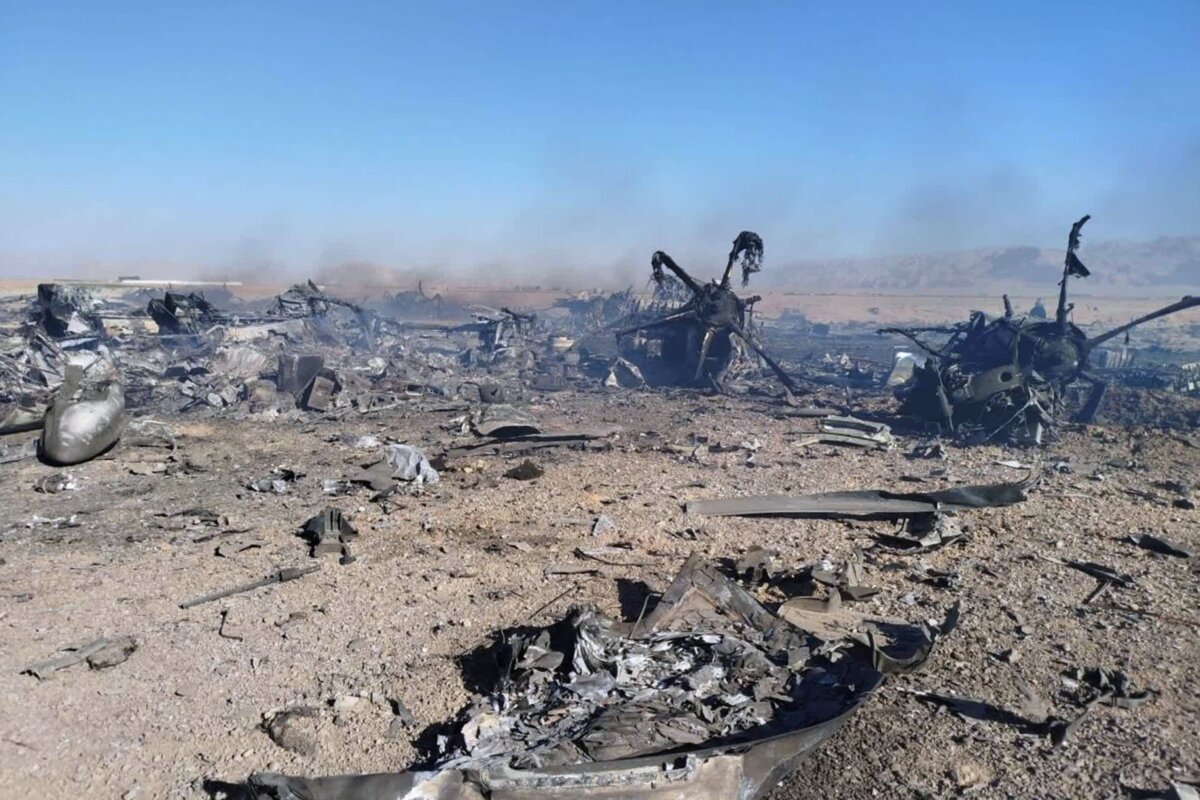
Almost two days after Bravo’s F-15 aircraft was downed, U.S. forces sent two large search-and-rescue aircraft to a makeshift runway in the desert. Little Bird helicopters were then deployed to rescue Bravo.
Bravo described seeing the Air Force pararescue operators appear on the ridgeline as “one of the greatest moments” of his life.
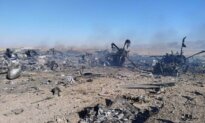
The rescue operation, however, experienced complications when the search-and-rescue aircraft’s landing gear became stuck in the desert sand. A clandestine Air Force Unit ultimately had to extract Bravo and more than 90 U.S. special operators before destroying the stranded aircraft to avoid capture by the Iranians.
Bravo’s rescue was completed on the morning of Easter Sunday roughly 50 hours after the F-15 was shot down.
“This is not a story about what I went through,” Bravo told CBS News. “Instead, it’s a story of the teamwork, the training, of the faith, of the decisions, and leadership to do something that will live in history, as an example of what America is willing to do in order to uphold our promise and leave no man behind.”
 Friends Read Free
Copy
Facebook
Tweet
Friends Read Free
Copy
Facebook
Tweet