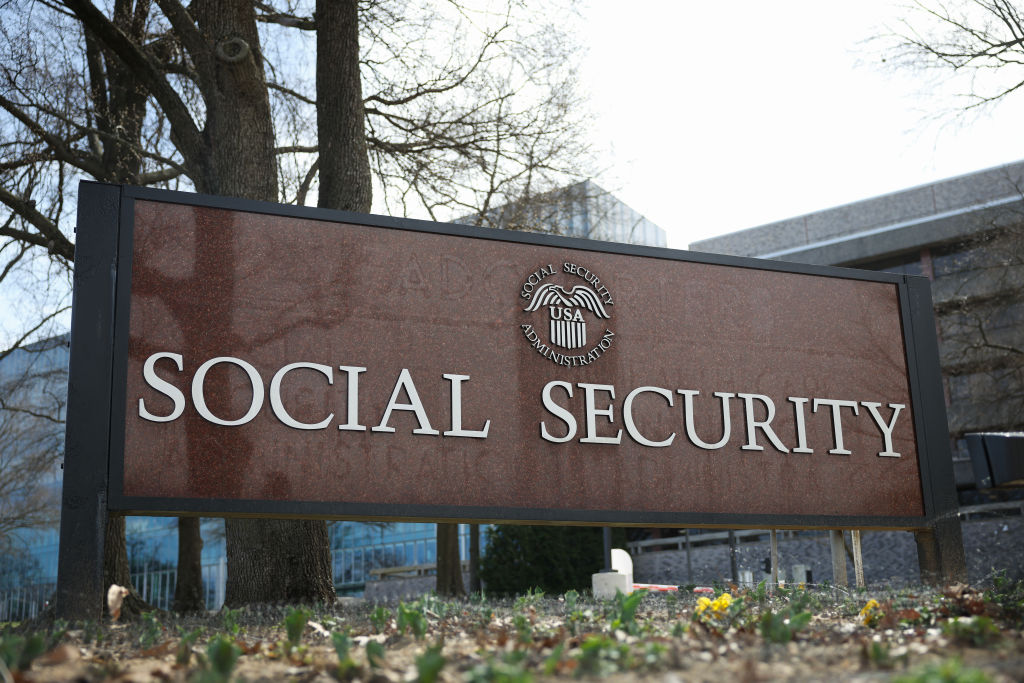

Senior citizens group AARP last week forecast a 3.6 percent increase in Social Security payments for 2027, citing current inflation data.
If the projection holds steady, it would be the largest cost-of-living adjustment (COLA) since the 8.7 percent increase that took effect for 2023 benefits. The adjustment that went into effect for payments sent out in 2026 was 2.8 percent.
While the average monthly Social Security payment in July was around $2,086, a 3.6 percent rise next year means retirees will receive about a $75 per month increase under AARP’s Sept. 11 projection. Social Security Disability Insurance recipients would receive a $59 per month increase, and the average monthly benefit for a surviving spouse would rise by about $70 per month, according to the organization.
The 2027 COLA is set to be announced in October when the Department of Labor releases its consumer price index (CPI) figures for September. The next year’s COLA is determined by the CPI for Urban Wage Earners and Clerical Workers, sometimes called the CPI-W, for the months of July, August, and September.
Noting that a number of older Americans use their monthly Social Security payments for large portions of their income, AARP Public Policy Institute official Rich Johnson said on Friday that “family budgets have been under increasing pressure because of rising prices.”
“The sooner that we can give them reliable information as to how much their benefits might [increase next year], the sooner they can start planning,” he added.
Tyler Bond, with the National Academy of Social Insurance nonprofit, added the 2027 adjustment to Social Security payments “will be particularly important” for tens of millions of older Americans due to higher costs of living.
Similarly, the Senior Citizens League said in a Sept. 11 forecast that the COLA would be 3.5 percent, or 0.1 percent lower than the group predicted last month. The average benefit will increase by $67.90, the seniors league added.
“No matter if the COLA announcement comes in slightly higher or slightly lower than our prediction, seniors will probably end up disappointed in the long run. The reality is that older Americans allocate their budgets differently than people still in the workforce, so inflation hits them differently,” Senior Citizens League President Shannon Benton said in a statement.
She added that the “CPI-W captures the experience of urban wage earners, which doesn’t represent the average senior’s budget.” Previously, Benton has called for the COLA to be based on the CPI for elderly people, or CPI-E.
The Department of Labor on Sept. 11 said the CPI increased 0.4 percent last month after edging up 0.1 percent in July. In the 12 months through August, consumer inflation advanced 3.4 perecent.
After rising by the same margin in July. The rise in the CPI was in line with economists’ expectations.
The Social Security COLA will take effect starting with payments sent out on Jan. 1, 2027.
 Friends Read Free
Copy
Facebook
Tweet
Friends Read Free
Copy
Facebook
Tweet