
U.S. Energy Secretary Chris Wright is an investor in solar start-ups, an electrical engineer, a student of nuclear physics, and a “shale revolution” pioneer, but next week he’ll be a gas salesman at the GasTech Exhibition and Conference in Milan, Italy.
“I think Europe [is] pretty dead set on getting off Russian gas. They still consume Russian gas,” he told S&P Global Vice Chair Daniel Yergin during a Sept. 5 Council on Foreign Relations presentation.
“There’s a lot of market share grab we can still do in Europe,” Wright added. “So I’m quite bullish that the market pull on natural gas growth is there.”
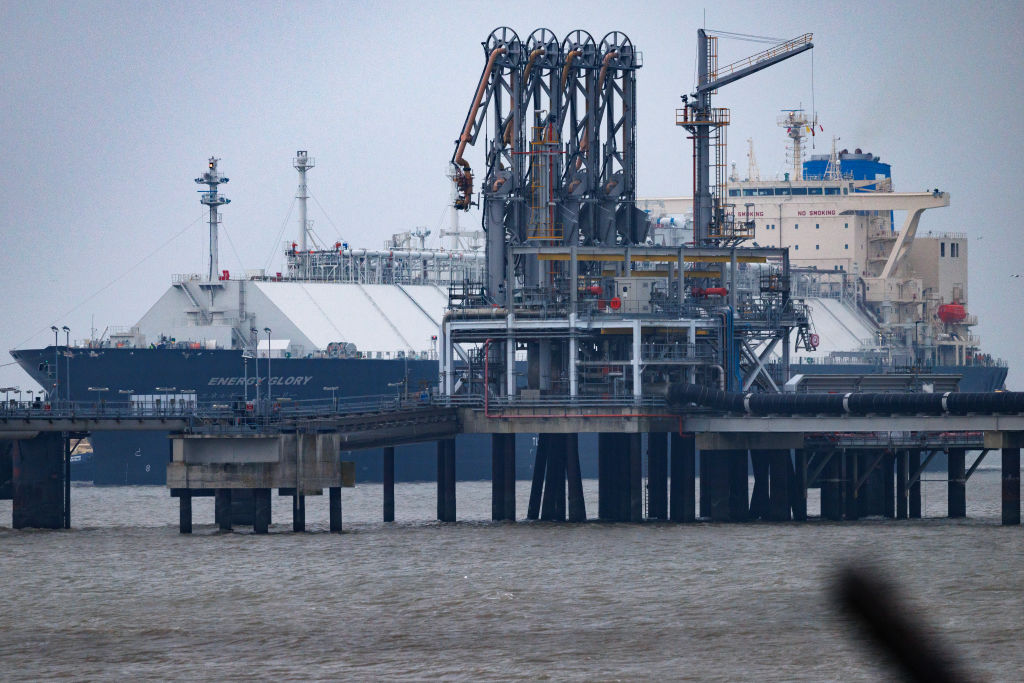
He heads to the Sept. 9-12 conference with 50,000 other attendees from 150 countries, buoyed by momentum fueled by an abundance of liquified natural gas (LNG) ready to ship from the nation’s nine export terminals.
U.S. producers exported an all-time record high of 9.33 million metric tons of LNG in August, with two-thirds—6.16 million tons—shipped to Europe, Reuters reported Sept. 2 citing preliminary ship-tracking data compiled by London-based LSEG.
With a July 27 trade deal between European Union Commission President Ursula von der Leyen and President Donald Trump for European nations to purchase $750 billion in U.S. energy commodities over the next three years, Wright believes LNG exports to the continent and elsewhere will continue to boom.
“I think it’ll become the single-largest export of our country because exports will double during this administration,” he said. “So this is a way to get European allies off Russian gas.
“So I’m going to bring that message of natural gas is a rapidly growing fuel” to Milan next week, Wright continued. “It’s a way to get off Russian gas. It’s for countries to have, to build up industries in their countries as well. It’s much cheaper than oil.”
LNG exports from the United States have increased every year since starting from scratch in 2016 to becoming the world’s largest exporter by 2023, according to the Energy Information Administration.
“From the end of the financial crisis, 2010 to today, the fastest-growing energy source on the planet, by far, is natural gas,” Wright said.
The Energy Information Administration’s March 2025 Short-Term Energy Outlook projected a 20 percent increase in U.S. domestic gas production in 2025 and a 15 percent increase in 2026.
“We expect U.S. LNG exports to continue growing, driven by the start-up of three new facilities” that will expand the nation’s export capacity by 50 percent when fully operational this year, the administration said in an April 3 analysis of the outlook.
A decade ago, none of this was envisioned. But the “shale revolution” fostered by advances in hydraulic fracturing, or fracking, technologies and techniques has revitalized U.S. natural gas and oil industries, turning the nation into an exporter rather than an importer.
“Twenty years ago, the United States was the biggest importer of natural gas on the planet, and we had over 1,000 drilling rigs drilling for natural gas in our country,” Wright said. “We’ve more than doubled our gas production, and we have 110 rigs drilling for natural gas. Like, that’s technology, that’s innovation—1,100 rigs to 110 rigs—and now we’re the world’s largest exporter.”
Under the Trump administration, energy policy is now keeping pace with advances in technology, he said, noting the president’s executive orders to “unleash” American energy, especially natural gas, will be key in paying down the nation’s $37 trillion debt.
“If we want to reduce the trade deficit, growing natural gas exports is a huge opportunity. We see it across the world,” Wright said.
“The great thing about gas is it’s much more plentiful, much cheaper than oil. China and India are going to convert a third of their trucks that run on diesel today to run on natural gas, even though they’re getting natural gas shipped over the ocean from us. So it’s much more expensive than the natural gas in the United States, but it’s still much cheaper than diesel.”
Trump’s lifting of the Biden administration’s LNG export permit pause shortly after assuming office in January has cleared the way for six new Gulf of America LNG export projects to proceed and assured customer countries to invest in needed infrastructure to accommodate natural gas, Wright said.
He recalled speaking with India’s foreign minister during Trump’s Jan. 20 inauguration. “‘We’re investing in infrastructure to use natural gas. Coal’s our main energy source. But can we trust the United States as a supplier? We’ll invest if you’re going to be a reliable supplier,’” Wright recalled the diplomat told him.
Wright said that will be his message in Milan next week.
“One of my jobs the last eight months has been through approvals, through permitting, through speaking, is to build confidence [that] the U.S. will continue to grow our LNG exports,” he said. “To build confidence that we will be a reliable supplier.”
 Friends Read Free
Copy
Facebook
Tweet
Friends Read Free
Copy
Facebook
Tweet