
The Department of State has updated the travel advisory for Israel, the West Bank, and Gaza, warning about health risks in Gaza.
Gaza has been designated as “Level 4: Do Not Travel,” the most severe of the four State Department travel advisory levels.
“Emergency and intensive care facilities are limited in Gaza. Hospitals and clinics lack basic resources,” the Aug. 26 travel advisory update said.
“If you use assistive or medical devices that require a power supply, be sure to find backup power or other ways that will sustain your device or equipment without access to power.”
The advisory asked people to ensure that their insurance includes medical evacuation coverage, and to check with their doctor about required vaccines and shots for high-risk exposure prior to visiting Gaza.
For Israel specifically, which is designated as “Level 3: Reconsider Travel,” the advisory update said that family members of U.S. government employees working in Israel can now travel there to join their loved ones.
Certain areas in Israel have been designated as Level 4. The advisory warned against traveling to areas north of Route 85 to Route 90 (south) to Route 87, citing armed conflict. Visitors must also avoid traveling within 7 miles of the Gaza Strip and within 1.5 miles of the Israel–Egypt border, except for the Taba border crossing.
U.S. government personnel seeking to travel to these places for official purposes are required to gain approval from the U.S. Embassy’s security office.
The advisory warned visitors of the risks of terrorist violence and unrest in the country. Israel’s security environment is “complex” and subject to rapid changes; violence can take place without any warning; and airlines can cancel flights due to heightened regional tensions, the State Department said.
The West Bank, like Israel, has a Level 3 designation, with the advisory warning people to reconsider traveling to the region due to unrest and terrorism.
In 2025, around 1.3 million tourists visited Israel amid a challenging security environment, according to a Dec. 31, 2025, statement from the country’s Ministry of Tourism.
Of the 1.3 million, the United States accounted for the largest share, with 400,000 tourists. This was followed by France, with 159,000 visitors, and the United Kingdom, with 95,000. Combined, the three accounted for 55 percent of all inbound tourism to the country, the ministry said.
Haim Katz, minister of tourism, said in the statement that 2026 was expected to be a year of recovery.
“The demand for Israel among supportive audiences and key countries, primarily the U.S., remains strong,” Katz said.
Conflict and Security Risks
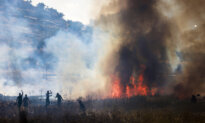
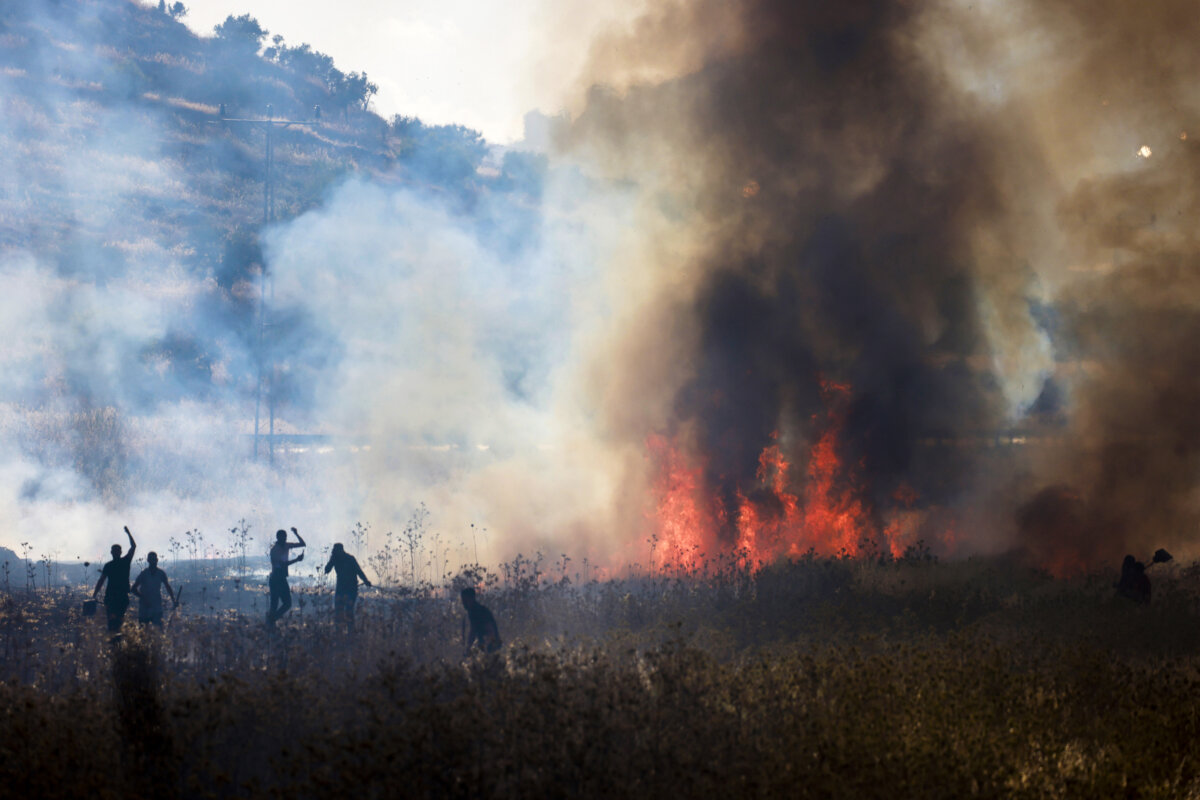
The security situation in Israel continues to remain tense as the country is in conflict on multiple fronts.
Last week, the Israel Defense Forces (IDF) launched a strike in southern Syria. According to the IDF, the strike target was a terrorist whose activity posed an immediate threat to Israeli soldiers.
The Syrian Ministry of Foreign Affairs said the Israeli attack was a violation of its territorial integrity and sovereignty.
The conflict between Israel and Hamas remains unresolved. Earlier this month, Israeli Prime Minister Benjamin Netanyahu said his country’s forces won’t withdraw from Gaza unless Hamas is fully disarmed. U.S. President Donald Trump’s Board of Peace is working to end the conflict.
Meanwhile, the U.S.–Israel war with Iran is showing no signs of easing. The United States recently rolled out “Economic D-Day” sanctions aimed at choking the Iranian regime. Tehran has vowed to retaliate against the United States.
On Aug. 1, the U.S. Embassy in Jerusalem issued a security alert, warning about the tense environment in the Middle East and the threat posed by Iran.
“The situation in the Middle East remains fluid. The Iranian regime is unpredictable,” the alert said. “U.S. diplomatic facilities, including outside the Middle East, have been targeted. Iran and groups supportive of Iran may target other U.S. interests overseas or at locations associated with the United States and Americans throughout the world, including U.S. businesses and other institutions.”
 Friends Read Free
Copy
Facebook
Tweet
Friends Read Free
Copy
Facebook
Tweet