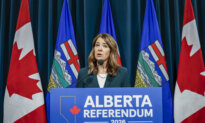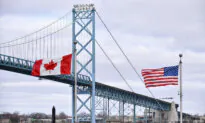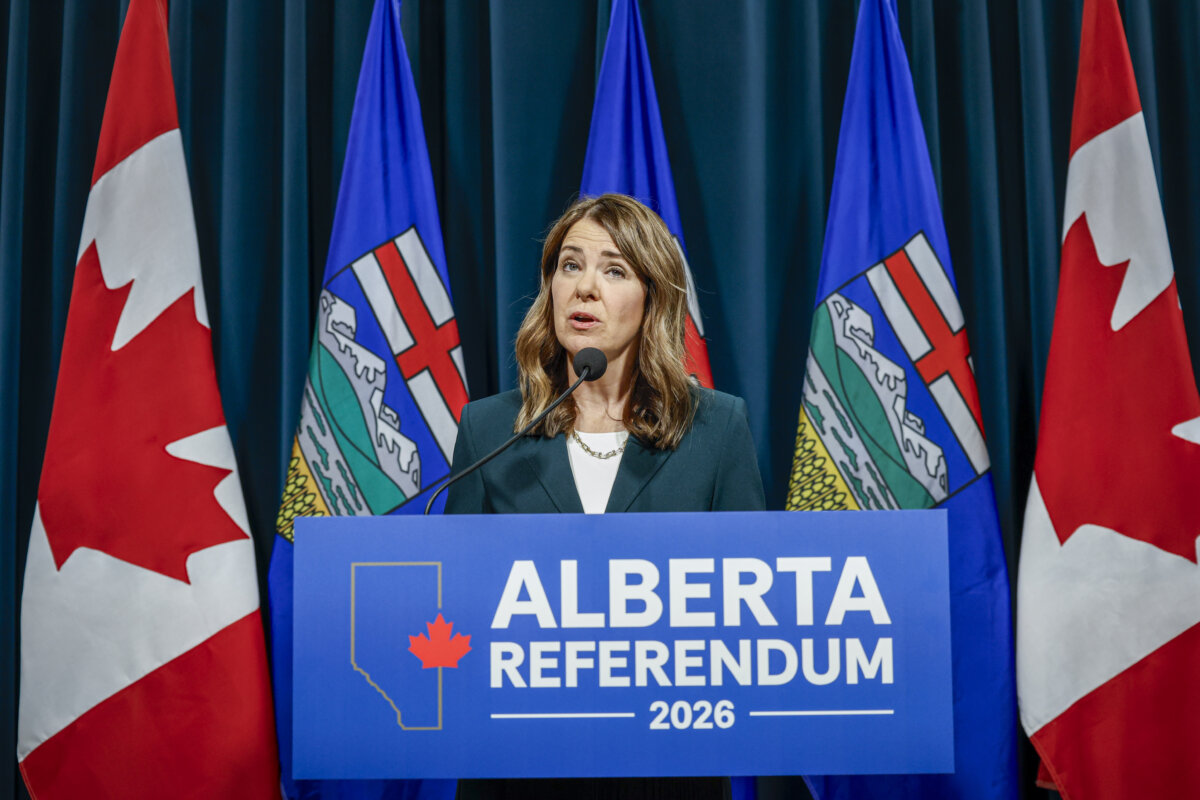

Alberta Premier Danielle Smith says she is preparing provincial measures to help businesses weather the ongoing Canada-U.S. trade war while rejecting calls to impose tariffs or export taxes on Alberta’s oil and natural gas in response to U.S. tariffs.
Smith argues that Canada should avoid a broader trade war, de-escalate tensions with Washington, and diversify its energy markets, while supporting businesses affected by U.S. tariffs.
Her comments come as some, including Ontario Premier Doug Ford and former Alberta Premier Jason Kenney, say Canada should consider tariffs on energy exports as leverage against U.S. President Donald Trump, while B.C. Premier David Eby says Canada could consider restricting U.S. thermal coal shipments from B.C. ports.
Smith’s position against counter-tariffs puts her at odds with other premiers, who have backed Prime Minister Mark Carney’s decision to impose dollar-for-dollar retaliatory tariffs on U.S. products.
At a press conference on Aug. 26, Smith said she remains opposed to tariffs “on all fronts,” although she acknowledged that Carney had matched U.S. tariffs on the same products to protect affected Canadian industries.
Warning Against Escalating Trade War
“I don’t think anyone wins a tariff war,” Smith said. “I think the way we win a tariff war is we get back to the table as quickly as possible.”
Smith has repeatedly warned against escalating the dispute through retaliatory measures, saying tariffs hurt businesses, threaten jobs, increase consumer prices, and damage relations between trading partners.
“I don’t think we should be happy about putting anyone out of business or causing any consumer to face higher prices,” she said.
Smith described the current dispute as “tragic, unjustified, and wholly unnecessary” given the longstanding economic relationship between Canada and the United States. She said Canada needs to be “wise, patient, careful, and deliberate” in responding to the tariffs.
Smith emphasized diplomacy, saying Alberta and Canada should continue working with American governors, members of Congress, and other U.S. leaders who oppose the tariffs.
“I have always felt that the greatest champion[s] of the Canadian trade picture are the American legislators and American states that are the biggest beneficiaries of it,” she said.
Opposing Tariffs or Limits on Alberta Energy Exports
Smith said she can’t think of a “more disastrous policy decision than cutting off or taxing Alberta’s oil to the United States.”
Smith noted that Canada exports roughly 4 million barrels of oil a day to the United States, and warned that if Canada imposed a 50 percent export tariff on that oil, Washington could respond with even higher tariffs on oil and natural gas that pass through the United States before being shipped to Ontario and withhold fuel supplies to Eastern Canada.
“When you take an action, you have to expect an equal and opposite and probably even more forceful reaction,” she said.
Smith argued that such a move could cause severe economic damage across Canada, cost hundreds of thousands of jobs—particularly in Alberta, Ontario, and Quebec—and encourage U.S. refineries to find alternative sources of heavy crude.
Saskatchewan Premier Scott Moe has also rejected calls to impose tariffs on oil and potash.
Rather than using Alberta’s energy exports as a bargaining weapon, Smith said the current crisis should be used to expand access to other markets and strengthen interprovincial trade.
“Let’s learn how to trade more with each other,” she said. “Let’s work at getting our product to market in new markets so that we have a diversified trade base.”
Province Plans Support for Businesses
Smith also said her government is preparing provincial measures to help businesses weather the tariffs. The federal government has announced a $7.5 billion relief package that provides loan and finance programs to affected businesses, and allows more flexibility for workers to access employment insurance.
Smith said she has established a cabinet committee that includes ministers responsible for affected industries and is tasked with assessing the effect of the tariffs and determining whether additional provincial assistance is necessary.
Further, she said the province is establishing an online portal and concierge service through which businesses can report the challenges they are facing.
Smith said Alberta is assembling a business advisory committee and plans to work directly with small- and medium-sized businesses and industry representatives.
She also wants Ottawa to pursue tax reforms, including an accelerated capital-cost allowance and lower capital-gains taxes for reinvestment, while promoting Canadian procurement and removing interprovincial trade barriers.
Team Canada Approach
Her approach contrasts with the broader provincial consensus behind Carney’s counter-tariffs, which was backed by most premiers, while Smith remains opposed to tariffs and counter-tariffs in principle.
Smith said Carney has done a good job of matching U.S. tariffs “equal for equal” to protect Canadian industries, but she does not believe retaliatory tariffs should be celebrated.
That position also distinguishes Smith from Saskatchewan’s Moe, who has typically been politically aligned with her but has supported Carney’s latest counter-tariffs.
Moe has now taken a targeted retaliatory measure against the United States, announcing that Saskatchewan will impose a 50 percent surcharge on U.S. alcohol beginning Sept. 8. But he has rejected calls to pull U.S. alcohol from shelves, saying he will leave that decision to citizens.
Saskatchewan and Alberta were the only provinces to restore American alcohol to liquor-store shelves after Canadian provinces removed the products in response to U.S. tariffs.
Saskatchewan’s Example
Smith was asked at the press conference whether Alberta would follow Saskatchewan’s example in imposing tariffs on U.S. alcohol, since the United States is tariffing Canadian alcohol.
She said her cabinet committee would discuss the issue before deciding whether Alberta should introduce new tariffs or levies on American products, but praised—and preferred—Moe’s approach to some other provinces’.
Smith said Moe has acted “in good faith” by putting American alcohol back on shelves and was now responding after the United States imposed a 50 percent tariff. She suggested Saskatchewan’s approach could provide a model for targeted retaliation.
“It’s been pointed out that there are no products from Canada that are banned from going into the United States, and so maybe this is an opportunity for all provinces to look at if we’re going to match equal for equal,” Smith said.
“We will win [the trade war] through being smarter, more strategic, more agile,” rather than through “brute force,” Smith said.
Alberta NDP Leader Naheed Nenshi criticized Smith’s approach, saying her strategy is “to do nothing.”
“She thinks being nice to the Americans and hoping they come around is a strategy. It isn’t,” Nenshi said in a social media post.
“What we need right now is tough decisions and action. Ban American booze and cancel the referendum,” he added, referring to the upcoming provincial referendum in October that includes a question on whether Alberta should remain a province of Canada or begin the process of holding a binding referendum on separation.
 Friends Read Free
Copy
Facebook
Tweet
Friends Read Free
Copy
Facebook
Tweet