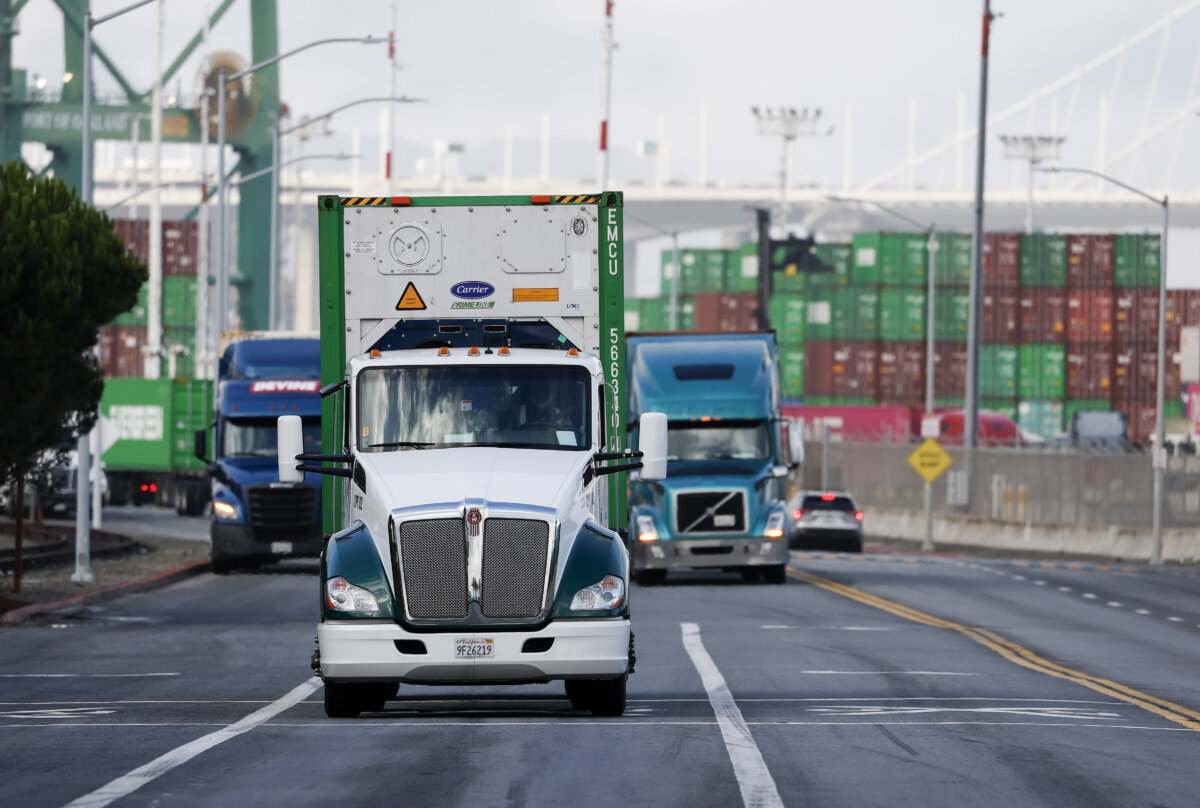

The Department of Transportation (DOT) is rolling out a new registration system for truckers, motor coach operators, and other motor carriers to tackle registration fraud in the industry and ensure that only qualified carriers are approved, the department said in a May 19 statement.
“This state-of-the-art tool—called Motus: the U.S. DOT Registration System—replaces a decades-old network of loosely connected applications rife with fraud, waste, and abuse,” the DOT said.
“Previously, bad actors applying for a federal trucking registration number could easily hide their identity, game the system, and endanger American families on the road. It’s estimated that there are several thousand suspicious registration numbers tied to fraudulent carriers.”
However, with Motus in place, the DOT will start using modern data analytics and biometrics to verify applicants with federal trucking registration numbers, and confirm that the businesses they claim to represent are “legitimate, legal entities,” it said.
The current registration is a “low-barrier, minimal-validation framework” that only requires a name, email, and physical address, the DOT said.
Trucking registration and compliance data are distributed across multiple disconnected applications, creating “systemic blind spots,” the department said. This enables fraudulent companies to remove their negative safety records, establish new identities, and avoid oversight by federal authorities.
As a result, a number of high-risk “chameleon” and reincarnated carriers are operating in the United States, exposing Americans to “preventable, catastrophic risks,” it said.
Motus aims to stop such fraud.
DOT’s actions come as the U.S. trucking industry has raised concerns about chameleon carriers. In an April 14 statement, the American Trucking Associations (ATA) called for shutting down such operators.
When chameleon carriers rack up serious safety violations, they simply dissolve the company and reappear under a brand new name and USDOT number while retaining the same trucks, people, and dangerous behaviors, according to ATA.
Some chameleon carriers spread violations across multiple USDOT numbers to avoid suspicion from authorities, it said.
“That shell game puts the public at risk and punishes the vast majority of professional drivers and motor carriers who do things the right way,” ATA said.
“America’s trucking industry was built by professionals who invest in compliance, training, and safety culture, and they deserve a system that holds everyone to the same standard. Safety isn’t optional, and it shouldn’t be erasable.”
Multiple accidents involving illegal truck drivers have occurred over the past year. In August, an illegal immigrant truck driver was accused of causing a crash that ended up killing three individuals in Florida.
In February this year, an illegal immigrant from Kyrgyzstan was arrested after the truck he drove collided with a van, which killed four people in Indiana.
In its latest statement, the DOT said the new Motus system eliminates the agency’s fragmented legacy infrastructure and ends previously exploited data silos.
By using mandatory identity verification protocols, such as digital face scans and government ID cards, together with third-party business validation, Motus “effectively suffocates” fraud during the registration process.
“Dangerous foreign drivers and the shell companies who employ them have been taking advantage of this lax, decrepit federal registration system for years. The lack of accountability is disturbing, and it’s killed American families on our roads,” Transportation Secretary Sean Duffy said.
“Thanks to President Trump, we are delivering a new registration system that will stop fraud dead in its tracks and strengthen oversight on shady carriers. And for good, honest drivers who follow the rules—our new system will improve customer service, enhance reliability, and cut down on red tape.”
Illegally Issued CDLs
Revamping the registration system is one of the latest measures taken by the DOT to tackle threats posed by dangerous drivers.
According to an audit published in September 2025 by the Federal Motor Carrier Safety Administration (FMCSA), an agency under DOT, thousands of commercial driver’s licenses (CDLs) have been improperly issued nationwide.
Of the 4 million CDLs in the country, 200,000 were issued to foreign nationals who did not live in the United States or the issuing state, the FMCSA said. Multiple states have stopped issuing licenses to out-of-state foreign drivers, including Texas, Colorado, and Washington.
In April, the DOT announced the withholding of $73.5 million in federal funds from New York after the state allegedly failed to revoke CDLs and commercial learner’s permits illegally issued to foreign nationals. However, this has been challenged in court.
The same month, New York Attorney General Letitia James and Gov. Kathy Hochul filed a lawsuit to block what it called the Trump administration’s “unlawful cancellation” of the funds, according to an April 24 statement from James’s office.
New York refused DOT’s request to revoke certain licenses because they were issued while fully complying with state and federal regulations, the statement said.
“New Yorkers depend on safe, reliable roads and bridges to get to work, take their kids to school, and keep our economy moving. The administration cannot promise funding to our state and then abruptly yank it away,” James said.
“By cancelling this funding, the federal government is putting jobs and communities at risk. New Yorkers are counting on these investments, and we will not let the president jeopardize our communities’ safety. My office is taking this administration to court to ensure New York gets every dollar it is owed.”
Meanwhile, the DOT announced on May 18 that FMCSA would invest $217 million in the trucking and bus industries, focusing on safety enforcement and workforce development.
A part of the funds will go to states to modernize their CDL systems and make sure that every trucker behind the wheel has a proper license and is qualified and well-trained.
“The investments will go towards strengthening supply chains, restoring integrity to the trucking industry by rooting out bad actors, expanding workforce opportunities for Americans, and improving roadway safety for families,” the DOT said.
 Friends Read Free
Copy
Facebook
Tweet
Friends Read Free
Copy
Facebook
Tweet