
U.S. Northern Command soldiers deployed near Rio Grande City, Texas, are using radar systems to monitor activity along the southern border, amid a “massive increase in drone use for reconnaissance” by illegal immigrants and drug smugglers, according to a Northern Command statement May 29.
Soldiers operate two radar systems, the AN/TPQ-53 rapid reaction radar that tracks rockets and mortars, and the AN/MPQ-64 Sentinel, which tracks aircraft and drones. Originally used on the battlefield, the systems have been adapted for domestic defense.
Their primary objective is to provide critical information to Customs and Border Protection (CBP) following a massive increase in drones used by illegal immigrants and drug smugglers.
“It’s not an automated system, so there is a human element to it,” said Capt. Christopher McNamara, who leads the radar platoon.
“We have to make determinations and distinctions about the data we receive and act accordingly. It can be difficult at times, given the sheer amount of data our system receives in a day,” he said.
The Northern Command has intensified surveillance in recent months along the Roosevelt Corridor. The corridor stretches from New Mexico to California and is a restricted zone for almost exclusively military use.
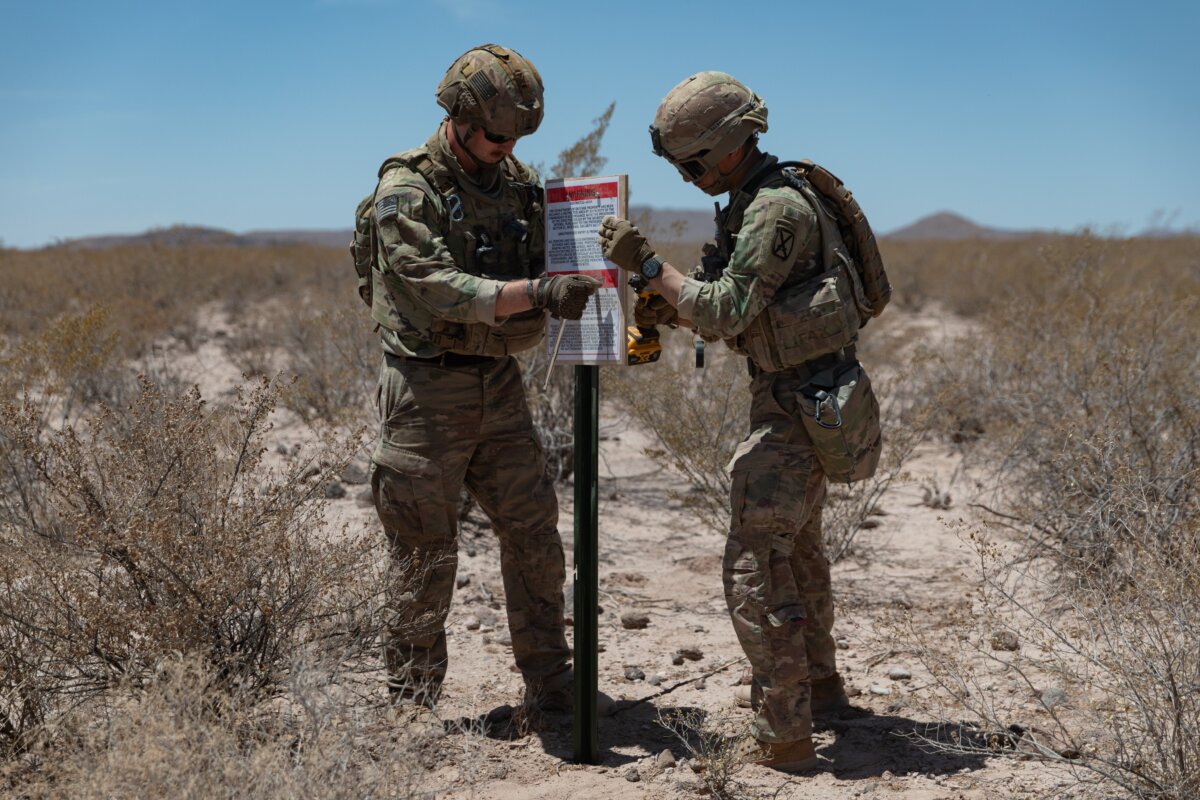
Over the past few days, troops have been marking the perimeter, installing additional fencing and warning signs to reinforce key sections of the southern border.
“These efforts support border security operations authorized by U.S. Northern Command, enhancing detection, deterrence, and domain awareness,” states a Northern Command post on May 28 on social media platform X.
The post is accompanied by images of soldiers installing a sign stating that entry through the Roosevelt Corridor is prohibited and could lead to penalties for those who violate the warning.
The Trump administration deployed more than 1,000 U.S. Northern Command troops to the southern border late last month as part of the Joint Task Force-Southern Border, a joint initiative between the Departments of Defense and Homeland Security.
That brings the total number of troops deployed to the southern border to more than 10,000.
“These deployments will provide greater agility and capability to efforts to stem the flow of illegal migration and drugs,” Northern Command commander Gen. Gregory Guillot said in a May 1 statement.
The military deployment is the result of an executive order signed by President Donald Trump on Jan. 20. It aims to protect territorial integrity and borders, granting the Pentagon control of the area.
The strip of land along the United States–Mexico boundary was originally designated by President Theodore Roosevelt in 1907 for security and public welfare purposes. It encompasses most of the southern land border, from the Pacific Ocean to the Rio Grande, excluding certain Native American reservations and private lands.
The troops are also equipped with Stryker vehicles, which allow infantry to close distances and engage enemies through a remote weapons station system.
 Friends Read Free
Copy
Facebook
Tweet
Friends Read Free
Copy
Facebook
Tweet