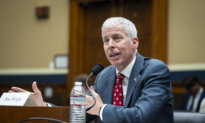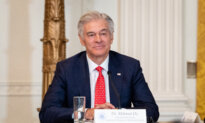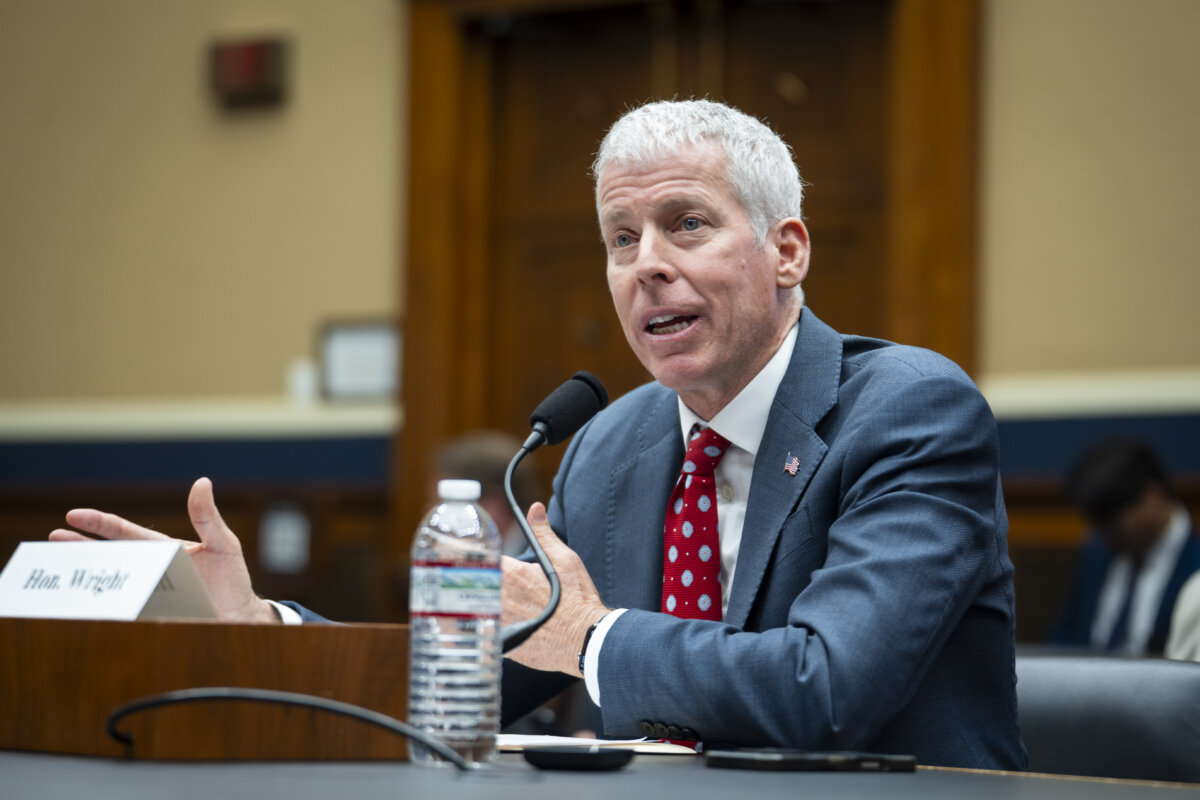

WASHINGTON—U.S. Energy Secretary Chris Wright said on Aug. 26 that the nuclear cooperation agreement signed between Washington and Riyadh is now in Congress for review.
“I can absolutely confirm that the agreement has been sent to Congress,” he told reporters during a press conference in Washington.
Wright hailed the deal as a “great step forward” for U.S.–Saudi relations and a boost to revive the U.S. nuclear energy industry.
On July 22, the administration announced it had signed a 30-year, multi-billion-dollar partnership agreement to develop the kingdom’s nuclear infrastructure.
The 123 Agreement, named after Section 123 of the U.S. Atomic Energy Act, is designed to allow American companies to play a key role in Saudi Arabia’s civilian nuclear sector while limiting Russian and Chinese influence.
Some Democratic lawmakers, however, voiced strong opposition to the deal, stating that domestic uranium enrichment without strict safeguards could spark a Middle East arms race and give Riyadh a path to develop nuclear weapons.
Congress has 90 days to review the agreement.
Some members of Congress are expected to block the deal as they oppose any nuclear cooperation with Riyadh.
However, to override the president’s veto and stop the deal, Congress would need a two-thirds majority in both the House and the Senate.
Sen. Ed Markey (D-Mass.) described the deal as “irresponsible and dangerous,” while Sen. Jeff Merkley (D-Ore.) called it a “massive mistake.”
In March, Markey and Merkley reintroduced the “No Nuclear Weapons for Saudi Arabia Act,” which requires congressional approval for any nuclear agreement with Saudi Arabia.
Reps. Don Beyer (D-Va.) and John Garamendi (D-Calif.), cochairs of the Nuclear Weapons and Arms Control Working Group in the House, also raised concerns about the agreement, saying that it “fails to include the safeguards” necessary to prevent Riyadh from pursuing nuclear weapons.
Wright defended the deal, stating that it has “comprehensive safeguard agreements.”
“This will be the safest possible way to exchange commercial technology,” he told reporters. “The International Atomic Energy Agency is the monitor of those safeguards.”
Wright made these remarks at an event he hosted in Washington for the agency’s Atomic Technologies Licensed for Applications at Sea initiative.
The two-day event brought together business leaders, regulators, and heads of delegations from more than 30 countries to promote the use of civilian nuclear-powered ships and floating nuclear power plants.
“American nuclear innovation, American nuclear technologies are moving at light speed,” Wright said.
He also denied the claims that the Saudi nuclear deal will immediately grant domestic uranium enrichment.
“There’s no reason in the near term to bring enrichment technology to Saudi Arabia. They don’t even have a nuclear reactor yet,” he said.
“So, I would say that’s something many years down the road, and it would only happen if, at that time, Saudi Arabia and the United States government both mutually agree this makes commercial sense, and this fits into our national security framework.”
Under the agreement, U.S. companies will provide new power reactors and other nuclear technology, and some foreign suppliers could play a secondary role.
Westinghouse Electric and its AP1000 reactor are expected to benefit significantly from the deal.
Jennifer Gordon, director of the Nuclear Energy Policy Initiative at the Atlantic Council, called the deal “a win for the United States over Russia and China.”
“A 123 agreement between the United States and Saudi Arabia is not only a win for the US nuclear energy industry,” she wrote in a note in July. “It is also a victory for the US-led global nonproliferation regime.”
U.S. President Donald Trump earlier said that he would make the agreement contingent upon Saudi Arabia’s normalizing relations with Israel by joining the Abraham Accords.
The president wants the nuclear agreement and the Abraham Accords to happen together, Wright said.
“I think he sees a window of opportunity to make that happen,” he said.
 Friends Read Free
Copy
Facebook
Tweet
Friends Read Free
Copy
Facebook
Tweet