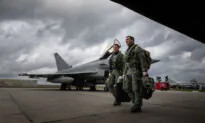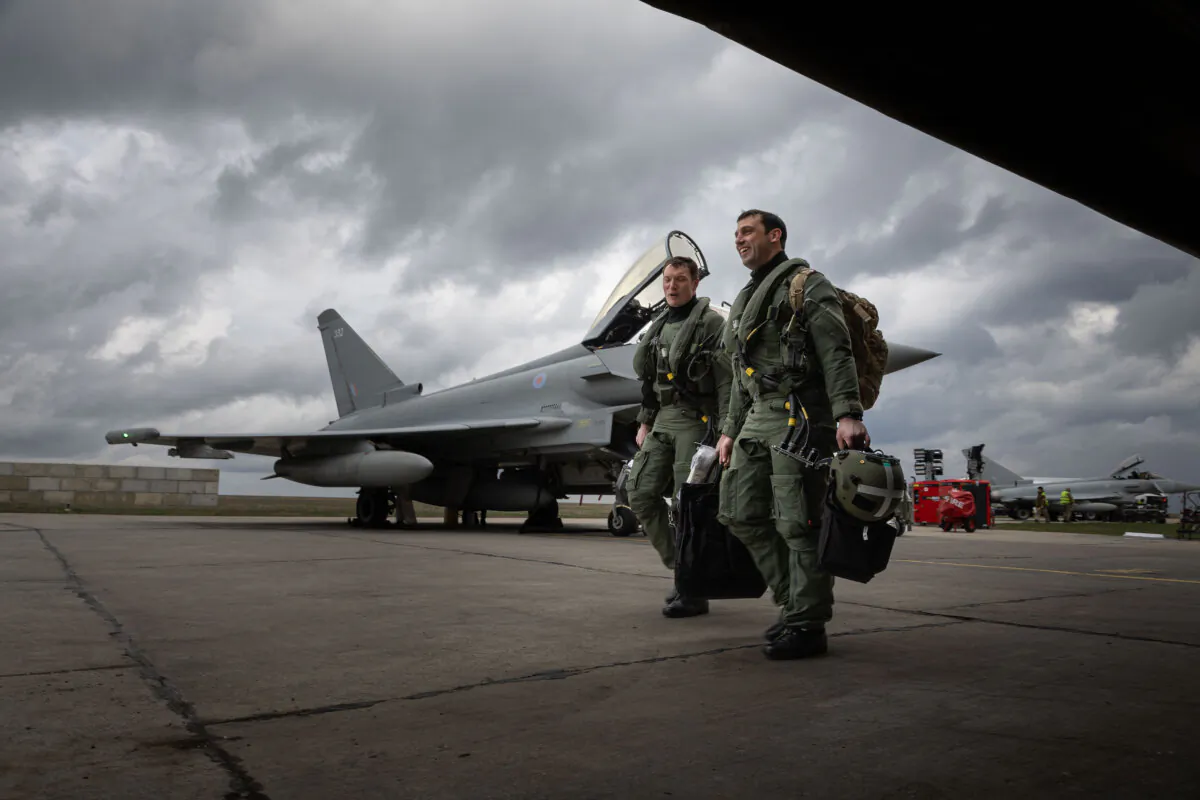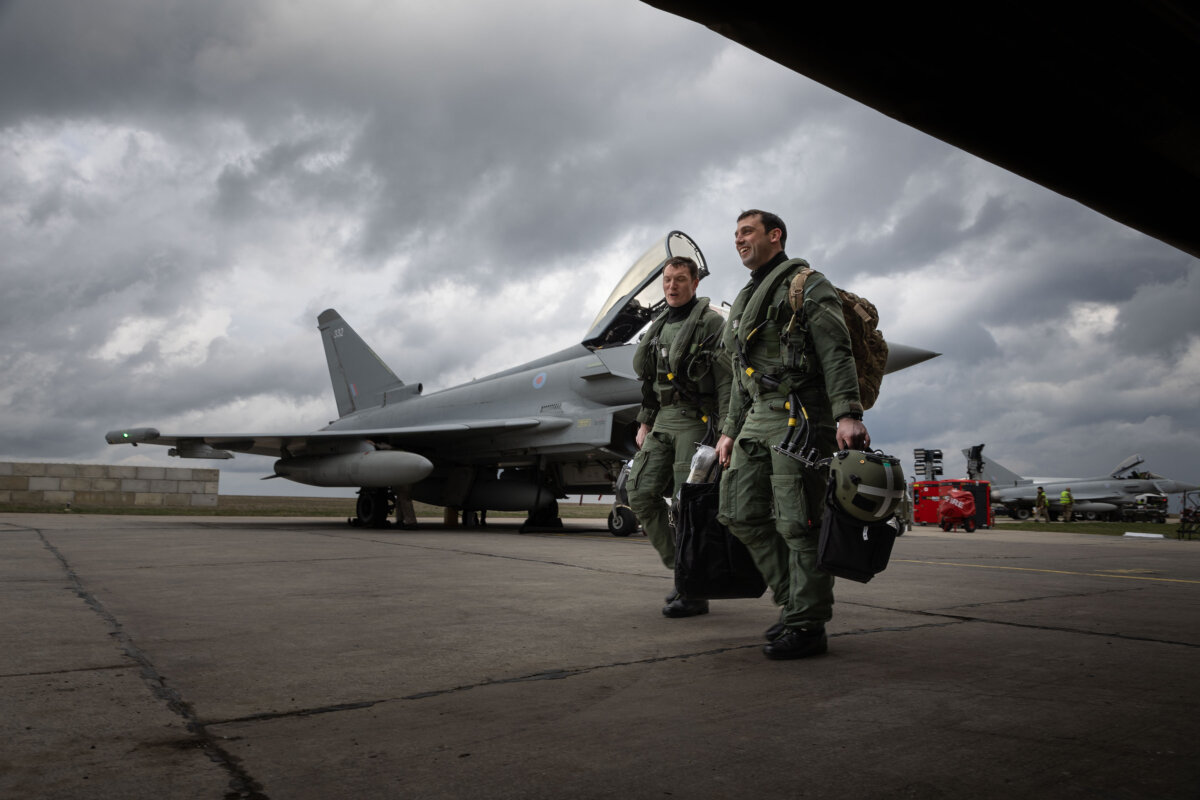

The United States plans to reduce the number of troops stationed on NATO’s eastern flank as part of a global force reassessment, Romania’s defense ministry said on Oct. 29.
“The American decision is to cease the rotation of a brigade in Europe that had elements in several NATO countries,” the ministry said in a statement.
The change affects troops who were to be stationed at Romania’s Mihail Kogalniceanu Air Base and in Bulgaria, Hungary, and Slovakia, Romanian Defense Minister Ionut Mosteanu told reporters at a press conference.
The ministry said the decision was expected, given Washington’s shifting priorities, and that roughly 1,000 U.S. troops would remain stationed in Romania. It did not specify how many would be withdrawn.
“The decision also took into account the fact that NATO had strengthened its presence and activity on the Eastern Flank, which allows the United States to adjust its military posture in the region,” the ministry said.
Romanian President Nicusor Dan said the change would return the U.S. presence to pre-Ukraine war levels and would not weaken Romania’s security. He added that deterrence on NATO’s eastern flank would be maintained through stronger European participation and close coordination with the United States.
A NATO official said the alliance was in close contact with Washington on force deployments and noted that such adjustments were not unusual.
Italian Defense Minister Guido Crosetto told Sky News that the U.S. shift in focus had begun under former U.S. President Barack Obama.
“The U.S. is concerned about competition with China, and Europe must guarantee its own defense,” Crosetto said.
The Trump administration has previously told European allies they will need to take greater responsibility for their own security as Washington pivots attention toward its borders and the Indo-Pacific.
The U.S. move to reduce troop numbers along NATO’s eastern flank comes as Russia’s war in Ukraine continues, prompting renewed debate in Europe over reliance on U.S. military power. Romania, Poland, and the Baltic states host thousands of allied troops as part of NATO’s enhanced forward presence.
Despite concern among allies about a possible scaling back of U.S. forces, Washington has sought to reassure key partners. Polish officials said they have received no indication of any reduction in the roughly 10,000 U.S. troops stationed in Poland.
Former Polish President Andrzej Duda said in February that visiting U.S. officials had assured him that there were “absolutely no American intentions to reduce activity” in that part of Europe. His remarks followed meetings in Warsaw with U.S. War Secretary Pete Hegseth and U.S. President Donald Trump’s special envoy for Ukraine, Keith Kellogg.
Trump has also personally reaffirmed the U.S. commitment to Poland. During a September meeting at the White House with Polish President Karol Nawrocki, he dismissed reports of a potential drawdown and said U.S. forces would “be staying in Poland.”
“If anything, we’ll put more there if they want,” Trump said at the time, praising Poland as a model ally for consistently exceeding NATO’s defense-spending targets.
Romania’s Mosteanu echoed that message of continuity, telling reporters at an Oct. 29 press conference that the presence of U.S. and allied troops would continue to serve as a strong deterrent on NATO’s southeastern flank.
“The allied presence remains considerable in Romania, from U.S. troops to France, Belgium, Luxembourg, Portugal, North Macedonia,” he said, adding that Romania had obtained an advanced air defense system from the United States that would bolster its ability to protect its skies against the incursion of drones.
The Epoch Times reached out to the Pentagon for comment but did not receive a response by publication time.
Reuters contributed to this report.
 Friends Read Free
Copy
Facebook
Tweet
Friends Read Free
Copy
Facebook
Tweet