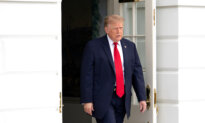


The Trump administration is taking steps to prevent Chinese nationals from exploiting a visa-free travel program to the Northern Mariana Islands, according to White House border czar Tom Homan.
Speaking to Epoch Times senior editor Jan Jekielek in an “American Thought Leaders” interview aired on Sept. 26, Homan called birth tourism a “driver of illegal immigration.”
When asked specifically about Chinese travelers utilizing the U.S. territory’s visa-free entry to give birth on U.S. soil, Homan confirmed federal authorities are moving to close the channel.
“We’re on it,” Homan said. “It’s being addressed.”
The push to close the U.S. territory’s visa loophole comes amid an ongoing legal battle over U.S. citizenship.
After the Supreme Court struck down President Donald Trump’s 2025 executive order restricting birthright citizenship for children of illegal aliens and temporary visitors as violating the 14th Amendment, the president issued two narrower orders, including one banning birth tourism.
On Sept. 2, a federal judge in Maryland blocked enforcement of the new order restricting who qualifies for citizenship at birth.
Birth tourism refers to the practice of foreign nationals traveling to the United States, often on a temporary visa, to give birth so their child can automatically obtain U.S. citizenship.
Currently, Chinese citizens can visit the U.S. territories of Guam and the Northern Mariana Islands visa-free for up to 14 days under the program.
Homan named China and Russia, calling them the “two biggest abusers” of birth tourism in the United States. He warned that children of the two nations will eventually have the legal right to vote and run for public office.
“I just think it’s a national security vulnerability, and we need to address it,” Homan said.
Homan expressed disappointment at the Supreme Court’s ruling, but said “it’s Congress’s job.”
“If you care about our national security, you need to address this,” he said.
A group of Republican lawmakers from both chambers of Congress introduced the One Nation, One Visa Policy (H.R.7780 and S.3857) earlier this year. The legislation would bar Chinese nationals from entering the United States and its territories without a valid visa, a measure intended to curb birth tourism by Chinese nationals.
“It’s time to end this abuse by Communist China. America’s laws must not be gamed, our generosity must not be exploited, and our national security must not be compromised,” Rep. Tom Tiffany (R-Wis.), who introduced the House bill, said in a statement at the time.
In April, four Republican senators sent a letter to Homeland Security Secretary Markwayne Mullin and Interior Secretary Doug Burgum, urging them to end the 14-day visa-free program for Chinese nationals. They said the program “threatens America’s national security and encourages illegal drug trafficking and birth tourism.”
In May 2025, Fang Ye, a Chinese national, was sentenced to 25 years in prison in Saipan for conspiring to possess more than 500 grams of methamphetamine with the intent to distribute.
According to prosecutors, Fang arrived in the Northern Mariana Islands from China in 2016 and overstayed his visa-free admission. He subsequently operated a birth tourism business in Saipan for three years, hosting more than 200 pregnant women and their families from China who traveled to the island to give birth. He later became involved in trafficking methamphetamine.
Fang’s co-conspirator, Yang Liang, was sentenced to 55 months in prison in Saipan for trafficking methamphetamine in August 2025.
Beyond birth tourism, Homan said federal law enforcement and intelligence agencies have been working to track military-aged Chinese males entering the country, noting that the mass influx of these individuals does not occur “without the coordination of the Chinese government.”
Homan added that he expects Immigration and Customs Enforcement arrests and deportations to reach record figures next year.
“You can’t have strong national security if you don’t have border security,” Homan said. “We need to know who’s coming in, what’s coming in, where it’s coming in, [and] why it’s coming.”
 Friends Read Free
Copy
Facebook
Tweet
Friends Read Free
Copy
Facebook
Tweet