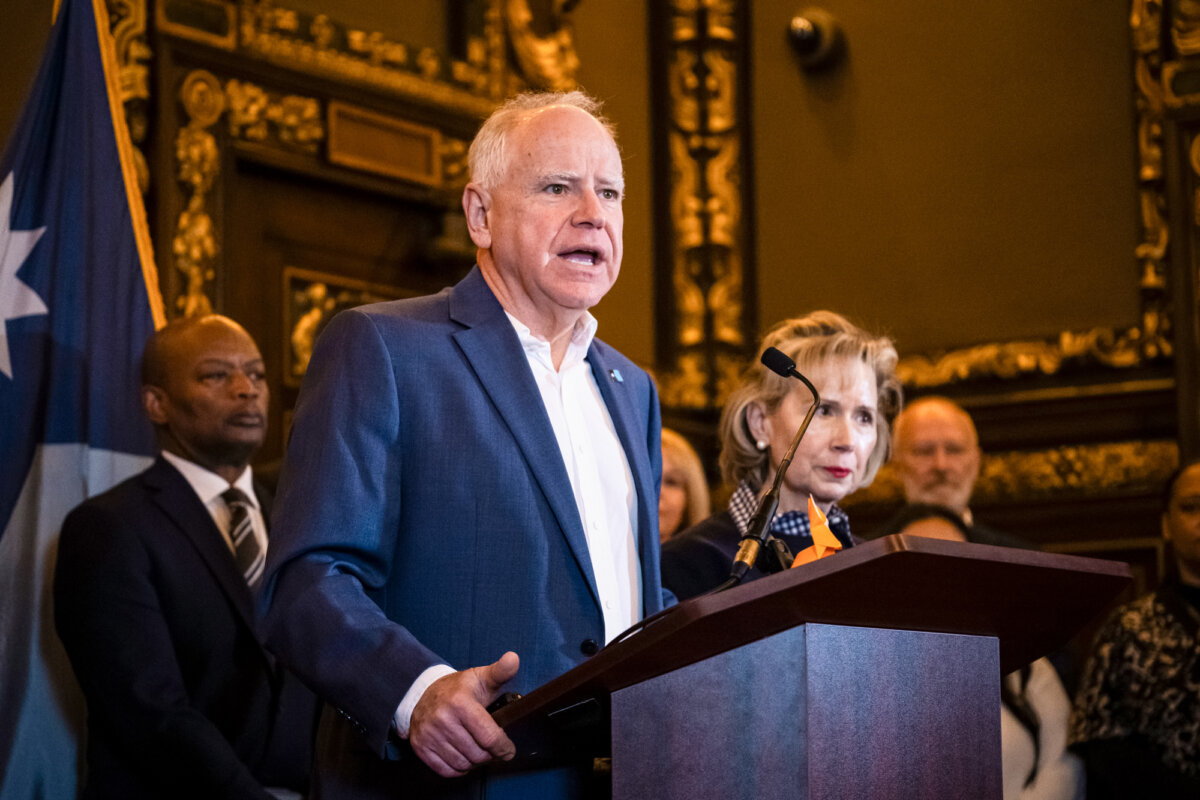

Minnesota Gov. Tim Walz on Thursday proposed a $10 million one-time relief package for the state’s small businesses he said were impacted by recent federal immigration enforcement operations, pitching the plan as a way to help businesses keep workers on payroll and stabilize after weeks of disruption.
The proposal followed an announcement by White House Border Czar Tom Homan that the federal surge in Minnesota is coming to an end after six weeks. Walz said the state remains focused on recovery as federal authorities “move on to whatever next thing they want to do.”
The Democratic governor, during a pre-scheduled event announcing the plan, accused the Trump administration of implementing a “campaign of retribution” that “has inflicted long-term damage on Minnesota communities.”
Walz also discussed Homan’s withdrawal announcement from earlier in the morning.
“Recovery will not happen overnight. Families, workers, and business owners are feeling the effects, and our responsibility is clear: We will help rebuild, stabilize these businesses, protect jobs, and ensure Minnesota’s economy can recover and thrive.”
Walz said the $10 million would be included in his 2026 legislative session package and administered through the Minnesota Department of Employment and Economic Development (DEED). Under the proposal, the state would distribute partially forgivable loans ranging from $2,500 to $25,000 to eligible businesses that can show substantial revenue losses during specified dates tied to the surge.
The governor said the state would propose “a first-time $10 million, one-time targeted loans, forgivable loans,” calling it “a very small first step, but it is a concrete step that can make a difference.”
He also said he wants the federal government to pay for the economic harm he said the surge caused. “The federal government needs to pay for what they broke here,” Walz said. “You don’t get to break things and then just leave without doing something about it.”
At Homan’s earlier press conference, he described increased coordination with state and local officials. He said that the surge led to thousands of arrests, and that the effort made the Twin Cities safer.
Homan also rebutted complaints about ICE tactics during the surge, saying agents did not arrest anyone inside hospitals, schools, or churches, as had been alleged by local officials. He said operations would continue in Minnesota after the drawdown and that enforcement would prioritize people he described as public safety and national security threats, while still enforcing immigration law more broadly.
DEED Commissioner Matt Varilek said the state expects the economic impacts to last beyond the end of the surge. He said reduced foot traffic and revenue have followed as some workers and customers “don’t feel comfortable showing up.”
Varilek said the proposal would offer loans at zero percent over three years. After one year, businesses could seek 50 percent forgiveness by proving they were substantially impacted by the federal presence, he said. He said eligibility would target businesses with annual revenues between $200,000 and $4 million.
Varilek said DEED is also asking private-sector partners to temporarily waive or reduce certain fees charged to small businesses. He said the state is working with groups such as the Latino Economic Development Center and philanthropic and business partners that have helped create private relief efforts.
In a separate statement earlier this week, Walz said the federal presence has reduced foot traffic, created staffing challenges, and increased fear and uncertainty. “When people are afraid to go to work, afraid to shop, or afraid to gather in their community, it hurts families, neighborhoods, and our entire economy,” he said.
That statement cited a January survey by the Latino Economic Development Center that found 44 percent of surveyed businesses temporarily closed, fewer than 20 percent were operating normally, about 40 percent said they could remain viable with outside support, 25 percent reported downsizing staff to stay open, and 9 percent said they were considering permanent closure.
The statement also cited estimates from the City of Minneapolis that businesses are losing $10 million to $20 million in revenue each week, with the Lake Street corridor losing $46 million between December 2025 and January 2026.
A Meet Minneapolis survey found 90 percent of restaurants, hotels, retail, and service providers reported being impacted, 72 percent reported staffing absenteeism, and 90 percent said fear and stress are affecting operations. The statement also cited data from Redfin showing pending home sales in the Twin Cities metro area fell 19.2 percent last month compared with a 1.6 percent national decline.
 Friends Read Free
Copy
Facebook
Tweet
Friends Read Free
Copy
Facebook
Tweet