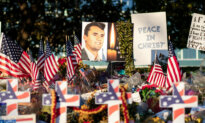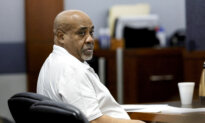

A preliminary hearing in Charlie Kirk’s murder case this week offered the first detailed look at the evidence against Tyler Robinson, the man accused of fatally shooting the conservative commentator and founder of Turning Point USA.
At the hearing in Provo, Utah, prosecution witnesses testified about private chat messages, notes, and text messages between Robinson and his roommate and romantic partner, Lance Twiggs.
Robinson, 23, is charged with aggravated murder and faces a possible death sentence if convicted of slaying Kirk as he spoke at Utah Valley University on Sept. 10, 2025. Robinson has yet to enter a plea.
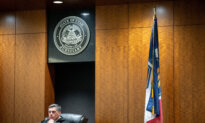
Judge Tony Graf Jr. of the Fourth District Court of Utah will decide whether the prosecution has demonstrated probable cause to proceed to trial. Oral arguments on probable cause are expected on Sept. 1.
Here’s what to know about the preliminary hearing that ended on July 10.
Alleged “Confession”
The most dramatic testimony of the hearing came on July 9, when Robinson’s former roommate said Robinson cried and regretted his actions after Kirk was fatally shot.
The testimony, which consisted of video that was at times blank, leaving only audio, was presented on the fourth day of the preliminary hearing.
Twiggs told police in a recorded interview that he spoke with Robinson in person when he returned to their residence after Kirk’s fatal shooting.
Twiggs said he asked Robinson whether the information in their previous text thread after the shooting was true.
“He said he wishes he hadn’t done it,” Twiggs said, adding that Robinson was agitated and crying during the conversation.
Text messages between the couple were also read by a Utah state investigator who was present when Twiggs spoke with police.
“Twiggs asked, ‘You weren’t the one who did it right?’” the investigator said. “And Tyler says: ‘I am. I’m sorry.’”
He told investigators the man in the campus photos released to the public during a manhunt for Kirk’s killer looked like Robinson. They included a widely viewed photo of a man in a ball cap wearing jeans walking up stairs.
Twiggs said Robinson asked him about the whereabouts of a bullet-engraving tool after saying he intended to go on a hunting trip with his family.
Surveillance Video
Never-before-seen surveillance video presented in court on July 7 allegedly placed Robinson on campus at the time of the shooting.
Police determined the plates on a car seen entering the parking garage that day belonged to Robinson, according to the prosecution.
A lead investigator at Utah’s Department of Public Safety testified that video showed that a man identified as Robinson visited campus on the day of the fatal shooting.
The video allegedly showed Robinson dressed in a T-shirt and shorts climbing the garage stairs. He interacted with Turning Point USA members and ate at a Chick-fil-A restaurant before walking off campus, the investigator said.
A later video of what appeared to be the same man showed that he had changed clothes, this time wearing pants, and that he was walking with a limp.
Footage showed the man making his way to the Losee Center, where he rolled over a railing onto the rooftop.
Just after the fatal shot rang out, the same man ran across the roof, dropping to the ground while holding an object in his hands before exiting the campus, according to testimony.
According to the prosecution, a rifle was later found where Robinson allegedly entered a wooded area after jumping from the roof.
DNA Evidence
The prosecution also offered DNA evidence allegedly linking Robinson to items found at the crime scene.
Those include a towel wrapped around a rifle stashed in the nearby woods and a screwdriver found near a “sniper pad” on the Losee Center roof.
The state investigator who oversaw the crime scenes and physical evidence in the case testified that DNA testing determined that it was very probable that DNA belonging to Robinson and Twiggs was present on the items.
But during cross-examination of an FBI DNA analyst, the defense sought to poke holes in the process to cast doubt on its validity.
The defense also called its own DNA expert to the stand to testify that newer technology exists. The prosecution countered that it was irrelevant in a probable cause hearing.
Hearsay and Cameras
The defense objected throughout the hearing to the broadcasting of the courtroom proceedings and to the use of hearsay evidence.
Robinson’s attorneys sought to close all or part of the hearing to the public and media, which Graf denied.
Attorneys for the media and widow Erika Kirk argued that the public and family members had a right to see the evidence.
However, during the last day of the hearing, the media accidentally captured and broadcast a letter written by Robinson, prompting the judge to bar cameras from showing any other exhibits.
The defense was also successful in restricting media and public viewing of portions of Twiggs’s recorded testimony, which was hearsay, claiming that it could prejudice a future jury pool.
Twiggs’s statement is considered hearsay because he testified about what someone else said. Normally, hearsay isn’t allowed in trials.
However, preliminary hearings in Utah allow the prosecution to introduce “reliable hearsay.”
Transgender Connection
Robinson was dating Twiggs, who identifies as transgender and also goes by the name Luna.
Twiggs questioned Robinson about his involvement in the shooting via a string of text messages later presented in court.
“Why did I do it?” Robinson’s text read. “I had enough of his hatred. Some hate can’t be negotiated out.”
However, Twiggs testified that Robinson didn’t speak in detail about politics or LGBT issues. Also, he didn’t recall Robinson talking about Kirk before the shooting.
The hearing touched on left-wing political and social ideologies that are likely to receive more attention if the case goes to trial.
Kirk was fatally shot as an audience member questioned him about transgender-identifying mass shooters.
The prosecution entered evidence of engraved bullet cartridges found at the crime scene referencing homosexuality and anti-fascism.
One read: “Hey fascist! Catch!” That was followed by a series of up arrow symbols that authorities have noted in the past may be code used in the video game “Helldivers 2.”
“If you read this, you are gay LMAO” appeared on another of the cartridges.
The phrase “Oh bella ciao,” which repeats “ciao,” was also found on a cartridge, according to the prosecution. It is believed to be linked to an Italian anti-fascist song from the World War II era. In recent years, “Bella ciao” has been used as a slogan or rallying cry by left-wing activists.
Stacy Robinson contributed to this report.
 Friends Read Free
Copy
Facebook
Tweet
Friends Read Free
Copy
Facebook
Tweet