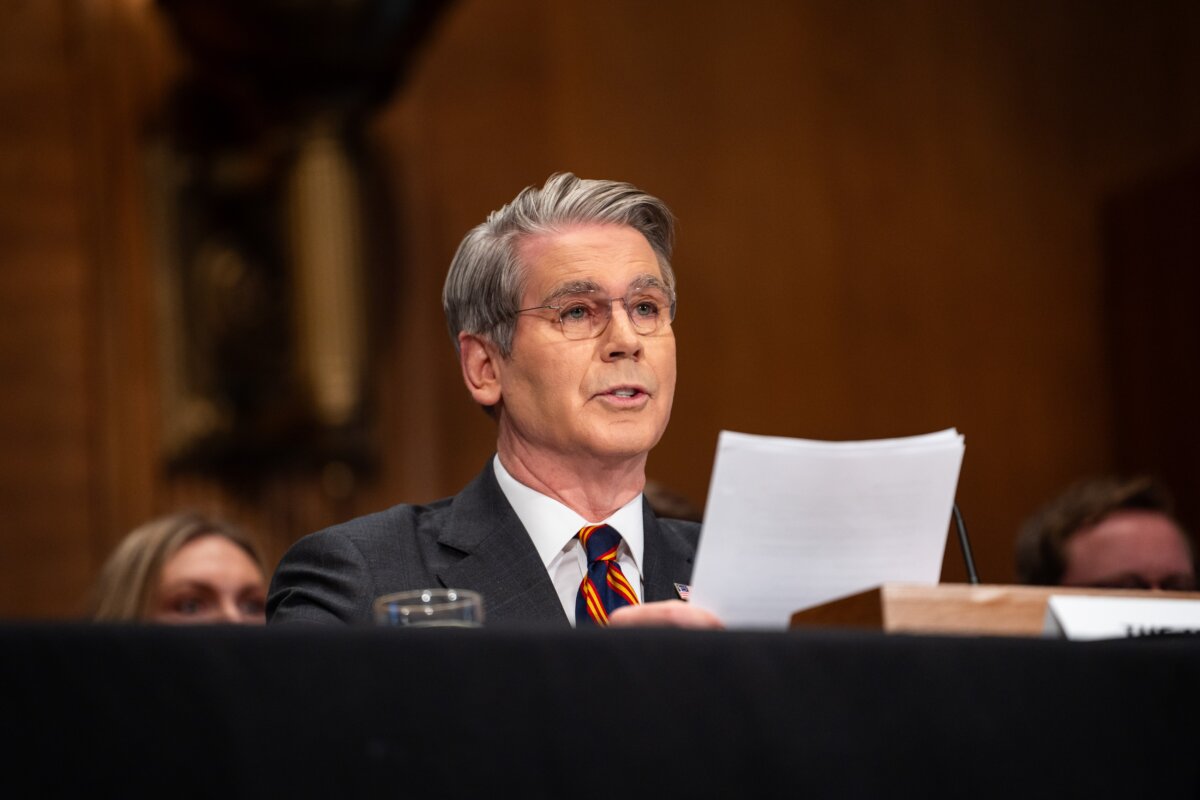

Whistleblowers who expose fraud involving government funds can get up to 30 percent of the fines imposed on violators, Treasury Secretary Scott Bessent said in a Feb. 13 interview with CNBC.
“I think it’s going to be a great way to ferret out waste, fraud, and abuse,” Bessent said.
“We are encouraging whistleblowers who know about fraud, people who are stealing from the American taxpayer, to come forward at Treasury. We’re setting up a website, and we will be giving rewards up to 10 [percent] to 30 percent of the fines that we levy.”
The tips can be “anything that has to do with government programs, where there’s a lack of common sense,” Bessent said.
“It’s kind of like they say at [the Transportation Security Administration], if you see something, say something. And if you say something and it turns out that you have helped us make a big recovery, we want to pay for that.”
On Feb. 13, the Treasury Department’s Financial Crimes Enforcement Network (FinCEN) launched the whistleblower webpage, through which tips can be submitted to the agency, the department said in a statement issued that day.
FinCEN’s Office of the Whistleblower accepts tips involving violations of various laws that are crucial to protect national security and the country’s financial system, the department said.
According to FinCEN, the agency’s whistleblower program covers violations of four statutes and their regulations: the Bank Secrecy Act, the Trading With the Enemy Act, the International Emergency Economic Powers Act, and the Foreign Narcotics Kingpin Designation Act.
Individuals who provide relevant information may become eligible for awards if the information leads to successful enforcement resulting in monetary fines exceeding $1 million, FinCEN said, while committing to protect the whistleblower’s confidentiality.
The Treasury encouraged whistleblowers to provide relevant information promptly and to submit specific, detailed documentation to support their allegations.
“President [Donald] Trump has been clear that Americans have a right to know that their tax dollars are not being diverted to fund acts of global terror or to fund luxury cars for fraudsters. At Treasury, we follow the money. We did it with the mafia, we have done it with the cartels, and we’re doing it with the Somali fraudsters,” Bessent said.
He had announced the Treasury’s plan to financially reward whistleblowers in January, while he was in Minnesota to support Trump’s effort to stop rampant fraud involving government schemes, the department said in its latest statement. Recent allegations of fraud in Minnesota have led to dozens of Somali immigrants being charged or convicted.
Bessent announced several initiatives to combat the government benefits fraud situation in Minnesota, which has led to billions in taxpayer funds being wasted, the Treasury said in a Jan. 9 statement.
Fraud rings have stolen funds from various state benefit programs, using the proceeds to purchase real estate, international flights, vehicles, and other luxury items, according to the department.
The initiatives include an investigation of Money Services Businesses in the state; the IRS’s launch of a Fraud Task Force; enhanced reporting requirements to expedite prosecutions and recover laundered funds; the alerting of institutions to help disrupt fraud operations that exploit child nutrition programs; and law enforcement personnel training to combat fraud schemes.
“President Trump has instructed the administration to bring accountability for the hardworking people of Minnesota,” Bessent said.
“Billions of dollars intended for feeding hungry children, housing disabled seniors, and providing services for children in need were diverted to benefit Somali fraud rings.”
In addition to FinCEN, other Treasury agencies have whistleblowing reporting programs, including the IRS, the Office of the Comptroller of the Currency, and the Alcohol and Tobacco Tax and Trade Bureau.
The IRS typically awards 15 percent to 30 percent of the proceeds collected from a whistleblower’s information to the informant.
 Friends Read Free
Copy
Facebook
Tweet
Friends Read Free
Copy
Facebook
Tweet