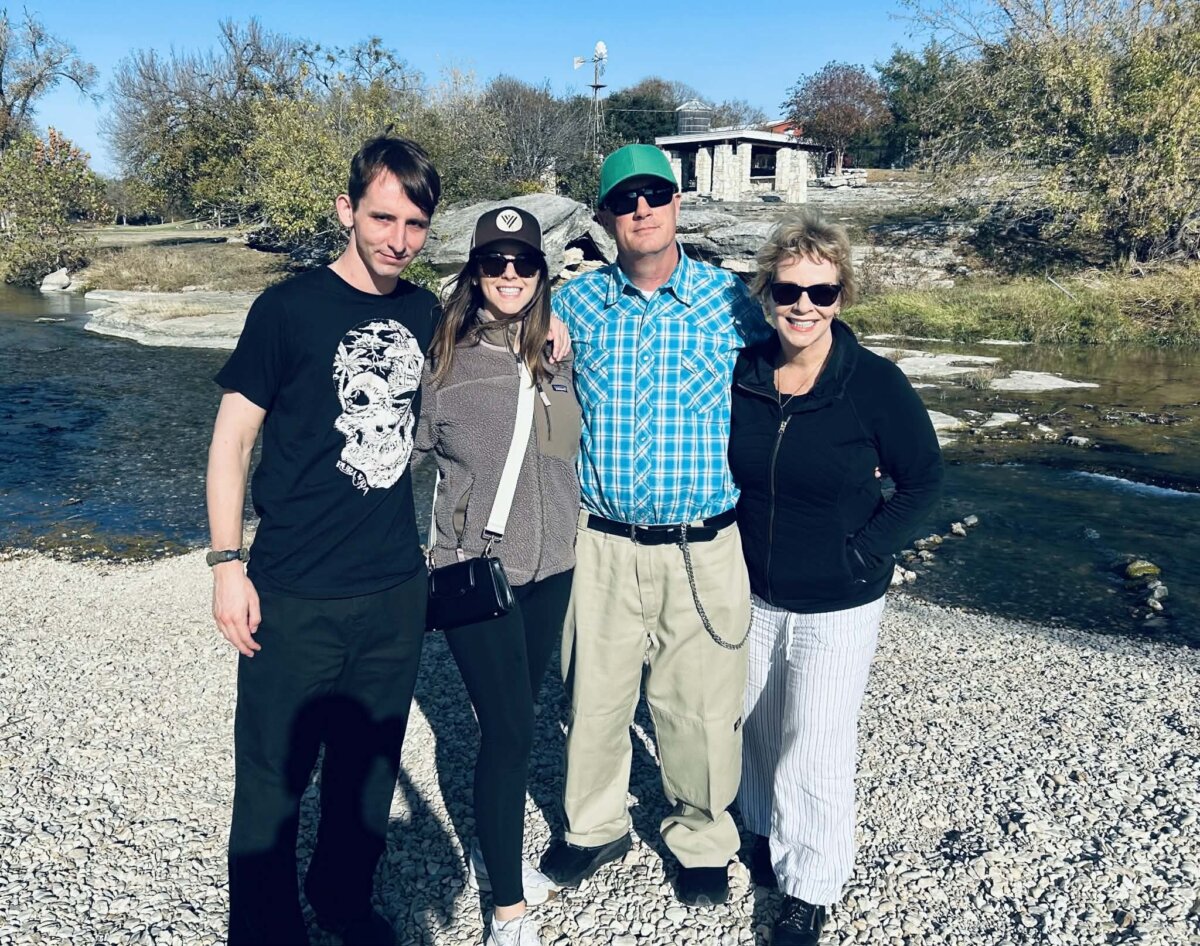
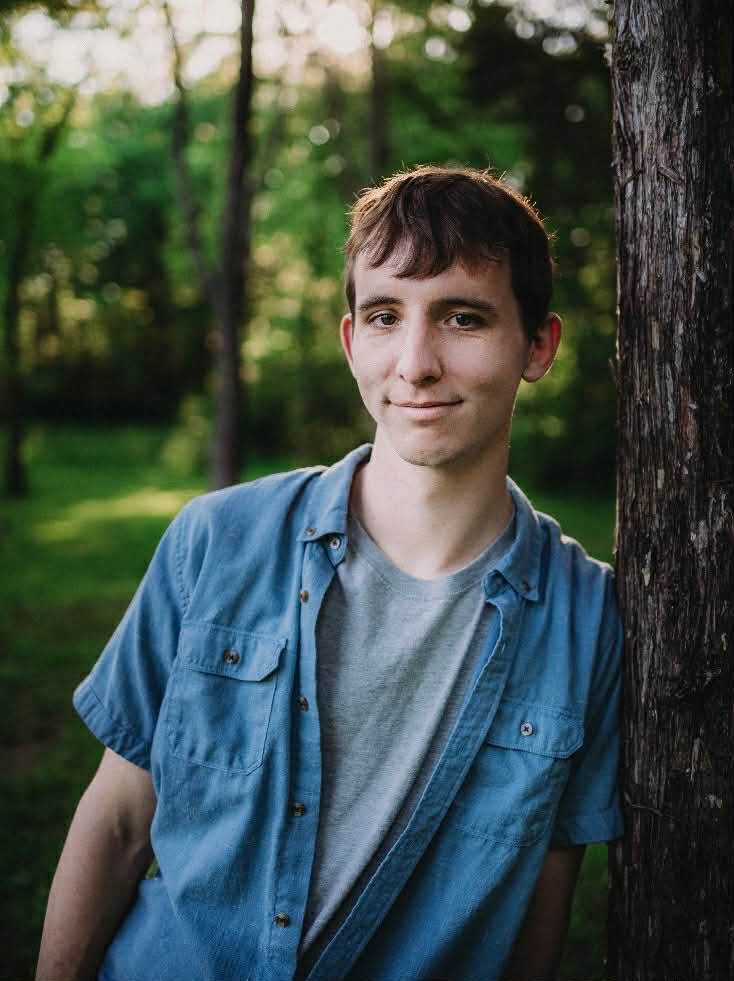
On a stage at an autism conference in San Diego last year, Collin Carley said he felt butterflies in his stomach as he looked out into a large crowd.
He had practiced what he planned to say multiple times, but that was when he was alone or in front of his parents. Behind the podium, he stood in front of hundreds of people.
Collin talked about how he was injured by a vaccine, developed “the debilitating effects of autism,” and improved over time with “hard work” and support from his family.
“I was nervous at the beginning, but in the end, it was a success. Parents heard me talk about things they think are out of reach for their own children, and I wanted them to know there is hope—that when you are a child with autism, you can get better and live a happy life,” he said.
Now 28, Collin was diagnosed with autism at the age of 3 after a vaccine injury, his mother Carmen Carley told The Epoch Times.
Following years of treatment through Applied Behavior Analysis therapy and nutrition, his condition improved.
After graduating from high school, Collin attended a trade school to learn how to work on a ship and was employed as a deckhand before joining his parents when they relocated to Tennessee.
He now lives independently in an apartment in Costa Rica and is learning Spanish at a local school. He aspires to run AirBnbs.
For years, Carmen said, her son did not want to talk about his autism. He associated it with being less of a person and it was something he wanted to hide.
His view changed in 2024 when he attended a Children’s Health Defense (CHD) Vaxxed-Unvaxxed bus tour event so he could tell his story.
“I am no longer going to be ashamed of my autism,” Carmen recalled him telling her on the car ride home.
After he spoke at the Autism Health Summit, a young adult girl waited for him at the bottom of the stage.
“She was choked up with emotion and felt inspired by what she had heard. She told him, ‘You shared my story,’” Carmen said.
Studying Autism
Autism, or autism spectrum disorder, refers to a broad range of conditions characterized by challenges with social skills, repetitive behaviors, speech, and nonverbal communication, according to Autism Speaks.
The Centers for Disease Control and Prevention (CDC) states that the prevalence of autism has increased to 1 in 31 children, up from 1 in 150 children in 2002, and 1 in 10,000 in the early 1990s.
Since Robert F. Kennedy Jr., who founded CHD, took office as Health and Human Services (HHS) Secretary, multiple autism-related initiatives have been launched.
In April 2025, the National Institutes of Health (NIH) announced plans to study the causes of autism.
Research into the root causes was among the 128 recommendations for ending the childhood chronic disease epidemic in a detailed strategy report released by the Make America Healthy Again Commission.
Last September, HHS said it would study all possible causes of autism, and the NIH announced $50 million in funding for studies.
In response to President Donald Trump directing officials to modernize autism research, Kennedy appointed multiple new members to the Interagency Autism Coordinating Committee (IACC) on Jan. 28.
The panel offers “advice and recommendations” to Kennedy on federal activities related to autism and helps increase public awareness of those activities, including federal policies and government-funded research.
It was created as part of the Children’s Health Act of 2000 to coordinate federal efforts on autism and advise the HHS secretary on strategic priorities.
The first meeting with the new members was initially set for March, but was postponed, according to HHS.
Prior members’ terms had concluded and were not renewed, according to an official from HHS, leading to the new additions to the panel. The IACC’s charter mandates that the committee have at least three members who are autistic, three who are parents or legal guardians of someone on the autism spectrum, and at least three individuals who represent organizations active in autism advocacy, research, or service.
“We are doing that by appointing the most qualified experts—leaders with decades of experience studying, researching, and treating autism,” Kennedy said. “These public servants will pursue rigorous science and deliver the answers Americans deserve.”
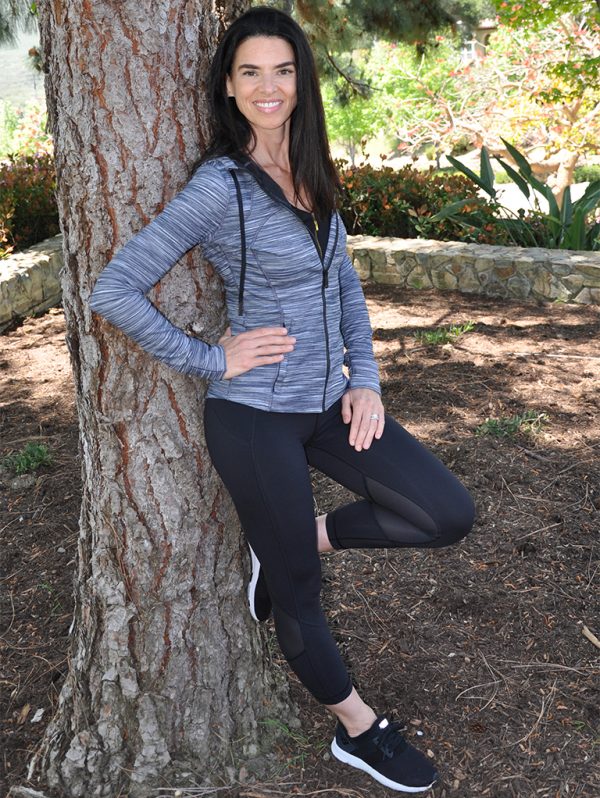
Warrior Mom
Tracy Slepcevic is a parent of a child with autism and a new IACC member. An integrative health practitioner, she is the author of “Warrior Mom: A Mother’s Journey In Healing Her Son with Autism” and the founder of Autism Health Inc.
She created the Autism Health Summit, an annual event that will be held from April 24-26 in San Diego this year. The summit offers continuing medical education credits for doctors and professionals and attracts widely known speakers such as Del Bigtree, Andrew Wakefield, and Dr. Peter McCullough.
Each year, she asks a person with autism to speak at the event. Carmen Carley, as an advocate, had worked with Slepcevic’s son, Noah, when he was in middle school. Now 20, Noah’s condition has improved with intensive therapy and nutrition. When Slepcevic talked to Carmen for the first time in years, she learned about Collin’s success and extended an invitation for him to address the summit.
There are many unanswered questions about autism, Slepcevic noted. Getting insight from young adults who are on the spectrum is one valuable way to find those answers, she believes.
Caden Larson, a nonspeaking adult with autism and founder of Children with Autism Deserve Education (CADE), and Daniel Keely, a high school senior with autism who shared his personal journey in “The Folate Fix,” a book published in March 2025, are also part of the new IACC.
Spelling to Communicate
Elizabeth Bonker is one of three new IACC members who are autism awareness advocates inspired by their personal stories. She is founder and executive director of Communication 4 All. The nonprofit organization offers free Internet-based instructional videos and support to families and schools to teach nonspeakers with autism to type to communicate.
Bonker has a form of autism that has kept her from speaking since she was 15 months old.
She communicates through a keyboard-to-speech computer program. She types her words one letter at a time.
The computer converts the message into a clear female voice.
When she speaks in public, she is often accompanied by her mother, Ginnie Breen, who holds an iPad for her to type on.
The method is designed to help people with autism who have limited or no verbal abilities communicate. Multiple companies in the space provide nonspeakers with a way to express their feelings, needs, and thoughts through spelling using a letter board or keyboard.
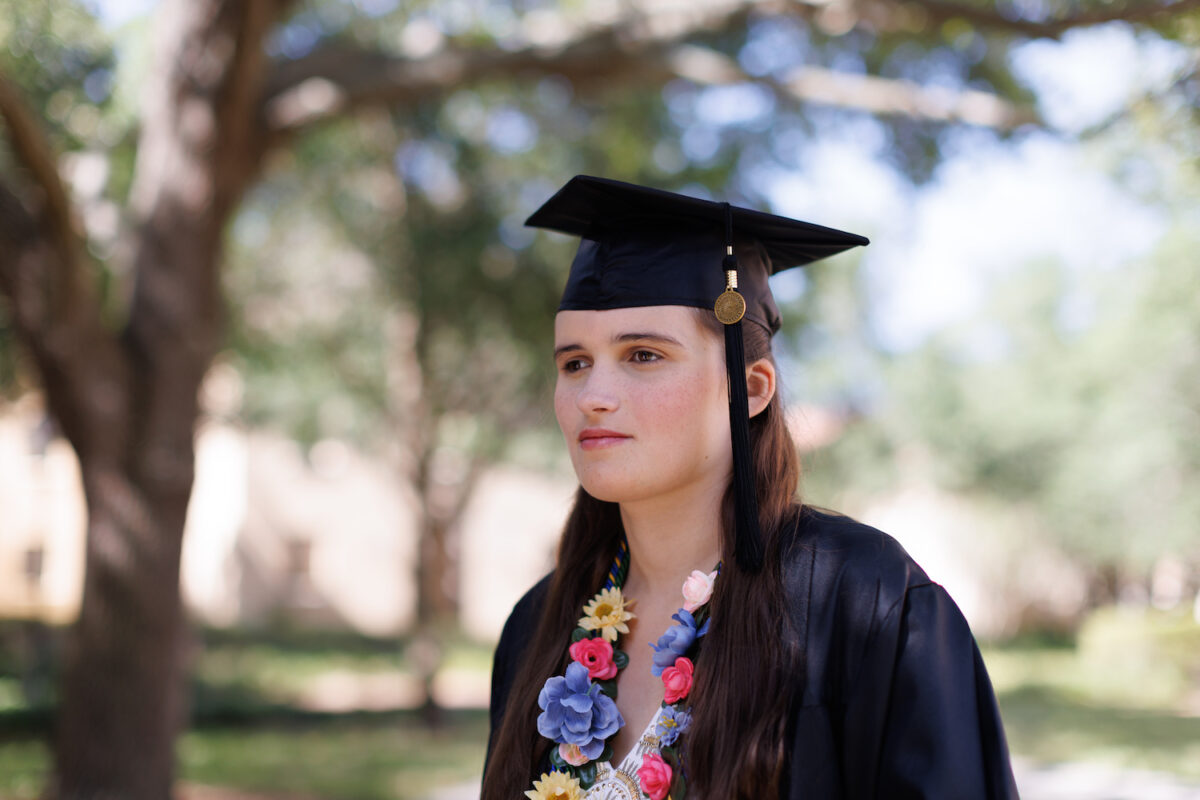
“Learning to type to communicate changed my life from hopeless to hopeful,” Bonker told The Epoch Times.
Bonker earned a degree in social innovation and a minor in English with a 4.0 grade-point average and was one of five valedictorians.
In 2022, she delivered the commencement address at Rollins College in Florida. The other four honorees chose her to make the commencement speech.
She ended the speech by saying, “Sometimes, it is the people no one imagines anything of who do the things no one can imagine,” referencing a quote from Alan Turing, a British mathematician who helped break Nazi encryption codes in World War II.
The address drew a standing ovation and subsequently went viral on social media. The published author, poet, and lyricist became a highly sought-after public speaker—even though she doesn’t say a word vocally.
Also an advocate on legislative and policy initiatives related to nonspeakers, Bonker is part of a group working in New York to pass the Communication Bill of Rights.
“The bill simply says that a person has the right to communicate in whatever way works best for them,” Bonker said.
Underestimated
Bonker was featured in the 2023 documentary “Spellers,” in which autism advocate and author J.B. Handley asks: “What if they’ve been wrong about every single one of them? What if they’re all walking around without the ability to speak, but brilliant, or at least cognitively normal?”
The film is inspired by “Underestimated: An Autism Miracle,” in which Handley and his son, Jamie, tell the story of the latter’s journey to find a method of communication that allowed him to emerge from his self-described “prison of silence.”
Bonker told The Epoch Times: “The world needs to change the way it sees nonspeaking autism. It’s a neuromotor disorder, not a cognitive one. My neuromotor issues also prevent me from tying my shoes or buttoning a shirt without assistance. I am one of the lucky few nonspeaking autistics who have been taught to type.”
Bonker told The Epoch Times that she has worked with several clinicians, researchers, and advocates on the new IACC and she hopes that the panel will further propel research and services “for the millions of nonspeakers whose voices are rarely heard.”
Staying silent, she added, is not an option because of her mission to reach nonspeakers so they can communicate and “the opportunity to live happy, productive lives.”
“When a nonspeaker with autism learns to type to communicate, they become fierce advocates. We know what it feels like to be locked in a silent cage,” she added.
Vaccines and Autism
Slepcevic said that her venture into autism advocacy started in 2006, when her son, Noah, regressed after getting a vaccine.
Medical professionals, including her pediatrician, assured Slepcevic that Noah’s decline in cognitive function, motor skills, and speech was normal, she told The Epoch Times. In 2009, the young boy was diagnosed with autism.
Some groups, such as the American Academy of Pediatrics, say that autism is not caused by vaccines.
The CDC previously held that position. However, in a 2025 update, it said, “The claim ‘vaccines do not cause autism’ is not an evidence-based claim because studies have not ruled out the possibility that infant vaccines cause autism.”
Kennedy has said that studies on the matter have not been properly done, and that the Trump administration is conducting those studies.
On March 3, a group of scientists introduced an autism committee aimed at providing an alternative to Kennedy’s federal panel.
The entity is being called the Independent Autism Coordinating Committee (also IACC).
The Independent Committee representatives said they were spurred to launch the competing group after Kennedy named the 21 new members to the already established IACC in January.
Alison Singer, a member of the Independent Committee, said that Kennedy’s panel “disproportionately represents a tiny subset of families who believe vaccines cause autism, while excluding the overwhelming majority of advocates and experienced autism researchers who support evidence-based science. The new I-ACC will ensure science, not misinformation, guides autism research.”
Kennedy has long contended there is a link between vaccines and autism. Last month, NIH Director Dr. Jay Bhattacharya told The Epoch Times that there is a dearth of high-quality research into vaccines and autism and that the agency is funding research that will determine the causes of autism.
Slepcevic is a firm believer that there is a link between vaccines and autism, based on Noah’s experience. Extensive research led her to seek alternative solutions to treat Noah’s symptoms, she explained. The lack of understanding about condition, and the link between autism and vaccines, impacted her life as she lost friends and faced “gaslighting” and skepticism from medical professionals.
Those challenges inspired Slepcevic to write “Warrior Mom,” which includes her personal story and practical advice.
Nutrition and biomedical interventions have proven effective for many of these children, she added. Eating “real food” and embracing a diet free from inflammatory foods like gluten and dairy are among her recommendations.
“When Noah was diagnosed with autism, I was told to accept limitations and lower my expectations, but that never sat right with me. Instead, I turned my pain into purpose,” she said.
“I dove into research, education, and advocacy, determined to uncover the root causes of his challenges and help him reach his full potential,” she added.
Slepcevic encourages parents to “go the full distance with maximum effort” to help their children who have autism. This includes embracing their desire to share their stories.
“When children with autism share their stories and demonstrate the courage to become advocates, it helps others with autism see they are not alone. It also shows parents that there is hope, and recovery is possible,” Slepcevic said.
Collin Carley agrees.
“It’s important for young adults who have personal autism stories to share their stories so that we inspire and motivate people with autism and their families to work as hard as they can and realize that there is healing,” he said.
“There are definitely many roadblocks and mountains to be climbed, but with good therapists, and the love and support of your family, one day at a time you can battle your way out from underneath the restrictions autism puts on you.”
 Friends Read Free
Copy
Facebook
Tweet
Friends Read Free
Copy
Facebook
Tweet