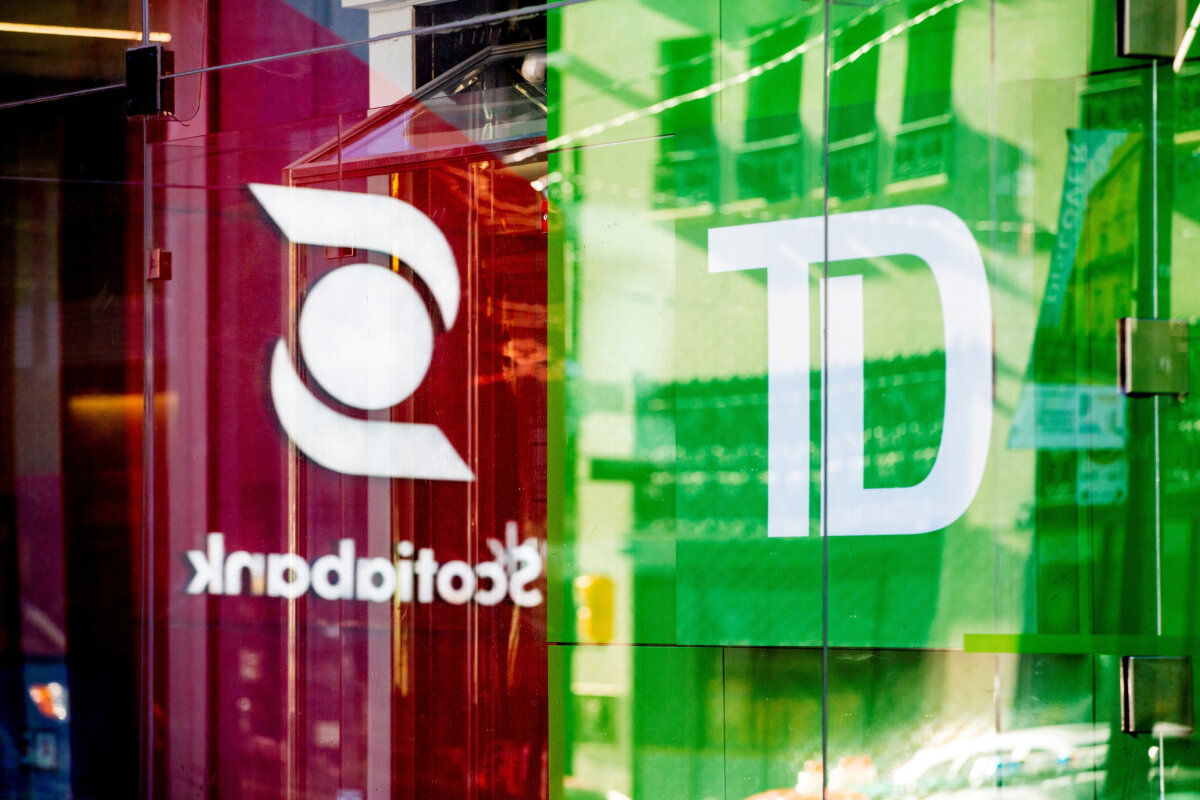

The Toronto-Dominion Bank and Scotiabank have each announced more than $100 billion in planned financing and investment to support Canadian businesses and projects amid ongoing cross-border trade tensions with the United States.
The Toronto-Dominion Bank (TD) is committing $150 billion over five years, while Scotiabank has committed more than $100 billion in financing, underwriting, and investment to support Canadian companies and projects as part of Canada’s economic growth agenda.
The commitments will be available over five years and are intended to support investments aligned with Canada’s long-term growth priorities, including sectors and projects identified through the federal government’s Major Projects Office and broader economic development agenda, according to separate Sept. 14 announcements from the banks.
TD said its commitment will centre on energy projects, including clean and conventional energy and grid infrastructure; critical minerals and resources; defence and aerospace; digital infrastructure and artificial intelligence; and infrastructure projects such as ports, railways and roads.
“Canada is entering a defining period of investment and industrial growth that will shape the country’s economy for decades to come,” TD Bank Group president and CEO Raymond Chun said in the bank’s press release. “TD will connect investors with opportunity, help businesses scale and strengthen the sectors critical to Canada’s next era of growth.”
TD said a portion of the commitment will be directed toward small- and medium-sized businesses in underserved communities and markets as they respond to U.S. tariffs and other trade-related pressures.
Scotiabank’s $100 billion commitment will focus on clean energy, oil and gas, critical minerals, advanced manufacturing, technology and defence. The bank also plans to allocate $50 million to programs focused on skills, talent, and capacity development.
“These partnerships will aim to close the gap on future labour market shortages and equip Canadians with the skills required for high-growth sectors and innovation and AI,” the bank said in its press release.
Scotiabank also announced the creation of an institute to examine Canada’s long-term competitiveness. Former Canadian ambassador to the United States Kirsten Hillman has been appointed as the institute’s Lead Strategic Advisor.
The institute “will examine where Canada can accelerate, and what it will take to turn the country’s strengths into lasting prosperity,” Scotiabank president and CEO Scott Thomson said in the press release.
Hillman said in a release the institute would focus on “sharper analysis, practical solutions, and a clear understanding of where we can compete and lead.”
Other Commitments
The three other members of Canada’s Big Five banks have also announced financing commitments in recent days.
The Bank of Montreal said it would provide $70 billion over 10 years for infrastructure, clean energy, transportation, sovereign AI computing, and mining.
The Royal Bank of Canada launched a $1.4 billion fund for Canadian technology companies, aerospace businesses, and dual-use defence companies. CIBC has earmarked $2 billion over five years to finance small- and medium-sized businesses operating in defence-related and dual-use sectors.
The announcements come as Prime Minister Mark Carney hosts a two-day national investment summit in Toronto on Sept. 14 and 15. The event is being held with the Canada Pension Plan Investment Board and the Public Sector Pension Investment Board and is aimed at attracting investment to Canada.
The federal government has set a goal of generating $1 trillion in investment over the next five years to support major projects and increase investment in Canada, following a decade-long decline in foreign investment.
The summit is taking place as Canada and the United States continue to face trade tensions following the breakdown of bilateral talks on Aug. 21.
U.S. President Donald Trump subsequently imposed 50 percent tariffs on certain Canadian goods, with the measures taking effect Aug. 22. Canada introduced matching tariffs ranging from 15 to 50 percent on certain U.S. imports on Sept. 8.
Trump also signed proclamations imposing additional restrictions on Canadian imports, including an import ban on Canadian alcohol, some dairy byproducts and large motorcycles, effective Sept. 29.
The federal government has also announced measures aimed at supporting Canadian industries affected by the trade measures.
 Friends Read Free
Copy
Facebook
Tweet
Friends Read Free
Copy
Facebook
Tweet