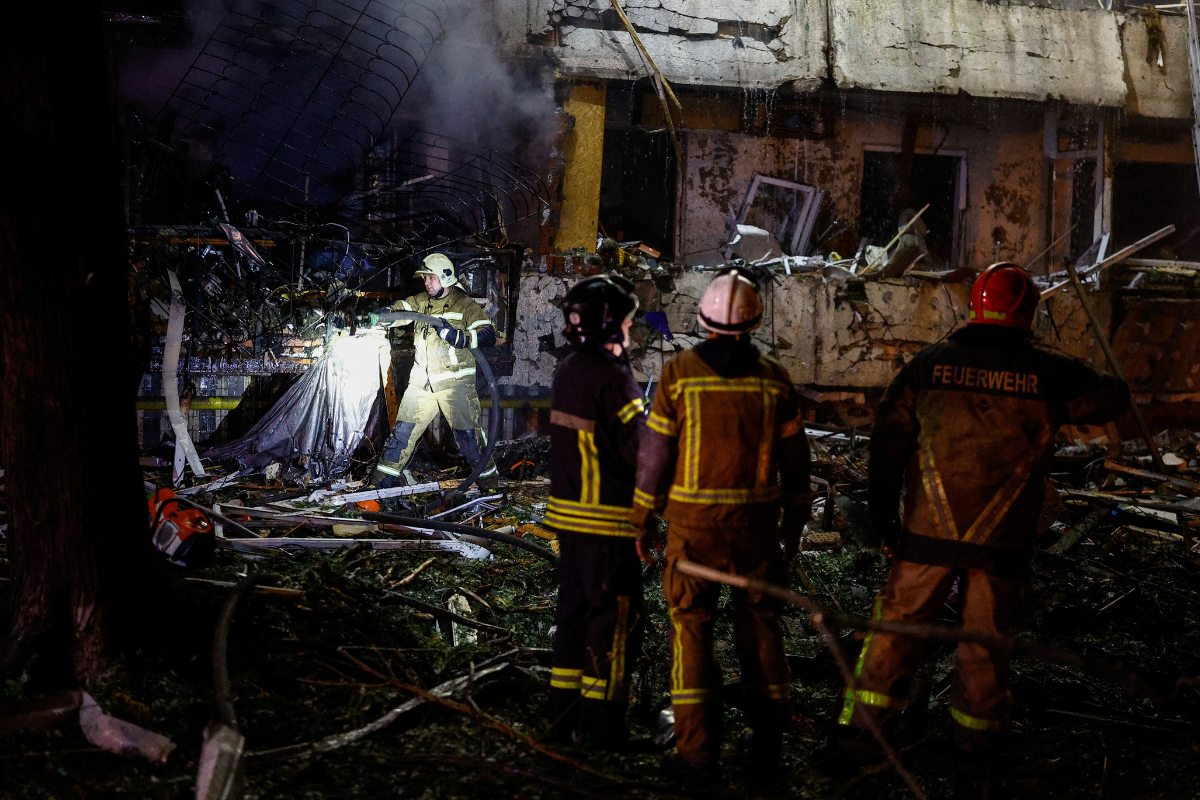

At least 600,000 people are without power following a Russian overnight aerial attack on energy infrastructure in Kyiv, the Kyiv region, and Kharkiv, according to the Ukrainian president.
Russian forces fired 39 ballistic missiles and 120 attack drones against energy and critical infrastructure, with there being “significant damage” to facilities, including to 26 power facilities and four in the oil and gas sector, Ukrainian President Volodymyr Zelenskyy said in a Wednesday post on X.
“A targeted Russian ballistic missile strike specifically against energy infrastructure,” he said, adding that it was the very infrastructure covered by the ceasefire announced by U.S. President Donald Trump.
Trump said on Sunday that Russia and Ukraine agreed to an “energy ceasefire,” where both sides would refrain from striking each other’s energy facilities. Russia, at the time, did not issue a statement confirming the agreement. Ukraine said it would continue its long-range strikes against Russia if Moscow did not accept an energy truce.
The Russian Defense Ministry confirmed that Russian Armed Forces struck communications and energy infrastructure in Kyiv, the Kyiv region, and the Kharkiv region. According to Russian state-run news agency TASS, the ministry said facilities were targeted because they supported Ukraine’s military industry and armed forces.
There have been fatalities and injuries, Zelenskyy said on X, and he asked international allies to “respond forcefully,” including strong sanctions on Russia.
Ukrainian Ambassador to the European Union Katarina Mathernova said in a post on X that more than a dozen explosions were heard before dawn in Kyiv and that an apartment block was struck. Railway infrastructure was also targeted, she said.
Ukraine, for its part, has engaged in a campaign of conducting strikes against Russian energy and logistics facilities in recent months.
Trump’s Energy Ceasefire
In the past several weeks, Trump repeatedly urged Ukraine and Russia to stop conducting military strikes on energy infrastructure.
On Sunday, the U.S. president announced that Moscow and Kyiv had agreed to cease striking those targets, a deal aimed at easing global oil and diesel prices, which have been driven up by the infrastructure damage in both countries during the war.
The U.S. president wrote in an Oct. 11 Truth Social post that “effective immediately, there is an energy ceasefire in the War between Russia and Ukraine” and that “both parties have agreed.”
Zelenskyy told the Warsaw Security Forum on Monday that immediately after Trump’s post, Russia launched a targeted strike on a power plant in Kharkiv, Ukraine.
“Yesterday, we were all hardly surprised that after a sudden but very important post from the American President saying that he had secured an energy ceasefire between Russia and Ukraine … that at that very moment, Russian jet-powered ‘shahed’ drones were flying in our skies,” he said via videolink.
If Russia “wants us to stop our long-range strikes against its oil refineries and oil exports, then Russia must stop its strikes against our energy system and critical infrastructure,” Zelenskyy said in a Monday post on X.
Zelenskyy said that Ukraine is “ready to respect an energy ceasefire if Russia is ready to do the same—we agree if they agree.”
Russian Diesel Deal
Kremlin spokesman Dmitri Peskov said on Tuesday that there have been no new developments on its end in terms of agreeing on an “energy ceasefire.”
“We discussed this issue yesterday, and for now I have nothing to add to what we said then,” Peskov said, according to TASS. “Contacts on this matter are continuing.”
The Kremlin spokesman added that Moscow maintains its position that achieving a lasting peace, rather than a ceasefire, is necessary and that it is working toward that goal.
Trump told reporters on Tuesday that his administration was still working with Ukraine and Russia “on getting the war to end.”
He said both Russian President Vladimir Putin and Zelenskyy want the war to end, but “there is a lot of hatred between the two of them” and they “don’t know how to get there.”
Trump has also recently reached a deal with Putin to supply diesel to the United States.
Trump announced on Oct. 9 that Russia had agreed to immediately export more than 300,000 tons of diesel to the global markets. An additional 500,000 tons of diesel will be shipped out in November, followed by an additional million tons in December, he said.
Emel Akan, Owen Evans, and Reuters contributed to this report.
 Friends Read Free
Copy
Facebook
Tweet
Friends Read Free
Copy
Facebook
Tweet