
The federal government says gun owners have declared more than 67,000 recently designated prohibited firearms to receive compensation.
Gun owners had until March 31 to fill a declaration as part of the Assault-Style Firearms Compensation Program, which is opposed by some provinces including Alberta and Saskatchewan. Public Safety Canada says 37,869 firearms owners across Canada have participated in the program.
The program has fallen short of its initial objective, amid provinces and police forces across the country refusing to participate.
The federal government had budgeted $248.6 million in compensation for firearms turned in under the program, which it had said would cover roughly 136,000 guns, with payout amounts for firearms and firearm parts ranging from $150 to $9,945.
Public Safety Canada says those who chose not to participate in the compensation program will have to dispose of their prohibited firearms and devices by “deactivating their firearm at their own expense, turning them in to police without compensation, or exporting them” to be compliant with the law before the amnesty period ends on Oct. 30.
After Oct. 30, those who still have banned firearms will be considered breaking the law and may face criminal liability and the loss of their firearms license.
The department says the program will begin to assess declarations in April, and will communicate directly with participants about how to finalize their claims, permanently deactivate, or make an appointment to turn in their guns for compensation. RCMP, local police, or mobile collection units are expected to collect firearms from spring through early fall this year.
Prime Minister Mark Carney told reporters on March 31 that the program’s uptake is “not as high” as the government had estimated it to be, and that “there’s obviously a gap there.” He noted that the government will evaluate the program and the next steps, adding that “there’s time between now and when the law fully takes effect later in the fall.”
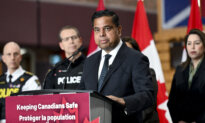
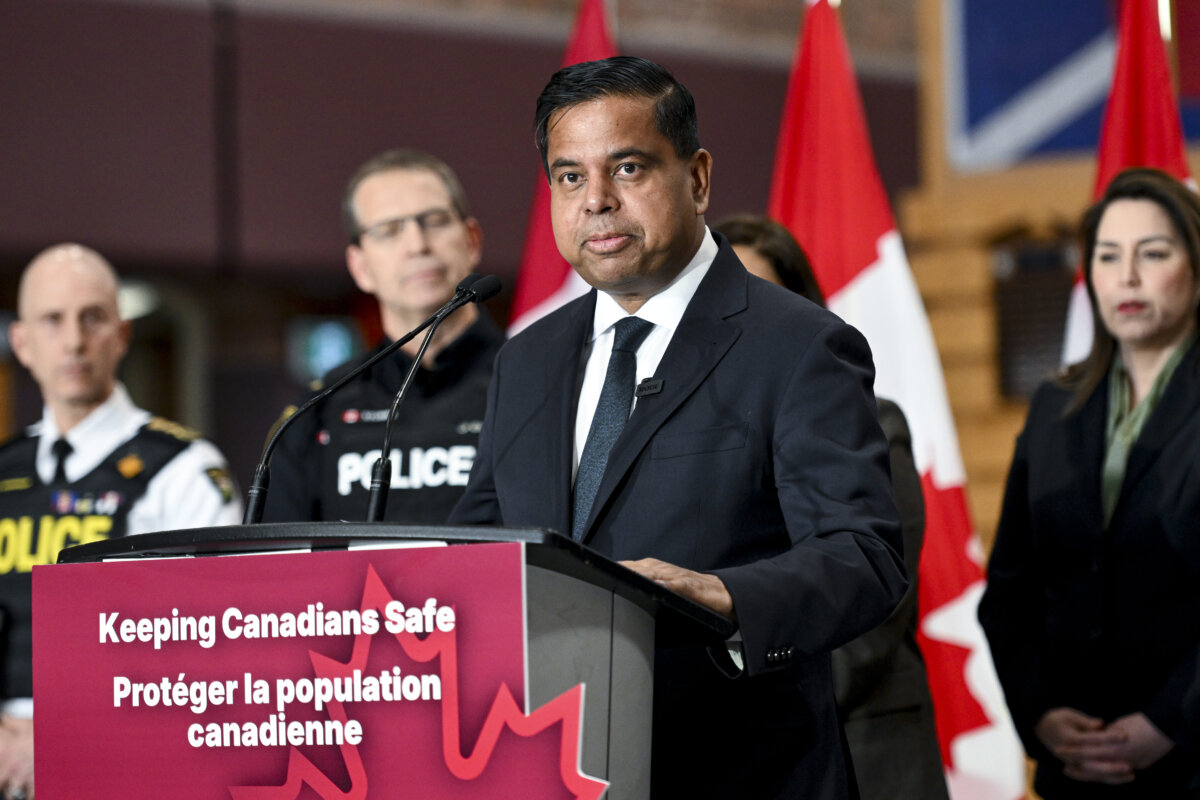
When asked what the government’s plan is for gun owners who choose not to declare their banned firearms, Public Safety Minister Gary Anandasangaree told MPs of the public safety and national security committee last week that the program is “strictly voluntary” but “compliance with the law is not voluntary.” He noted that every police force and jurisdiction will be required to “enforce the law” after the amnesty period ends.
Conservative Leader Pierre Poilievre told reporters on March 31 that the Liberal government is “banning hunting rifles [and] gopher guns.”
“They’re attacking licensed, law-abiding, trained, and tested farmers, hunters, and sport shooters, while allowing rampant, repeat violent criminals to come into our country through open borders and to be released from jail within hours of their latest arrests,” Poilievre said.
He said his party’s approach is to instead “lock up criminals, secure our borders, and leave our hunters, sports shooters, and farmers to live their lives lawfully and peacefully.”
Gun rights groups have been encouraging gun owners to oppose the program. Tracey Wilson from gun advocacy group Canadian Coalition for Firearm Rights (CCFR) said in an April 1 social media post that she has “a hard time believing they got 67k declarations with 10k of them just yesterday.”
Meanwhile, gun control group PolyRemembers says it is “disappointing” that only half of the number of eligible firearms across Canada were declared in the compensation program.
Several provinces and territories have indicated they will not participate in the program, including Alberta, Saskatchewan, Manitoba, Ontario, New Brunswick, Yukon, the Northwest Territories, and Nunavut. Quebec is the only province that has expressed support for the program so far.
Numerous police services have also said they will not help with the program, while the RCMP and Quebec’s provincial police force have said they will collect guns eligible for compensation.
Federal Firearms Ban
The federal government has banned more than 2,500 makes and models of what it calls “assault-style” firearms since 2020. It classifies the guns as suitable only for military use, rather than for hunting or sport shooting.
The Supreme Court of Canada agreed on March 19 to hear an appeal challenging the federal ban, after the Federal Court dismissed multiple lawsuits by various groups and individuals challenging the ban in 2023, and the Federal Court of Appeal upholding the decision last April.
 Friends Read Free
Copy
Facebook
Tweet
Friends Read Free
Copy
Facebook
Tweet