
When Iranian leader Masoud Pezeshkian stood before the U.N. General Assembly in New York City on Sept. 23, he presented the Islamic Republic of Iran as a victim.
“The United States president described us as terrorists. We have been the victims of terrorism,” Pezeshkian told the General Assembly.
During his speech, Pezeshkian displayed photographs of Iranians killed in the war with the United States and Israel, among them former Islamic Republic leader Ali Khamenei and students from a school in Minab. He accused Washington and Jerusalem of targeting civilians.
He also defended the Islamic Republic’s response to nationwide protests, claiming that the United States and Israel had armed people inside the country to stir unrest.
The father of 25-year-old Sepehr Shokri, who was killed in Tehran, Iran, on Jan. 8, publicly challenged Pezeshkian’s remarks. He demanded evidence to support the claim that his son had been armed or involved in terrorism.
“You went to the United Nations and accused our children of being rioters, terrorists, and armed,” he said in a video response. “Based on what evidence are you saying this?”
He called on police to examine surveillance cameras from the area where his son was killed, saying the footage would show that Shokri was struck by live ammunition fired from above.
“If our children were rioters and terrorists, why didn’t we know?” he said.
On Jan. 22, Shokri’s father appeared in a 12-minute video that was widely shared on social media. In the footage, he is seen searching among bodies at the Kahrizak forensic center for his missing son, calling out, “Sepehr, where are you, son?”
Throughout the video, as he continued searching for Shokri, the father also blamed the Islamic Republic and Ali Khamenei for what he was witnessing, repeatedly saying: “This is the Islamic Republic’s crime. This is Khamenei’s crime.”
The father was later arrested after posting the video on social media.
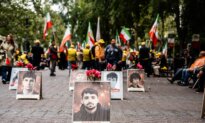
Human rights groups, including Hiwa, say those two days were among the bloodiest days of repression in the history of the Islamic Republic.
Shortly after Pezeshkian’s U.N. address on Sept. 23, U.S. Secretary of State Marco Rubio rejected the Iranian president’s criticism of Washington.
He said a government that massacres its own people is in no position to lecture others about international rules.
“I don’t know what standing Iran has to lecture anyone on human rights or the international system when they habitually violate it,” Rubio told reporters.
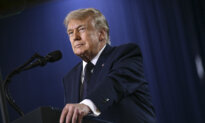
President Donald Trump spoke about the killing of protesters in Iran during remarks at the Oval Office on Sept. 2. He said security forces used machine guns and snipers against demonstrators, leaving many Iranians afraid to return to the streets.
“In Iran, they kill the people. When they get out to protest, they kill them. … Can you imagine this? And now I hear the number’s probably 20,000, 25,000, or more. They have close to 65,000 protesters killed,” Trump said.
Iran’s Supreme Council of National Security said in January that more than 3,000 people were killed during the uprising, while other estimates, based on hospital records, medical sources, and accounts from victims’ families, range from 30,000 to 70,000. Independent verification has been hampered by an internet blackout, limited access for journalists, and fears among families about speaking publicly, leaving the exact death toll unknown.
The Jan. 8–9 Clampdown
Iran’s protests began on Dec. 28, 2025, after a sharp drop in the value of the country’s currency, high inflation, and worsening economic conditions. Other than anger over the economy, many people had been frustrated for years by political repression, a lack of freedom, and the way the Islamic Republic has ruled the country since 1979.
By Jan. 8, following a call by exiled Crown Prince Reza Pahlavi, large crowds had taken to the streets in cities across Iran. On Jan. 8 and Jan. 9, video footage shows people running through dark streets as gunfire echoed through neighborhoods.
On Jan. 14, Amnesty International stated that the Islamic Revolutionary Guard Corps, Basij forces, police units, and plainclothes agents were among the forces involved in the deadly clampdown on protesters on Jan. 8 and Jan. 9. Verified video footage has shown protesters being shot in the head or torso.
He Gave His Life to Save Others
Mohammad Jabbari, a 39-year-old taxi driver, was among those killed in Karaj, Iran, on Jan. 8.
Footage from a building’s security camera that went viral on social media in the days following the clampdown shows a group of protesters fleeing into a building in Karaj as gunfire began outside. Jabbari was the last person to enter. He could have followed the others upstairs. Instead, he turned around.
Jabbari stayed at the entrance and attempted to hold the door shut as armed forces moved in, allowing others inside the building more time to reach safety. The forces eventually entered the building. Iran International and IranWire reported that Jabbari was shot at close range. He was taken to a hospital, where he later died.
Families Search for the Missing
In the days after Jan. 8 and Jan. 9, families searched hospitals and morgues for missing relatives. Medical facilities struggled to cope with large numbers of people suffering from gunshot wounds. Reuters reported on Jan. 26 that security forces had also taken wounded protesters from hospitals and sought access to medical records in an effort to identify people who had joined the demonstrations.
Video footage from Kahrizak Forensic Medical Center near Tehran shows rows of body bags and families moving among the dead, trying to identify victims.
In a Jan. 26 report, Amnesty International stated that it had analyzed footage from Kahrizak and identified at least 205 separate body bags in one location.
Media reports also documented pressure on victims’ families, including restrictions on funerals and warnings not to speak publicly about the deaths. IranWire reported on Jan. 29 that some families had been forced to hold burials under tight security and had been barred from public mourning ceremonies. Iran Human Rights reported on Jan. 25 that some families were pressured to accept an official version of events, including claims that their relatives had been members of the Basij and had been killed by protesters rather than by security forces.
State media portrayed the unrest as violent and foreign-backed, focusing heavily on attacks against security personnel, police stations, and public property. On Jan. 10, Press TV described the unrest as involving armed groups and “foreign-backed elements” carrying out violence, arson, and attacks on public infrastructure.
In a Sept. 21 report, the U.N. Independent International Fact-Finding Mission described the clampdown on protesters as “extraordinarily brutal” and found that some of the violations amounted to crimes against humanity.
‘A Sea of Blood’
“The Islamic Republic is on a downward slope because of the seeds of hatred it has planted among the Iranian people,” Bijan Kian, a national security expert, told The Epoch Times Persian.
“There is a sea of blood between the people and the government.”
Erfan Qanei Fard, a researcher of Middle Eastern history and security studies, told The Epoch Times Persian that ideology matters more to the Islamic Republic than the country itself.
“For the Islamic Republic, the homeland and the country have no value. What matters to them is ideology,” he said.
He said that the system relies on “fear, propaganda, terror, and the elimination of opponents,” describing it as a Stalinist approach in which “terror, violence, and warmongering are presented to society through old beliefs with a religious color.”
Qanei Fard said that supporters of the system are willing to use violence “to preserve this structure.”
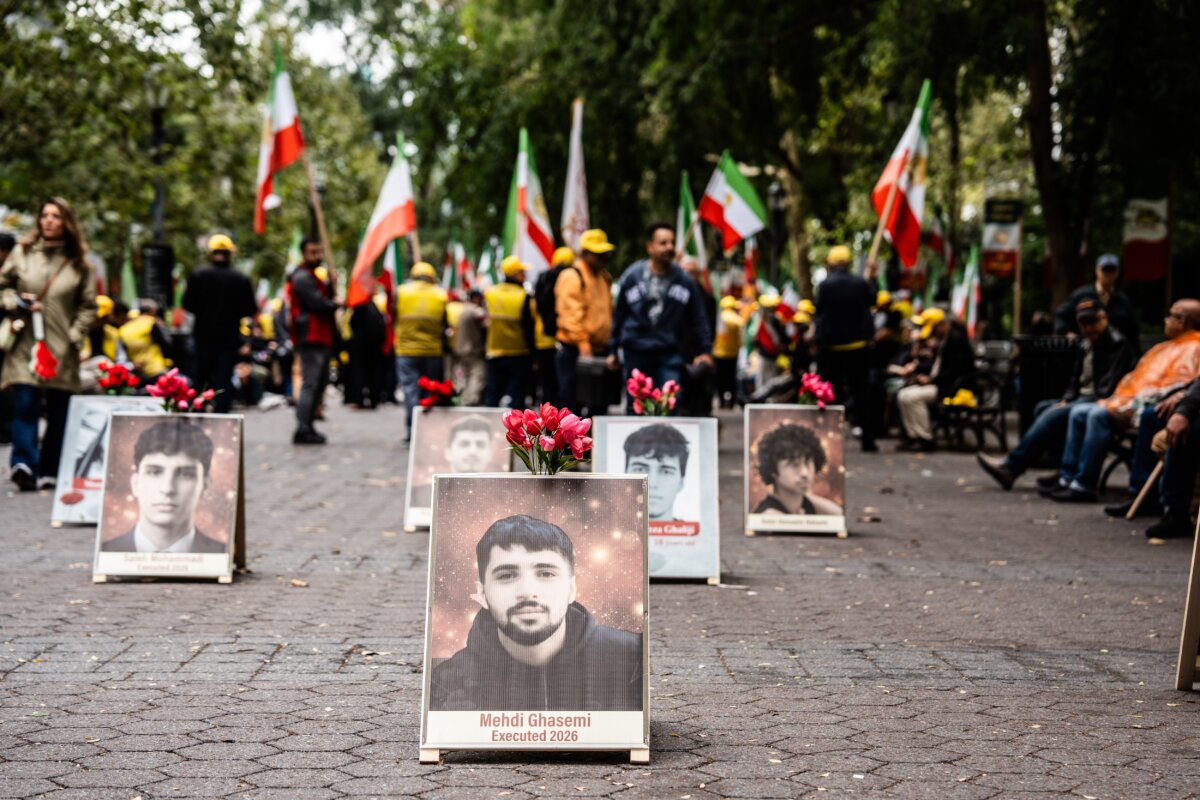
Reports of executions of people arrested in connection with the uprising have continued to emerge with near-daily regularity. By Oct. 5, Iran International reported that at least 35 people had been executed in cases linked to the protests, while more than 100 others remained under death sentences.
 Friends Read Free
Copy
Facebook
Tweet
Friends Read Free
Copy
Facebook
Tweet