
President Donald Trump is increasingly weighing new U.S. military action against a suspected Iranian nuclear site situated within a fortified mountain facility known as Pickaxe Mountain.
Asked during a July 21 White House meeting about reports that centrifuges for uranium enrichment had been moved into Pickaxe Mountain, Trump said “it doesn’t mean anything” unless uranium has also been moved into the facility. Still, the president indicated he intends to order strikes on the facility.
“If I thought they could do something about it, I would never say that. But we’ll be hitting that area pretty soon, and very heavily,” he said.
Trump’s recent comments about the Pickaxe Mountain facility come as U.S. forces have resumed regular strikes on Iran following the collapse of a ceasefire agreement.
With the Iran war approaching the five-month mark, U.S. lawmakers on both sides of the aisle have pressed the Trump administration for more details about its military objectives and have sought to halt the conflict until the president obtains direct congressional approval for the campaign.
What Is Pickaxe Mountain?
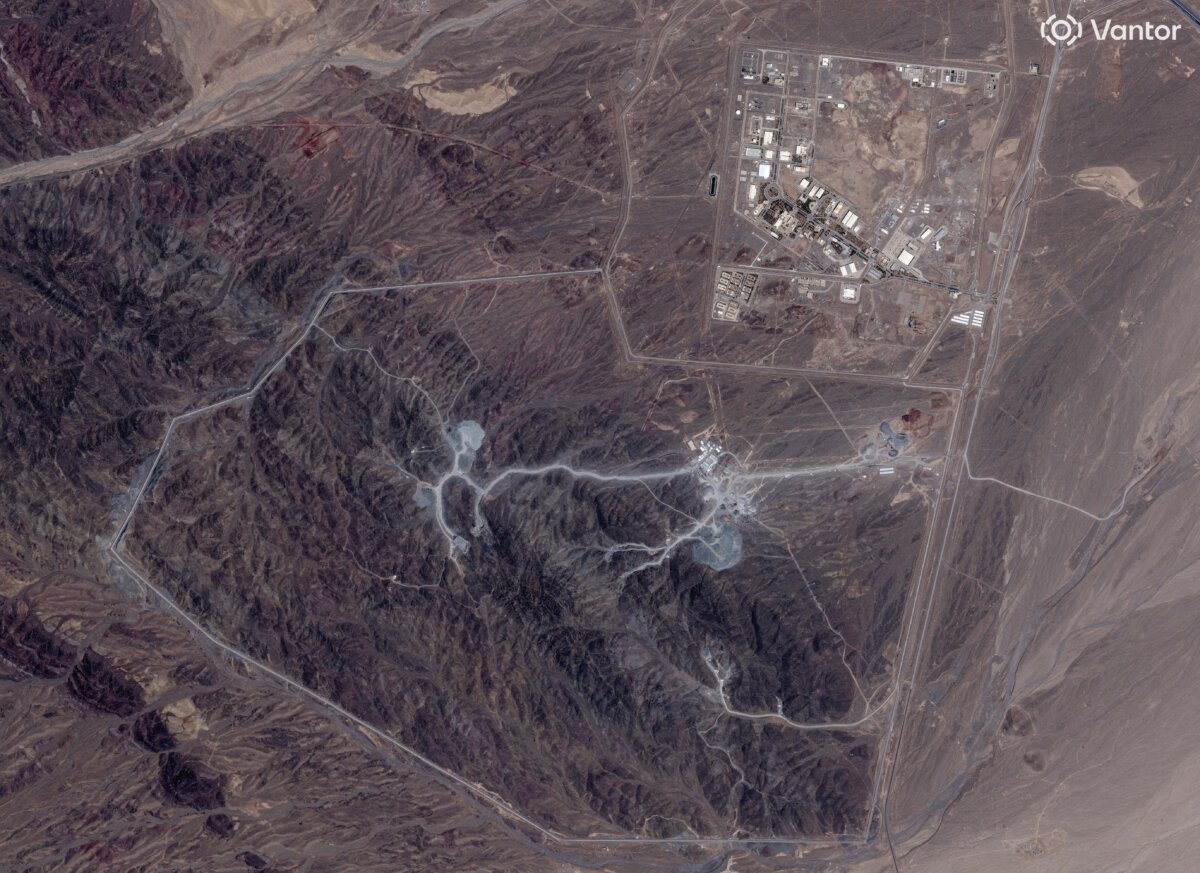
Translated from the Persian Kuh-e Kolang Gaz La, Pickaxe Mountain is surrounded by granite geology and rises to about a mile above sea level. The mountain is situated in central Iran, about 140 miles south of the capital city of Tehran.
Iran disclosed plans to establish a new centrifuge assembly facility at Pickaxe Mountain in 2020, following suspected sabotage at another nearby assembly facility in Natanz that year.
Unlike other Iranian nuclear sites, the International Atomic Energy Agency (IAEA) hasn’t been permitted to inspect the Pickaxe Mountain site.
Iran also has not publicized schematics for the Pickaxe Mountain facility, according to the Institute for Science and International Security, a Washington-based think tank that studies nuclear proliferation issues.
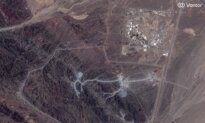
Much of what’s known about the mountain facility has instead been gleaned from satellite imagery.
The facility at Pickaxe Mountain may be more than 300 feet underground, according to the Institute for Science and International Security. Noting differences in the height of the eastern and western entrances of the facility, the think tank has assessed that the facility may have multiple levels.
What’s Happening at Pickaxe Mountain?
Trump and other members of his administration have listed preventing Iran from obtaining a nuclear weapon as a key objective of the recent military operations.
Though Iranian officials have claimed the country’s nuclear aspirations are peaceful, international observers have continued to raise doubts, and the Trump administration has called for further assurances.
Trump’s new threats to target Pickaxe Mountain come more than a year after he said U.S. forces had severely damaged all of Iran’s nuclear sites in a round of strikes on June 22, 2025.
By October 2025, the Washington-based Center for Strategic and International Studies (CSIS) assessed that construction efforts at Pickaxe Mountain had accelerated. CSIS further assessed that the expanded construction effort could mean the facility’s purpose had grown to incorporate other nuclear capabilities that were degraded during the U.S. strikes in June.
Responding to Trump’s recent comments about hitting the Pickaxe Mountain facility, Iranian Foreign Ministry spokesman Esmaeil Baqaei said Iran has already fully declared its nuclear activities with the IAEA and no nuclear activity is taking place at Pickaxe Mountain.
What Could US Forces Do?
The location of the Pickaxe Mountain facility may pose technical challenges to any force seeking to strike it.
Asked during a July 21 Senate hearing whether the U.S. military can damage whatever may be inside the Pickaxe Mountain facility, Secretary of War Pete Hegseth said, “A lot of our capabilities are classified, but if anybody in the world can reach anything on God’s green Earth, it’s the United States military.”
To attack Pickaxe Mountain, Trump may look to a similar playbook as the one used in June 2025, when B-2 Spirit stealth bombers dropped GBU-57 Massive Ordnance Penetrator bombs on the underground nuclear facilities at Fordow and Natanz.
Weighing in at 30,000 pounds, the GBU-57 is the most powerful non-nuclear bunker buster in the U.S. military arsenal.
A 2007 report by the U.S. Air Force indicated the GBU-57 was being designed to burrow up to 200 feet underground before exploding. Whether the GBU-57 could reach the furthest depths of the Pickaxe Mountain facility is unclear.
Benjamin Ashraf, an analyst for the nuclear risk assessment organization Open Nuclear Network, recently assessed that Pickaxe Mountain’s granite geology could reduce the efficacy of conventional bunker-busting weapons.
When U.S. forces targeted Fordow last year, they dropped several GBU-57s on ventilation shafts running into the underground facility to increase the probability of success.
Andrea Stricker, who studies nuclear counterproliferation for the Foundation for the Defense of Democracies, previously told Epoch Magazine in Israel that a ground operation may be warranted to address the potential threat at the Pickaxe Mountain facility.
“Western intelligence fears that the facility at Pickaxe Mountain could serve as a new Fordow-style enrichment plant—only one protected even more deeply,” Stricker said in a March interview.
In recent years, U.S. special operations troops have trained to fight alongside troops who specialize in dismantling nuclear and radiological threats.
Still, Trump may prefer to seal off the entrances to Pickaxe Mountain with heavy bombing, rather than ordering what could be a high-risk ground raid inside the facility.
Last month, the president revealed he had considered sending special operations troops to retrieve enriched uranium from unspecified Iranian storage sites, but said he elected not to because he “didn’t want to be Jimmy Carter.”
Trump’s comment about Carter was an apparent reference to the late president’s 1980 decision to order special operations forces to attempt to rescue dozens of U.S. citizens taken hostage in Iran. That Carter-era rescue mission, known as Operation Eagle Claw, ended in failure after eight U.S. service members were killed in an accident at a mission staging site inside Iran.
 Friends Read Free
Copy
Facebook
Tweet
Friends Read Free
Copy
Facebook
Tweet