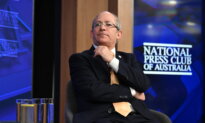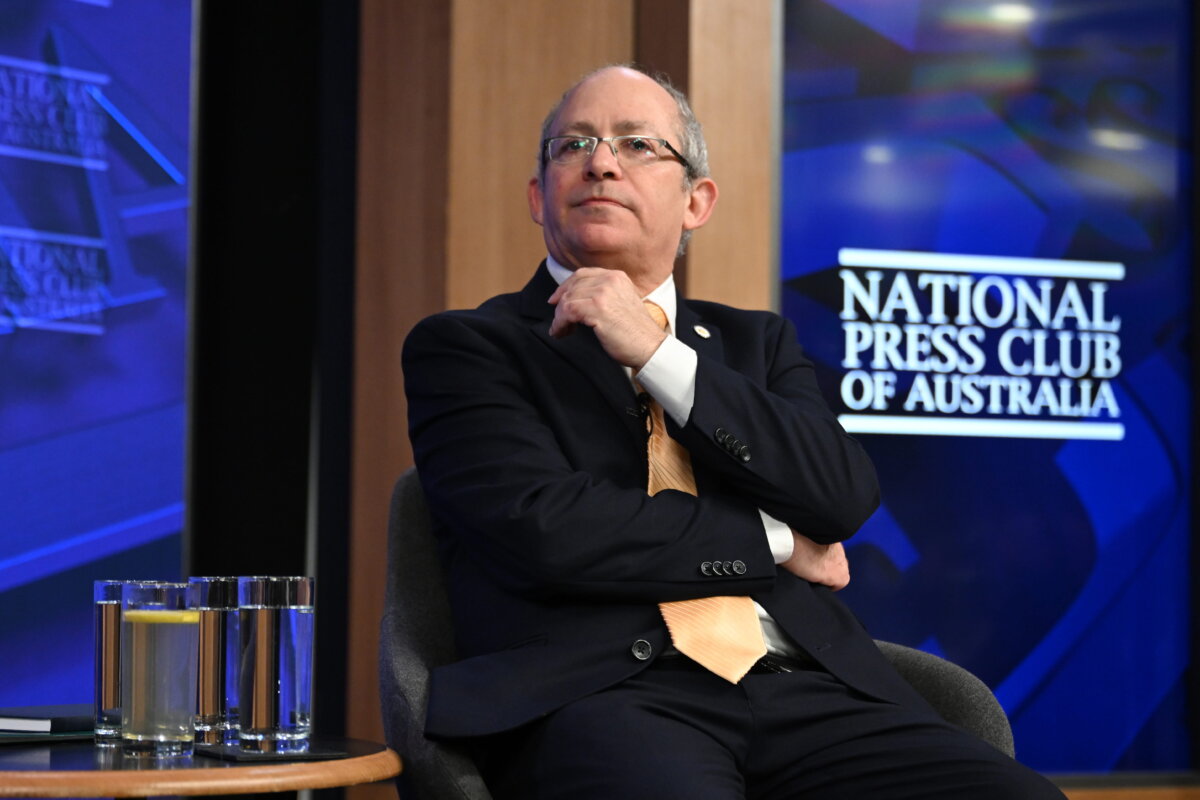

Israel’s Ambassador to Australia, Hillel Newman, has described the Iran conflict as a battle between moderation and extremism, arguing that democracies like Australia and Israel must stand together.
Speaking at the National Press Club on March 31, Newman said extremism was the root of conflicts in the Middle East.
“The main barrier in the Middle East is not between religions, Muslims and Jews, or Muslims and Christians. Nor is it between nations like Israelis and Jordanians. It is the tension between moderates and radicals. The real battle is between moderation and extremism,” he said.
The ambassador also noted that Israel’s current military operations focused on weakening extremist forces in Iran and creating conditions for peace in the region.
“By reducing the power of the radical Islamic regime, we are removing a fear barrier, [and] opening opportunities for peace,” he said.
At the same time, Newman warned that geographic distance can no longer ensure Australia’s safety in the face of rising extremism.
“Australia has long relied on its geographical isolation for security and on its values of social cohesion and multiculturalism. Recent events demonstrate that these alone are no longer safeguards in today’s world with radical ideologies and rapidly evolving technologies,” he said.
“Suicide bombers, rocket launchers, drones and precision missiles can strike anywhere.
“Radicalised individuals can target a Nova [music] festival in Israel or a Hanukkah celebration in Sydney. These threats are real, immediate and global.”
On Australia-Israel Ties
Regarding the Australia–Israel relationship, Newman, who took office in February, said ties between the two countries were anchored in shared democratic values despite recent tensions.
“Israel and Australia stand in the same camp of moderate, modern democracies that value human rights and uphold democratic principles,” he said.
“Our connection is deeply rooted in history and founded on shared values. It is only natural, for Australia and Israel to be close allies.”
While the ambassador acknowledged disagreements in the Australia–Israel relationship, he said they should not overshadow the fundamental shared values between the two countries.
Newman’s comments came amid recent strains in relations, with Israel criticising the Labor government over its recognition of Palestine’s statehood and rising anti-Semitic incidents in Australia.
Ambassador Defends Israel’s Attacks on Iran
Newman highlighted the threat posed by the Iranian Islamic regime, accusing Tehran of long-standing hostility and regional destabilisation, including backing terrorist groups such as Hezbollah, Hamas and the Houthis.
“It became the foremost state sponsor of terrorism, the largest proliferator of weapons, planning attacks around the globe and destabilising the entire Middle East,” he said.
The ambassador also defended the joint military action by Israel and the United States.
“Israel and United States therefore took action, not for territory, not for resources, but in self-defence,” he said.
“The main objective of the operation was removing immediate existential threats the regime’s nuclear ambitions, its missile program, and the infrastructure that sustains them.
“The operation also targets the leadership of the IRGC [Islamic Revolutionary Guard Corps] and Basij forces—[the] mechanisms of repression that have held the Iranian people hostage for decades.”
In addition, Newman praised Australia for recognising the threat posed by Iran’s Islamic regime and responding with firm measures.
“I would like to take this opportunity to commend the Australian government for its clear stand on Iran—firmly on the right side of history,” he said, pointing to the designation of the IRGC as a terrorist entity and the expulsion of the Iranian ambassador in August 2025.
Ambassador Responds to Fatal Israeli Drone Strike
When questioned about the Israeli drone strike that killed Australian aid worker Zomi Frankcom and six others in Gaza in 2024, Newman said investigations were still ongoing.
“As far as I know they have not come to final conclusions not because they delay, there are legal cases in Israel that go on for years … as far as I know it [has] not come to that conclusion yet but I will check again,” he said.
Newman also did not commit to releasing drone footage.
“[It] could be intelligence. I was not there … I would have to check [why] it is not possible to release that video information,” he said.
The issue was later raised in parliament, with independent MP Zali Steggall asking Prime Minister Anthony Albanese what “tangible progress” had been made to secure justice ahead of the second anniversary of Frankcom’s death.
Steggall noted the UK and Poland had launched coronial inquiries and international investigations into the deaths of their citizens.
Albanese said he would meet Frankcom’s brother later that day and confirmed the issue had been raised directly with Israeli President Isaac Herzog.
“I have certainly raised the issue very directly, most recently with the Israeli President Isaac Herzog during his visit here to Australia. Last year at the United Nations, when I was there, Australia led the world in launching the declaration for the protection of humanitarian personnel,” he said.
Calling the incident “a tragic loss,” Albanese stated that the government would continue pushing for transparency and accountability.
“We’ll continue to work each and every day to do our best to ensure that there is transparency and appropriate action,” he said.
 Friends Read Free
Copy
Facebook
Tweet
Friends Read Free
Copy
Facebook
Tweet