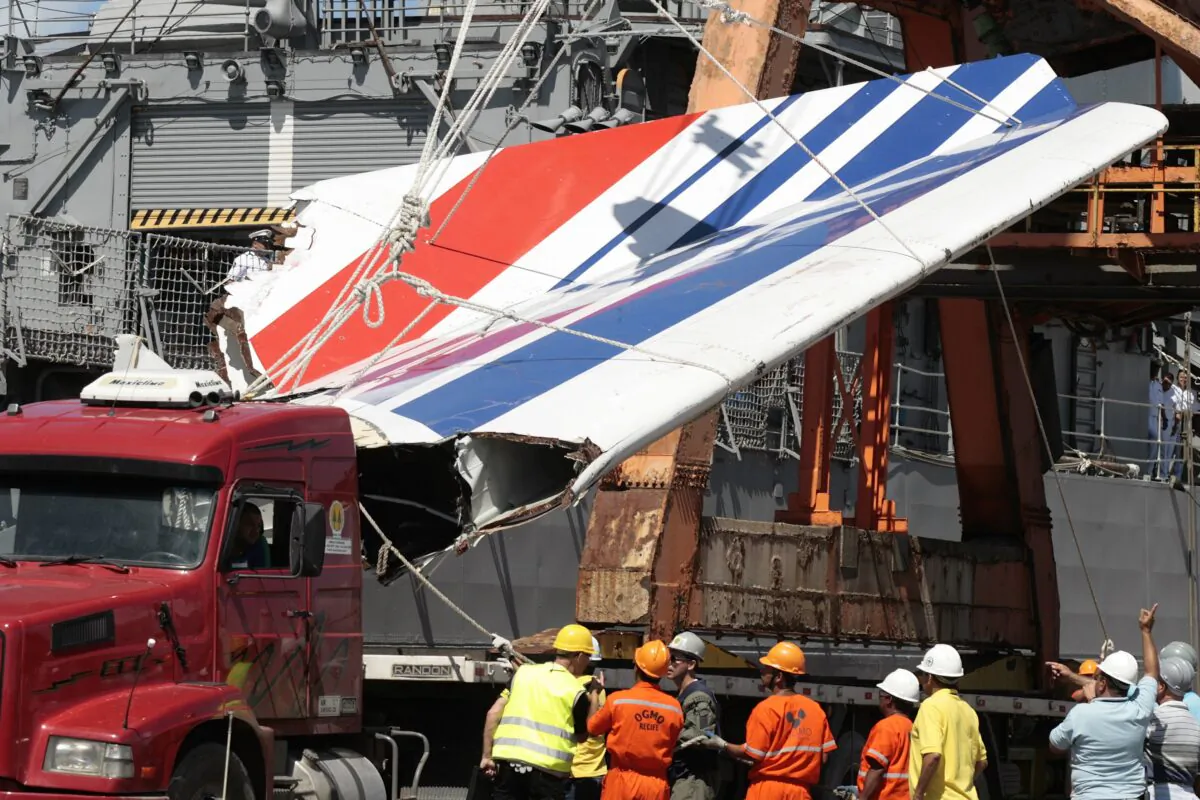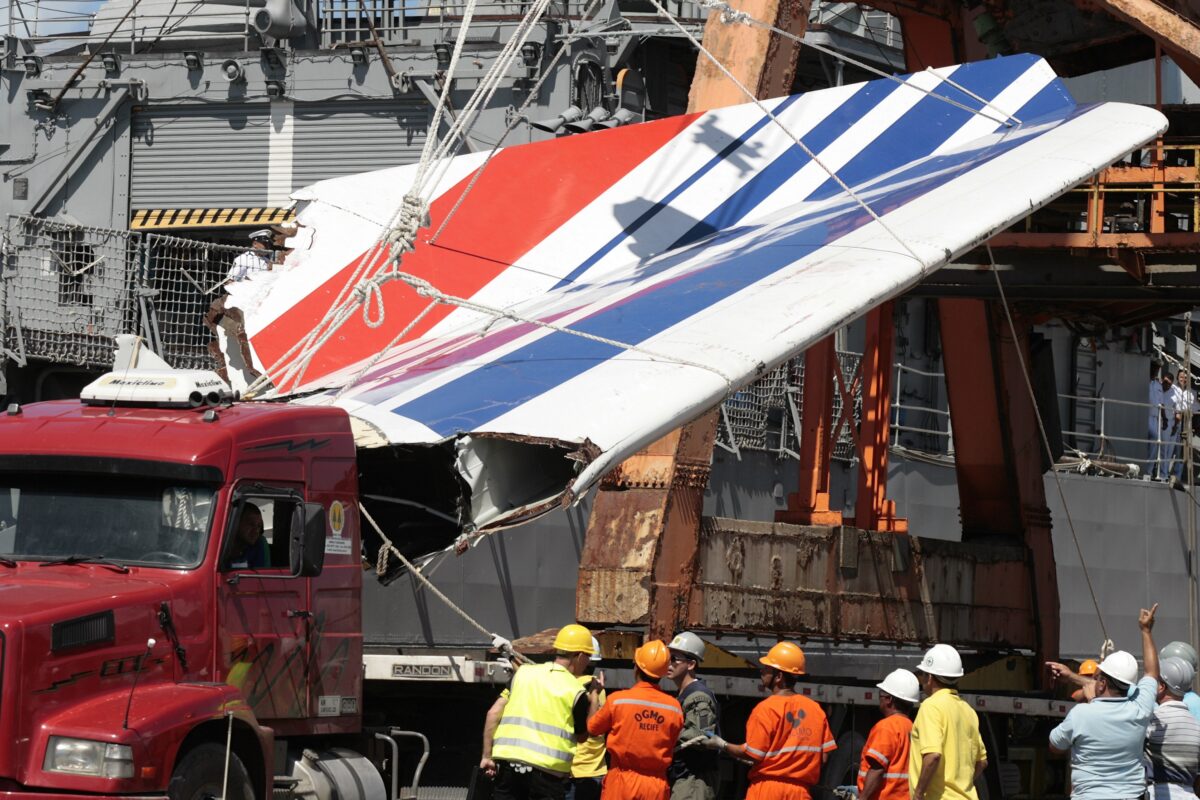

An appeals court in Paris overturned a lower court’s 2023 verdict on May 21 and found Airbus and Air France guilty of corporate manslaughter over a 2009 crash that killed 228 people.
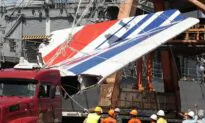
Flight 447 from Rio de Janeiro in Brazil to Paris vanished from radar screens over the Atlantic Ocean on June 1, 2009, during a storm.
The A330-200 plane was carrying 216 passengers and 12 crew members, and it took two years before the wreckage of the plane and its black box recorders were found on the ocean floor, at a depth of 13,000 feet.
The appeals court ordered them both to pay the maximum fine for corporate manslaughter, 225,000 euros ($260,000), following prosecutors’ request during last year’s eight-week trial.
“Justice has absolutely been done,” Daniele Lamy, president of the AF447 victims’ association, said outside the courtroom after the ruling was handed down. Her son Eric, who was 38, was one of those who died.
Air France and Airbus said in separate statements on May 21 that they would appeal to the Court of Cassation, the country’s highest court.
Alain Jakubowicz, a lawyer for the families, said a second full retrial, rehashing the evidence a third time, could not be ruled out if the Court of Cassation overturned the appeals court’s ruling.
Airbus Seeks ‘the Truth’
In its statement, Airbus expressed “sympathies and unwavering support to the families and loved ones of the victims” of the incident.
“From the outset, Airbus has pursued a constant objective: to understand the facts, to seek the truth, to draw all necessary lessons, and to act responsibly to continue improving aviation safety,” the company said. “Flight safety is the absolute priority for Airbus. It is at the heart of Airbus identity, its industrial operations, and the focus of all its employees, from aircraft design through to operation.”
Air France said it regretted that its appeal would prolong the already lengthy process for the victims’ families but noted that the company’s criminal liability had previously been dismissed.
The official investigation found that multiple factors contributed to the disaster, including the icing over of pitot tubes—devices on the wing of the plane used to measure airspeed—and inappropriate control inputs.
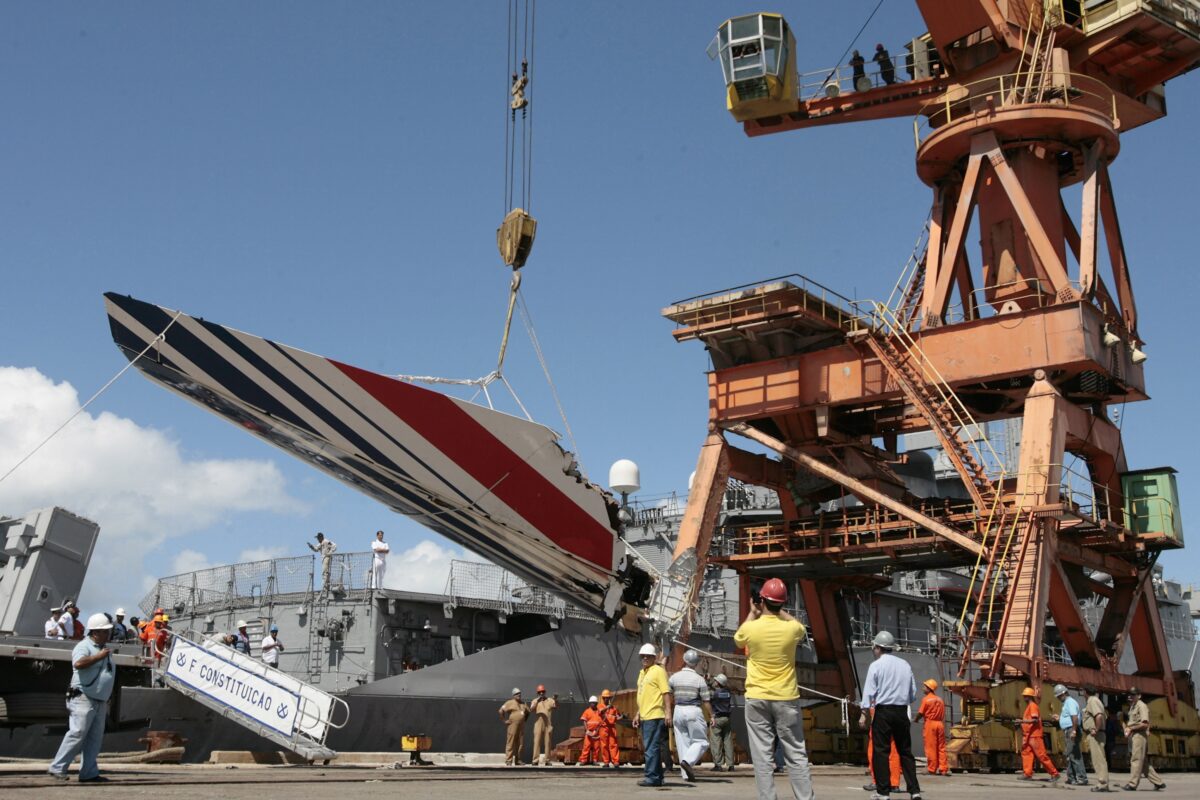
When the airspeed indications became unreliable, the autopilot and autothrust disconnected. The pilot made nose-up sidestick inputs, causing the aircraft to climb to about 38,000 feet and enter a sustained stall, then descend rapidly before crashing into the Atlantic Ocean.
Air France was accused of failing to implement training in the event of pitot tubes icing over. Airbus was accused of not doing enough to urgently inform airlines and their crews about potential faults with the pitot tubes.
France’s National Union of Airline Pilots welcomed the appeals court’s ruling and said it would be “unacceptable to place responsibility for the outcome of this accident solely on the pilots, without taking into account all of the systemic failures that led to the disaster.”
The Brazilian head of a victims’ association, Nelson Faria Marinho, said he was dissatisfied with the outcome and felt that justice had yet to be served.
Marinho, whose son Nelson Jr. died in the crash, said he wanted executives of the two companies to go to jail, although the appeals court does not have the power to take such measures and simply ruled on corporate responsibility.
“I’ve lost my father, my mother, brothers. It hurts a lot, but it is impossible to translate into words the pain of losing a child,” Marinho said, at his home in Brazil.
Since the crash, there have been changes in regulations for airspeed sensors and in pilot training.
The Associated Press and Reuters contributed to this report.
 Friends Read Free
Copy
Facebook
Tweet
Friends Read Free
Copy
Facebook
Tweet