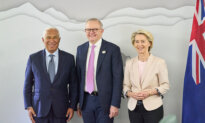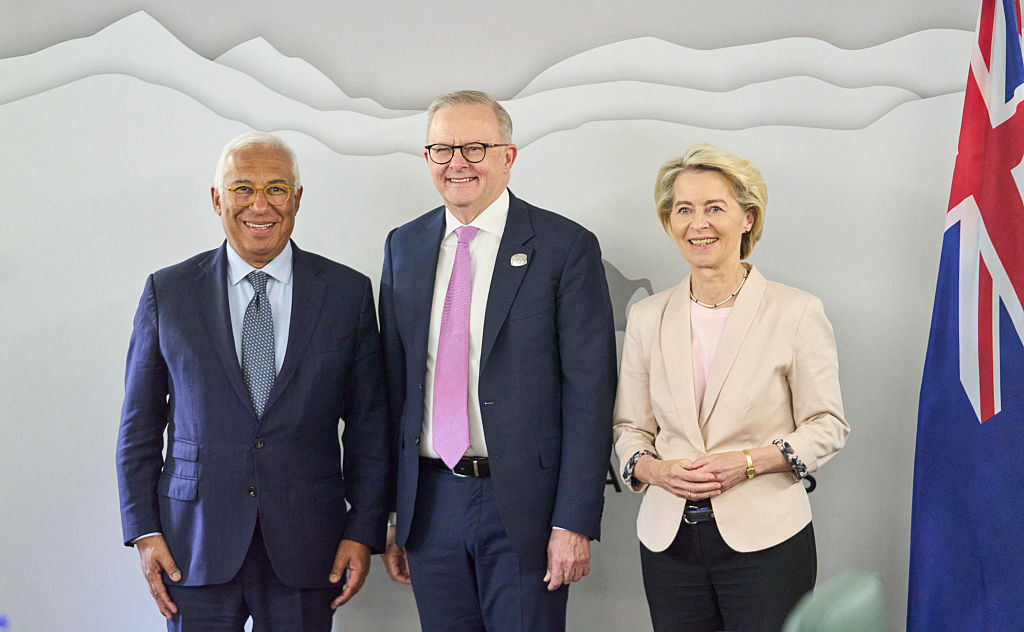

Australian Prime Minister Anthony Albanese has talked with U.S. officials on the sidelines of the G7 summit following the cancellation of his meeting with President Donald Trump.
The highly anticipated meeting was scheduled for June 17 local time, during which Albanese was expected to push for a tariff exemption on Australian products.
Currently, the United States imposes a baseline tariff of 10 percent on most of Australia’s exports, while the country’s steel and aluminium products are subject to a much higher tariff of 50 percent.
Apart from trade issues, the prime minister was expected to advocate for the AUKUS nuclear submarine deal, as the Pentagon has conducted a review of the trilateral security partnership with Australia and the UK.
However, things did not go as planned when Trump announced that he had to leave the G7 summit early to deal with the escalating conflict between Israel and Iran, just 24 hours before his meeting with Albanese.
A spokesperson for the prime minister said Trump’s decision was understandable, given the developments in the Middle East.
Albanese instead held talks with several top U.S. officials, including Treasury Secretary Scott Bessent, National Economic Council Director Kevin Hassett, and Trade Representative Jamieson Greer.
“I had a meeting this morning with U.S. Secretary of the Treasury Scott Bessent, which was a good opportunity to put forward Australia’s position on tariffs,” the prime minister said.
He also brought up the trade surplus that the United States has with Australia.
“We made the point very clearly to the American trade representative and to [other officials] that the [free trade agreement] has delivered for both Australia and the United States for a couple of decades now,” Albanese said.
Australia’s ambassador to the U.S. and former prime minister, Kevin Rudd, also took part in the meeting, during which the two sides discussed trade, tariffs, and Australia’s critical minerals and rare earth minerals.
Meanwhile, Opposition Leader Sussan Ley has criticised Albanese for missing the meeting with Trump, calling it a missed diplomatic opportunity.
While Ley acknowledged that it was reasonable for Trump to leave early, she said Albanese should not have relied on the G7 summit as the only channel for having a face-to-face dialogue with the U.S. president.
Albanese’s Meetings With Other G7 Leaders
While the prime minister did not achieve his primary objective for the G7 summit, he met with other world leaders to discuss important issues concerning Australia.
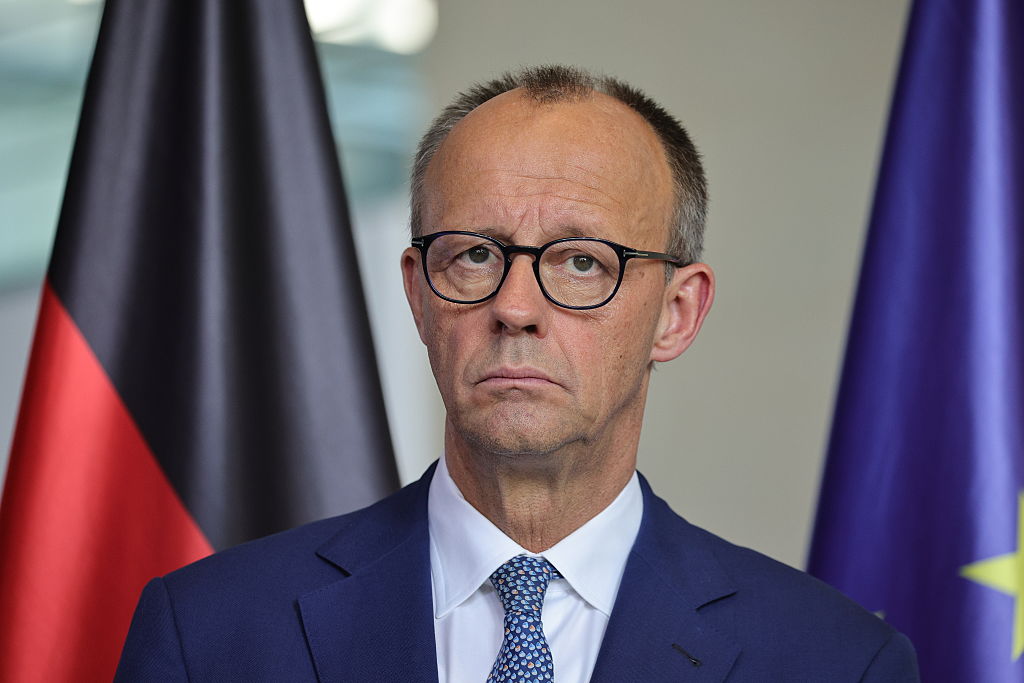
During a meeting with German Chancellor Friedrich Merz, Albanese said he was “very keen” on finalising a free trade deal with the EU quickly.
Merz was receptive to the idea and offered to help advance the negotiation between the two sides.
“Is there anything I can do to speed it up a little bit?” he said ahead of their meeting.
Australia began negotiations for a free trade agreement with the EU in 2018.
However, they broke down in 2023 due to several unresolved hurdles.
Australia has pushed for the EU to significantly increase its quotas on the country’s agricultural products, including dairy products, sugar, beef, and sheep meat.
However, the bloc was unable to meet Australia’s requirements due to pressure from European farmers.
In addition, Australia rejected the EU’s demand to extend geographical indication protections to hundreds of product names—an arrangement that would have barred Australian producers from using terms like Parmesan, feta, and prosecco.
Albanese also met with Japanese President Shigeru Ishiba, UK Prime Minister Keir Starmer, Canadian Prime Minister Mark Carney, and South Korean President Lee Jae-myung.
 Friends Read Free
Copy
Facebook
Tweet
Friends Read Free
Copy
Facebook
Tweet