
Alberta says it will provide nearly 500 elementary schools across the province with “complexity teams” to meet the academic and behavioural needs of students.
Classroom complexity was one of the issues raised by teachers during a three-week strike in October. The teachers were ordered back to the classroom after Smith’s government passed the Back to School Act on Oct. 28.
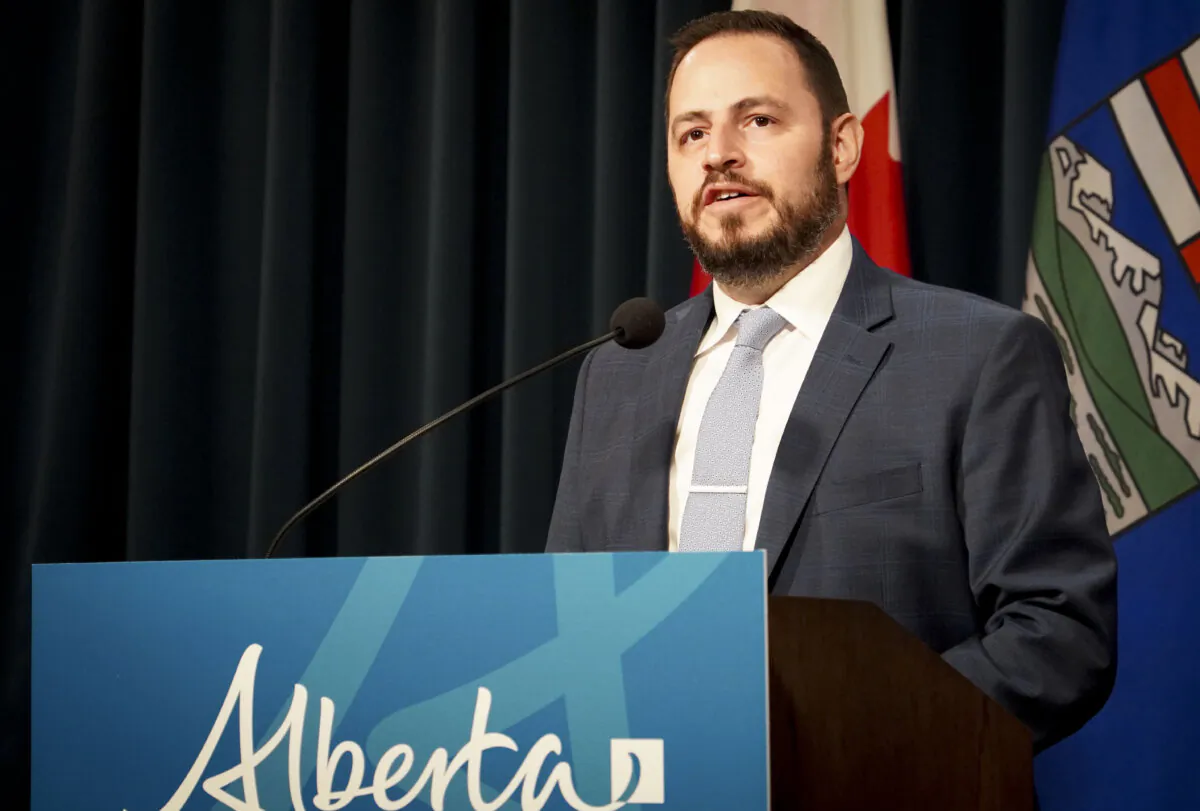
Smith and Education Minister Demetrios Nicolaides made the funding announcement on Feb. 12, saying the province will commit to spend $143 million on 476 teams, which will be made up of one teacher and two education assistants.
The premier said the decision was made after the province gathered data from 1,549 schools, representing 89,000 classrooms, which was compiled into a report and showed class sizes were “significantly higher” in some areas of the province.
Smith said the trend of increasing complexity in schools corresponded with a provincial population boom that has put a strain on public services across the province.
“The report makes it clear that this strain is felt first and most acutely on the front lines in classrooms around the province, and this lines up with what we’ve heard firsthand from teachers and students, and it’s so important that we correct course on this challenge,” she told reporters on Feb. 12.
“Our government recognizes that if we want to maintain our world class education system, our approach has to change just as quickly.”
Minister Nicolaides said the data showed that classes sizes in the province were “relatively in good shape,” with 79 percent of kindergarten to Grade 3 classrooms, and 65 percent of all kindergarten to Grade 6 classrooms, having less than 25 students.
“Furthermore, only 1 percent of all reported classrooms over 30 are in our [kindergarten to Grade 3] environment. In fact, 91 percent of all classrooms over 30 are in grades seven to 12,” he said.
The complexity teams will support students in several ways, including helping students learn English, manage disruptive students, and provide in-class assistance to teachers.
The government said the teams will identify student needs early, and will be able to bring in additional specialists when needed.
Alberta Teachers’ Association (ATA) president Jason Schilling said that teachers and school leaders are “skeptical” about the announcement.
“We will need to spend time analyzing the data released by government today to ensure that it truly reflects the nature of our class sizes and needs,” he said in a Feb. 12 statement.
Schilling said that targeted intervention is necessary, but “it is only a beginning.”
“Alberta must commit to stable, predictable, and adequate funding that reflects the full scope of need across the entire education system,” he said.
The government said 162 of the teams will be dispersed to urban and rural schools, while the other 314 will go to metro schools.
Nicolaides said the province would measure the teams through surveys and feedback from teachers, track the number of interventions each team conducts, and look at the number of classroom disruptions.
 Friends Read Free
Copy
Facebook
Tweet
Friends Read Free
Copy
Facebook
Tweet