
Alberta ended the 2025–26 fiscal year with a $2.2 billion surplus, $7.4 billion better than budgeted thanks in part to high energy prices.
A $5.2 billion deficit was initially forecast, but revenue came in higher by $5.6 billion and expenses declined by $1.8 billion, turning the outcome into a surplus, according to the province’s 2025–26 year-end fiscal update.
The increase in revenue over budget was driven by gains in investment income of $2.1 billion, corporate income tax and other taxes that accounted for $1.1 billion, non-renewable resource revenue of $0.9 billion, and government business enterprise net income and other revenue totalling $1.8 billion. These increases offset drops in revenue from personal income tax and fees worth $0.4 billion.
The surplus of $2.2 billion for the year represents the province’s fifth-consecutive surplus year.
Despite the improvement over the forecast, the year finished down $6.1 billion compared to the 2024–25 surplus of $8.3 billion.
Aside from the decrease in revenue from income taxes, lower non-renewable resource revenue also contributed to that lower surplus, the province says.
The decline in annual expenses compared to the budget were due to lower capital grants ($0.5 billion), lower miscellaneous expenses ($0.2 billion), and the full allocation of the $4 billion contingency, which is for emerging issues such as disasters. These declines offset increases in operating expenses of $1.5 billion and disaster funding totalling $1.4 billion.
The year’s expenses were still higher by $3.4 billion compared to 2024–25, which was due mainly to the increase in operating expense increases for health, education, and social services (including ratified public sector agreements). However, disaster and debt servicing costs were lower year-on-year.
The update said the initial budget’s outlook for the year was based on global uncertainties, U.S. trade and tariff policies, and geopolitical tensions. Government decisions for the year prioritized health care, education, and social programs amid rising population growth and inflation, it said.
Facing potential U.S. tariffs, and planning for emerging issues and ongoing public sector compensation negotiations, the province doubled the budgeted contingency fund to $4 billion.
The government also emphasized savings through the Alberta Heritage Savings Trust Fund, which grew by $5.2 billion through net income retention and a $2.8 billion deposit.
“We delivered that surplus in the same year we cut personal income taxes with a new 8% bracket, the lowest in the country. That put up to $750 back in the pocket of every Albertan and up to $1,500 back with the average family,” Alberta Premier Danielle Smith wrote on social media.
“The Heritage Fund is on track to reach $35 billion in 2027 and $250 billion by 2050.”
Smith said the province is on track for a sixth-consecutive surplus year, and that it will continue growing the Heritage Savings Trust Fund.
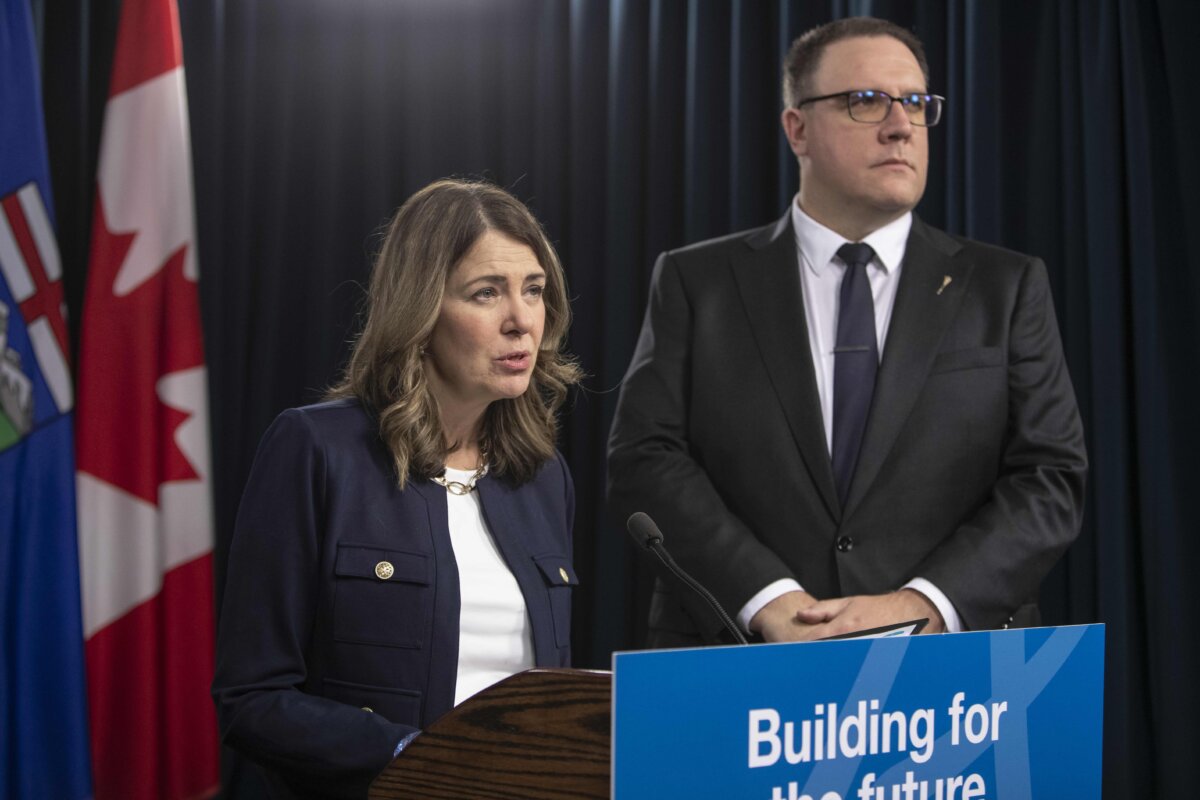
“We know oil prices can change in a day, and we will not mistake a good year for a guarantee,” Alberta’s President of the Treasury Board and Minister of Finance Jason Nixon said. “Instead, we’ll keep spending under control, growing our savings, cutting our debt and protecting the services Albertans count on.”
Alberta NDP criticized the timing of the release of the fiscal update, saying it was delayed to “score political points.” The UCP government had said that the update couldn’t be released at its usual time in June because of complexities tied to ongoing health-care system restructuring.
“A responsible government releases information on time and on schedule,” NDP MLA and finance critic Court Ellingson said. “But far more importantly, a responsible government would turn a surplus into tangible benefits for Albertans: an affordability plan, a minimum wage increase with supports for small businesses, a health care recruitment strategy to stabilize emergency rooms, stronger disability supports, and more schools, to name just a few.”
 Friends Read Free
Copy
Facebook
Tweet
Friends Read Free
Copy
Facebook
Tweet