
Alberta is launching an $809 million “patient-focused” surgery funding model beginning in a dozen public hospitals throughout the province that will see them receive a predetermined price for each surgery performed, rather than relying on a fixed annual budget.
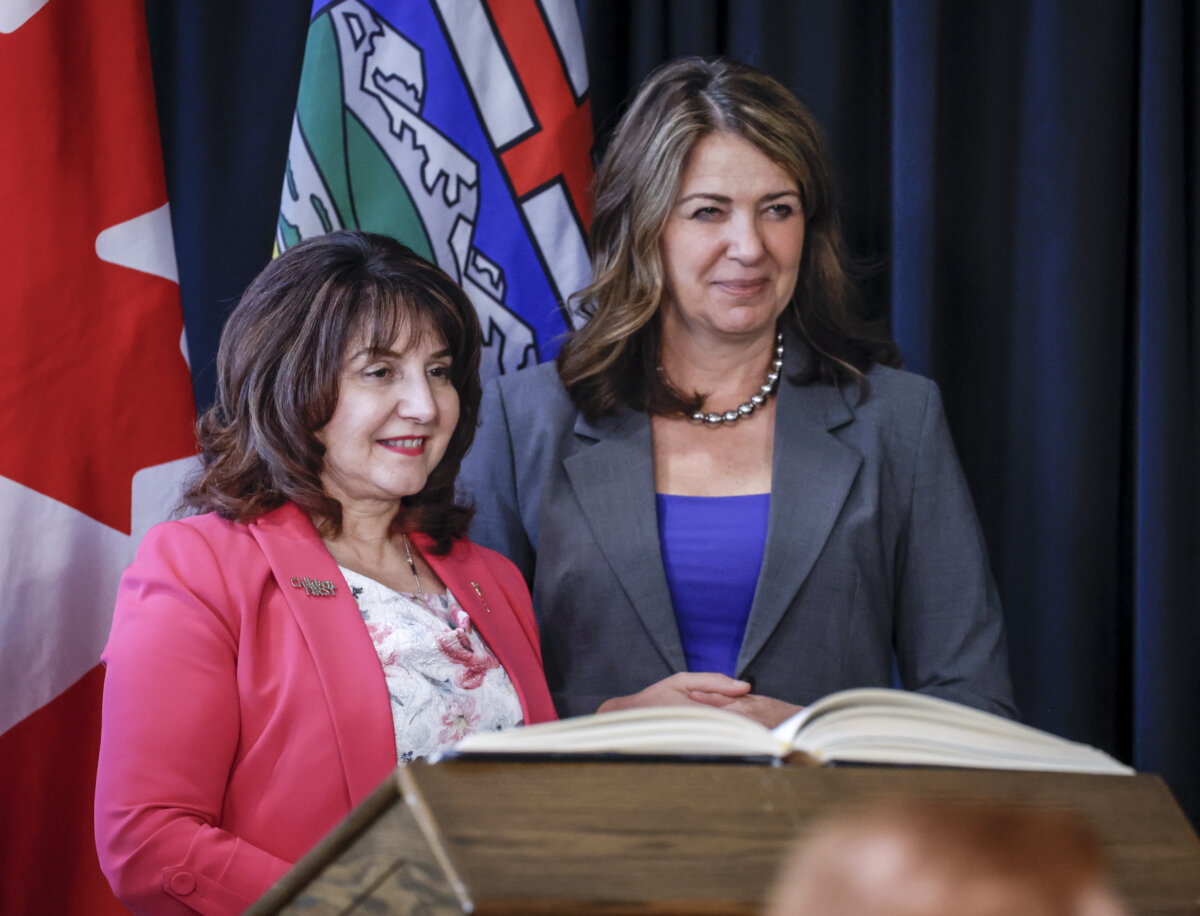
“It’s a system that aligns the incentives the right way,” Premier Danielle Smith said at a June 1 press conference in Calgary. “It rewards hospitals for treating more patients instead of making every patient a cost.”
The new model began to roll out last month at 12 hospitals run by Alberta Health Services and Covenant Health, including the Royal Alexandra Hospital in Edmonton and the Rockyview General Hospital in Calgary.
Smith first announced the change to the new funding model more than a year ago. At the time, she said it aims to increase hospital accountability and reduce costs by promoting competition between public and private surgical providers that conduct publicly funded procedures.
However, the initial rollout announced this week is restricted to public hospitals.
How the Funding Works
This phase of the roll out applies to what Health Minister Adriana LaGrange called “high volume planned procedures” such as hip and knee replacements, cataract surgeries, and some shoulder procedures like arthroscopic rotator cuff repairs.
“These were chosen deliberately. They are common,” LaGrange said during the press conference. “They have long wait lists and improving access to them directly improves quality of life and independence for Albertans.”
Acute Care Alberta, the provincial health agency that oversees hospitals, released a “price book” this week outlining the funding model for each type of surgery that is part of the trial.
The book contains set pricing models for standard surgeries, but hospitals can receive more funding if patients have pre-existing conditions that make the procedure more complicated and resource-intensive.
A standard day-surgery hip replacement, for example, would be $8,900, but that price would rise to as much as $33,440 if the patient has other serious conditions that could impact the surgery.
The book pegs standard knee replacement day surgeries at $8,530, unilateral cataract surgery at $880, and shoulder replacements at $6,800.
LaGrange said her ministry will be monitoring “quality, safety, and outcomes” throughout this phase of the roll out and “future expansion will be considered only after careful evaluation.”
Patient-focused funding has been introduced gradually over several years in other jurisdictions, including the UK, Germany, Australia, and Norway, LaGrange said. In these cases, implementation took place in incremental phases while evaluating the effects to allow systems to adjust.
Future Plans
The plan is to use the new funding system to shape future contract discussions with private providers, government officials told reporters during the briefing.
Smith said the province has to “start somewhere” in the process of implementing the system and reducing costs.
“This is about getting the level of efficiency up at all of our hospitals,” she said. “We are starting from a position of fairness. We know that different types of surgeries take different amounts of resources and we want to be able to pay everybody fairly on that basis.”
Some adjustments could occur “based on what we discover on the efficiencies and the pricing,” Smith added.
She said the new model could expand to include additional procedures and other hospitals if the initial rollout is executed successfully.
Sarah Hoffman, the Opposition NDP hospitals critic, said the new funding model is not a good solution for surgical backlogs.
“Activity-based funding pushes hospitals towards quicker, less complex procedures at the expense of comprehensive care, proper followup and better health outcomes,” Hoffman said in a statement. “If this government truly wanted to fix health care, it would invest in public surgical capacity, address bottlenecks across the system, and work with patients, providers and communities on real solutions.”
Alberta Medical Association president Dr. Brian Wirzba said his organization is concerned about public hospitals potentially focusing on easier patients to remain competitive with chartered surgical facilities.
“So, it really all depends on that formula that’s used,” he said in a media statement. “We would be asking that that formula be transparent, so that everyone knows how it is addressing that patient complexity.”
Government officials said during the press conference that indicators of success for the new model will be an increased number of surgeries and shorter hospital stays.
Acute Care Alberta’s price book indicates that nearly 26,000 surgical procedures—with approximately half being cataract replacements—will be funded through the new model in the first year.
The government has also allocated $525 million over three years to support up to 50,000 additional surgeries by expanding operating room capacity in public hospitals and increasing the use of chartered surgical facilities for lower-complexity procedures.
This will help free up hospital capacity for more complex cases, which will reduce wait times and improve patient flow, the province said in a press release.
Alberta is also earmarking $284 million over three years through the Alberta Surgical Initiative Capital Program to renovate operating rooms, upgrade surgical infrastructure, and purchase new equipment in publicly owned hospitals in what is described as a bid to expand long-term surgical capacity across the system.
The Canadian Press contributed to this report.
 Friends Read Free
Copy
Facebook
Tweet
Friends Read Free
Copy
Facebook
Tweet