
A new report by ATB Financial says Alberta’s economy is expected to finish the year strongly and outpace other provinces in various metrics, thanks in part to high oil and gas prices.
The report projects that the Prairie province’s real gross domestic product (GDP) will grow by 2.6 percent this year, above the 0.9 percent nationally, and expand by 2.3 percent next year, outpacing the expected national growth of 1.5 percent.
The report also projects that the “high case” scenario in GDP growth this year could be 3.4 percent, while next year the “high case” increase could be 3.8 percent.
“Geopolitical instability and trade uncertainty have led to a period of slower growth and higher inflation in Canada. Alberta is not immune to these challenges, yet is still on track to finish 2026 in a relatively strong position,” the company said.
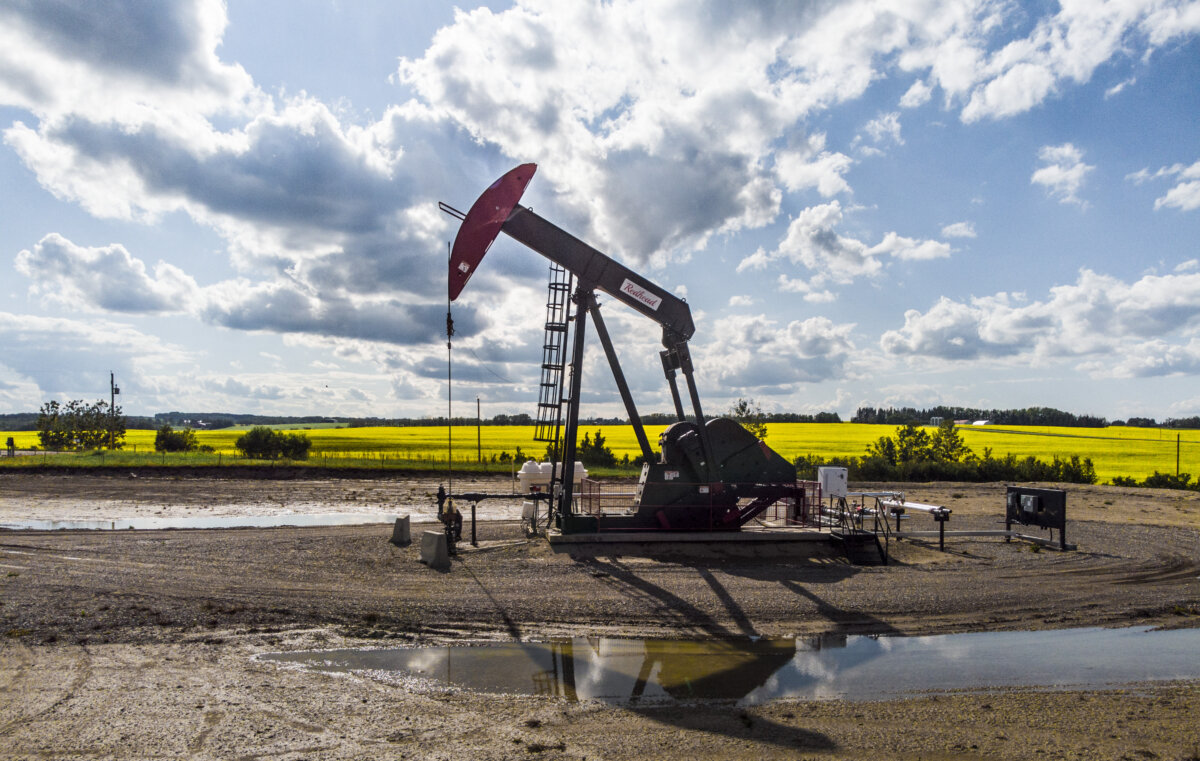
ATB Financial credited Alberta’s economic growth to “a resilient energy sector” that is expanding production and benefiting from higher crude oil prices and improved market access for oil and liquefied natural gas (LNG).
The report says Alberta is producing roughly 4.2 million barrels of oil per day this year, while it projects total export revenues of $99.3 billion and total capital investments of $25.1 billion this year.
Other upsides exist, but the company said it was maintaining “a cautious forecast on investment” until a new West Coast pipeline was constructed and oil sands projects could fill it.
ATB Financial noted that other projects supporting the forecast include initiatives such as Meta’s new data centre, De Havilland’s aerospace hub, Dow’s Path2Zero petrochemical project, Enhance’s carbon capture hub, and natural gas pipelines by Wolf Midstream and ATCO.
“Alberta’s economy is faring relatively well given the geopolitical circumstances,” Mark Parsons, vice-president and chief economist at ATB Financial, said in a news release.
“But that does not mean every Albertan is feeling better off. Higher living costs continue to put pressure on households, while global instability is adding a layer of uncertainty that businesses cannot ignore.”
While tariffs and trade uncertainty are placing “a major constraint” on Canada’s growth, Alberta faces a lower tariff burden due to energy exemptions and lower exposure to targeted goods like steel, aluminum, and autos, ATB Financial said. Yet, some businesses facing sectoral tariffs up to 50 percent will experience significant effects.
“Many businesses have also cited the uncertainty over the October referendum as having an impact,” the report stated.
At the same time, trade tensions with the United States and the energy crisis the conflict in the Middle East has caused have highlighted “Canada’s role as a safe, reliable global partner,” ATB Financial said. The upside to Canada “meet[ing] the moment” includes pursuing major projects and attracting capital to ensure the country becomes a global supplier of choice.
The report noted that Alberta’s population is still growing, albeit slowly, as interprovincial migration continues due to good jobs and relative affordability and fewer outflows of temporary residents. It added that population growth should increase in 2027 but remain below the past three years.
 Friends Read Free
Copy
Facebook
Tweet
Friends Read Free
Copy
Facebook
Tweet