
Canada’s financial watchdog says the federal government’s new budget framework contains inconsistent and “contradictory” definitions for some spending categories, making it difficult to predict how future expenditures will be treated.
Prime Minister Mark Carney’s Liberal government introduced a new budget structure last year that separates day-to-day operating expenditures from spending classified as capital investment. Known as Capital Budgeting Framework, it was officially introduced last October by Finance Minister François-Philippe Champagne and was formally implemented as part of Carney’s first federal budget released in November 2025.
The framework broadly defines capital investment as government spending or tax expenditures that contribute to public or private-sector capital formation.
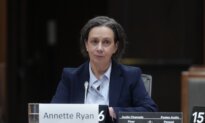
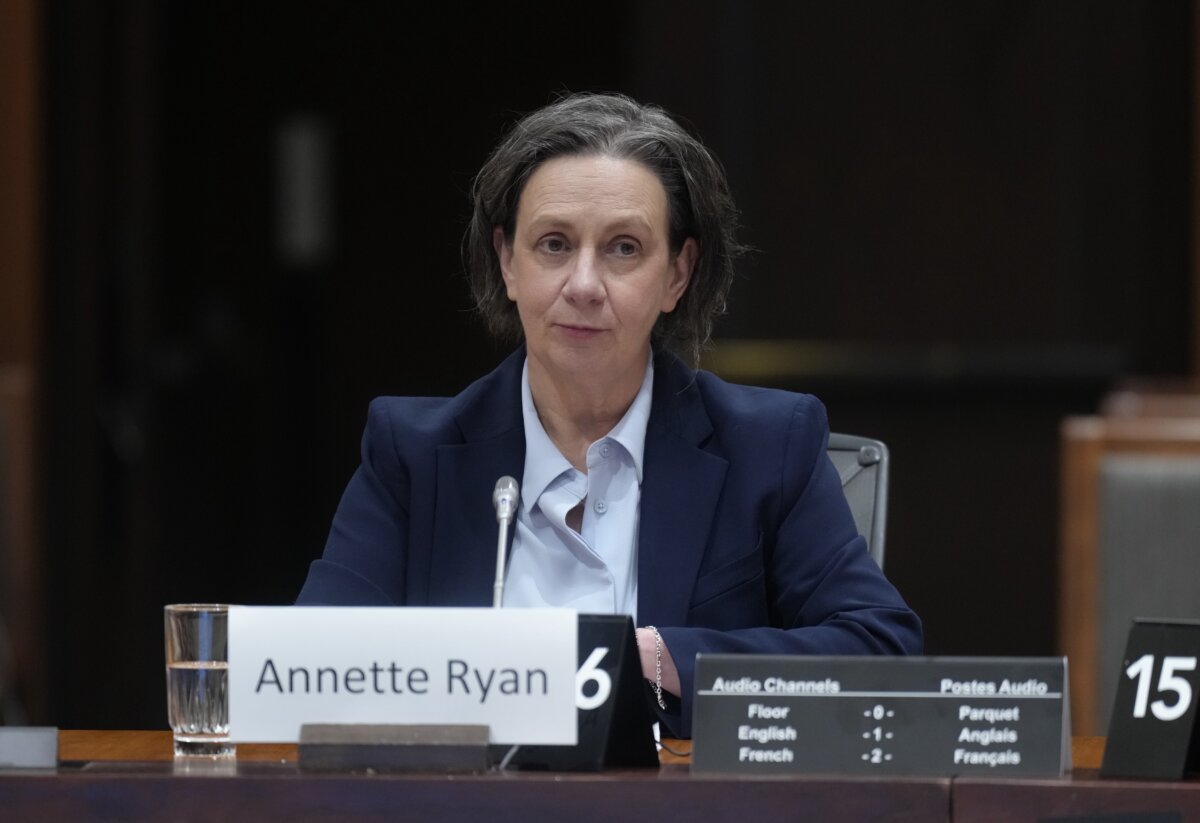
A Sept. 24 report from Parliamentary Budget Officer Annette Ryan examines Ottawa’s progress toward balancing the operating side of the budget and compares Ottawa’s approach with frameworks used in other jurisdictions.
Ryan said that although the government is improving fiscal transparency in some ways, the way Ottawa defines its operating and capital categories isn’t as stringent as the definition used in other jurisdictions that use a similar framework, such as the United Kingdom and Singapore.
“Canada is not the first jurisdiction to tie a fiscal anchor to a capital-versus-operating split,” Ryan said, adding that while the UK has a similar framework, it also “pairs it with a debt rule and a capital definition aligned to international national accounts standards.”
“These are two characteristics notably absent from the Canadian approach,” she said.
The report provides several examples of what Ryan described as “contradictory” classifications.
Film tax credits are included as capital while journalism tax credits are not, the report noted. Another example involves two similar programs at Agriculture and Agri-Food Canada designed to encourage investment in farm equipment. One is classified as a capital transfer while the other is treated as day-to-day operating spending, even though both ultimately support the same type of farm-level investment.
“These examples reflect a broader pattern. Programs with similar objectives can receive different treatment depending on how directly they link to asset formation and classifying them can depend on judgments that vary program by program without a consistent, published rationale,” she wrote. “This makes it difficult to anticipate how future spending will be sorted.”
Ryan said that while the government argues strategic borrowing for targeted capital investments will support economic growth, its framework does not establish clear, measurable criteria for determining whether specific expenditures create tangible assets or deliver sustained economic benefits over time.
“Even where they do, those assets do not all generate the same financial return for government or the same contribution to broader economic growth, if any,” she said.
Ryan said it is “critical” that the definitions underpinning fiscal anchors be transparent and applied consistently over time so they can be “easily replicated by external bodies.”
Carney announced last week at the Canada Investment Summit that the federal government is on track to balance its operating budget by fiscal 2027-28. Meanwhile, the budget office’s forecasts, drawing from spring data, suggest Ottawa will reach that fiscal milestone two years later.
“PBO projects the government to slightly miss its 2028-29 operating balance target by one year, achieving balance in 2029-30,” Ryan said. “Targeted restraint to operating items of $500 million would allow the government to meet its fiscal anchor in 2028-29.”
Finance Ministry spokesperson John Fragos said in a media statement that the government remains committed to balancing its operating budget ahead of schedule and that the upcoming fall budget will demonstrate Ottawa’s fiscal prudence.
Conservative MP Michael Chong reacted to the PBO report on social media, calling on the government to abandon the Capital Budgeting Framework and use established Public Sector Accounting Board standards instead.
“The Carney government’s definition of operating vs. capital is nonsensical,” Chong said, arguing that the framework creates confusion over the state of federal finances and could make it difficult to determine whether the government’s fiscal anchor will actually constrain federal spending.
The Canadian Press contributed to this report.
 Friends Read Free
Copy
Facebook
Tweet
Friends Read Free
Copy
Facebook
Tweet