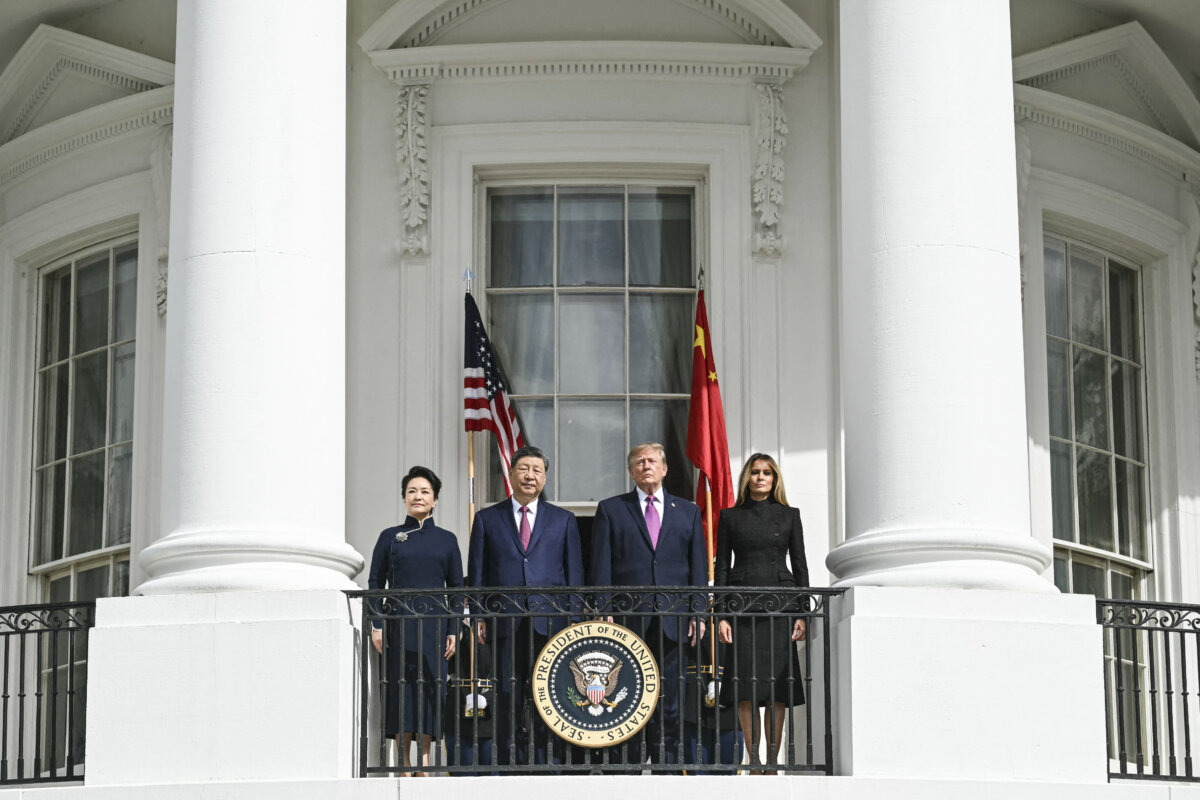

WASHINGTON—Chinese leader Xi Jinping arrived for his first White House meeting in more than a decade amid protests over his regime’s human rights abuses.
U.S. President Donald Trump, meeting Xi for the second time in the year, said the two countries have been working to bring about a more balanced trade relationship.
The two will discuss pressing issues—from artificial intelligence to technology and security—in a closed-door meeting, involving decisions that will be consequential for decades to come, Trump said in the opening speech. He said in an earlier social media post that there’s no plan for new AI guardrails with China.
While Trump touted their “truly great friendship,” Xi put greater emphasis on geopolitics, such as Chinese companies’ U.S. access.
The Chinese leader also evoked the “Thucydides trap,” a term referring to the danger of conflict that arises when a rising power threatens to displace an existing one, saying that the two countries can find a path to “get along.”
Xi last referred to the concept in May during the two’s Beijing meeting, implying that the United States is a declining power facing China’s challenge.
Trump said at the time that Xi was describing the country that his predecessor Joe Biden left behind.
Since 2020, Xi has repeatedly used the phrase “the East is rising, the West is declining,” referring to a perceived shift in global order.
To overcome the trap, Xi suggests, public sentiment is key—starting with the young. He announced an invitation for 100,000 young Americans to visit China for exchanges or study in the next five years. In two days, two pandas will arrive in Zoo Atlanta, he said, calling them an “envoy of friendship.”
Loaning out pandas and cultural exchanges are two popular devices for the regime to project soft power and improve its global image.
But there’s another side of China about which activists are seeking to remind the world.
Hours after Xi arrived in the District of Columbia, a human rights group projected the faces of Chinese political prisoners in multiple parts of the district. There are thousands of such individuals in China right now, and they should be free, the organizers said.
 Friends Read Free
Copy
Facebook
Tweet
Friends Read Free
Copy
Facebook
Tweet