
Bucharest has said allies are preparing to support Romania in reinforcing air defenses along NATO’s eastern flank, after a Russian drone strayed into Romanian airspace last week, hitting a block of flats and injuring two people.
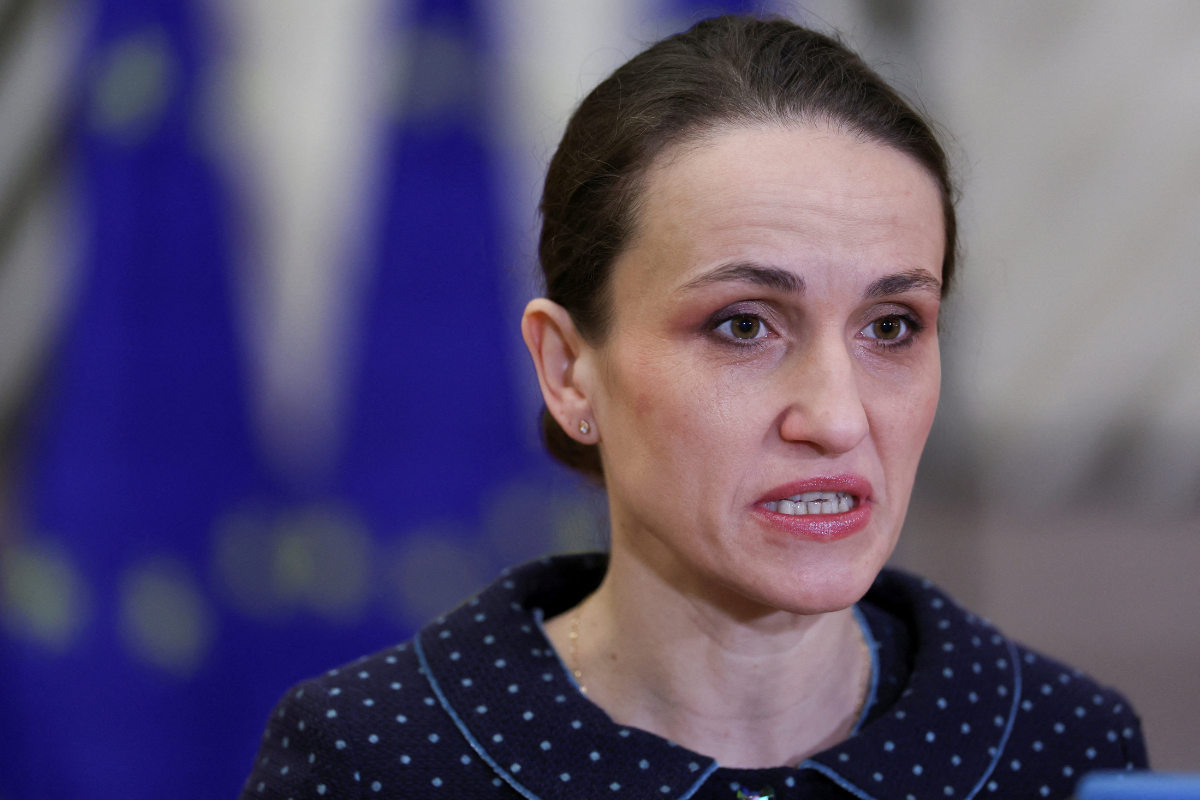
Romanian Foreign Minister Oana Toiu said during a visit to Paris on June 3 that the incursion into NATO airspace would accelerate efforts already underway to strengthen systems and responses, including anti-drone technologies.
“Our top priority is to increase capabilities,” Toiu said.
She said plans being considered are how NATO allies can supplement Romania’s existing air monitoring and air defense systems, particularly along its 400-mile border with Ukraine.
Reinforcements could include expanded radar coverage to track low-flying drones or more aircraft to monitor the airspace.
“There is a common understanding that we need to strengthen the eastern flank, not just in Romania. This is a conversation we’re having with the Baltics and all countries on the eastern flank,” she said.
Romania is seeking to modernize its own defenses—allocating 2 billion euros ($2.32 billion) to upgrade its air defense and monitoring systems—and Toiu said this support from allies would be a temporary means of securing the country’s airspace.
Drone Incursion Into Romania
The incident that sparked accelerating efforts to reinforce NATO’s eastern flank occurred when a Russian drone strayed into Romanian territory while conducting missions in Ukraine overnight between May 28 and 29.
The Romanian Ministry of Defense said the drone was conducting strikes on civilian and infrastructure targets in Ukraine, in the vicinity of the river border with Romania.
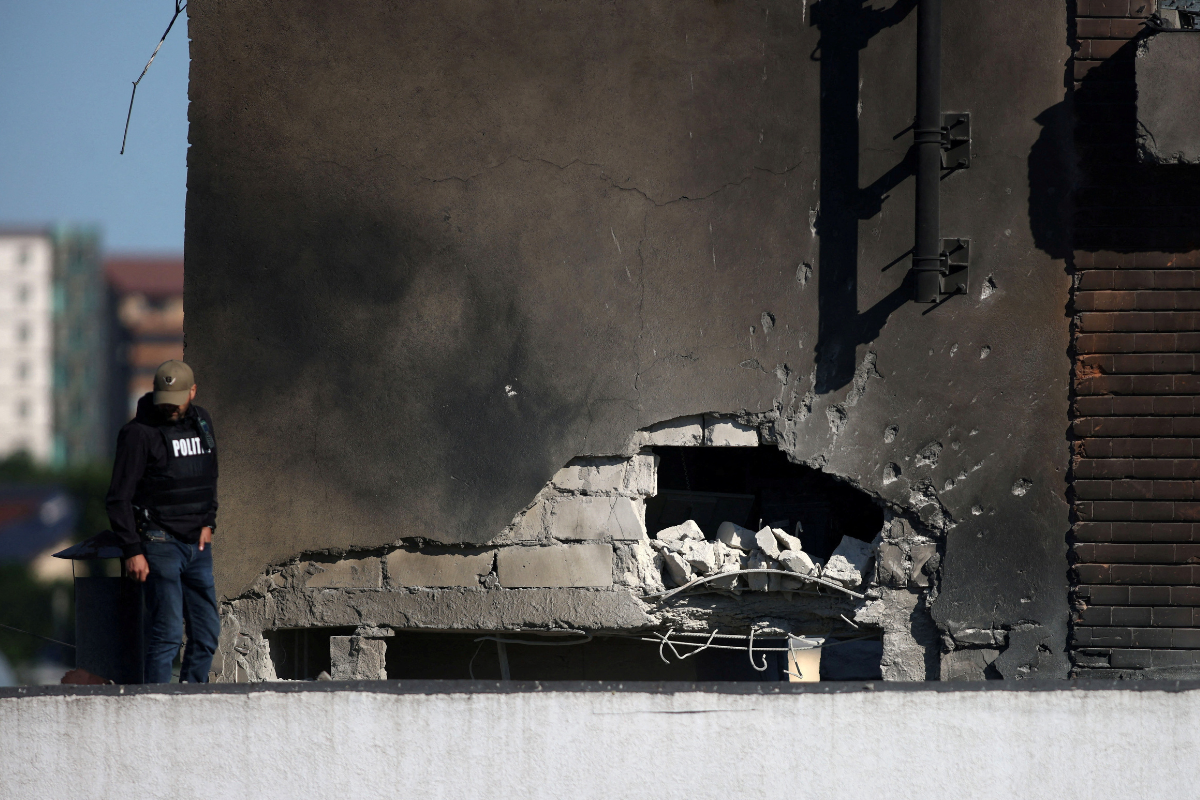
“A drone entered Romanian airspace, being tracked by radar to the southern area of the city of Galati, and crashed onto the roof of a block of flats, the impact being followed by a fire,” the ministry said on May 29.
Two civilians were injured.
Toui confirmed the drone in question was Russian.
The Romanian foreign minister said Bucharest had no evidence that the incident was intentional, but held Moscow fully responsible for the incursion.
Russian President Vladimir Putin on May 29 said it was too early to tell whether the drone was Russian, suggesting it might have been a stray Ukrainian drone.
“No one can say what the origin of this or that drone is until an examination has been carried out,” Putin told reporters at a news conference in Astana, Kazakhstan.
The Russian president said that Ukrainian drones had previously been spotted in the Baltic countries, Finland, and Poland.
“The first reaction was exactly the same as it is now in Romania: The Russians are coming,” Putin said. “Then, after a short time, it turned out that it had nothing to do with Russian drones.”
Stray Ukrainian Drones
A number of Ukrainian drones conducting missions over Russia have strayed into NATO territory.
Latvia and Lithuania on May 7 called for NATO to increase air defenses over the region after two suspected stray Ukrainian drones crossed over the border with Russia and crashed in Latvia, one of which exploded at an oil storage facility.
In late March, several stray Ukrainian UAVs hit Estonia, Latvia, and Lithuania. One hit a chimney at a power station, and another crashed into a frozen lake and exploded.
Stray Ukrainian drones also crossed into Finnish territory in March.
Ukraine had previously apologized to NATO members for the stray drones, saying Russia had redirected them through electronic warfare.
Reuters contributed to this report.
 Friends Read Free
Copy
Facebook
Tweet
Friends Read Free
Copy
Facebook
Tweet