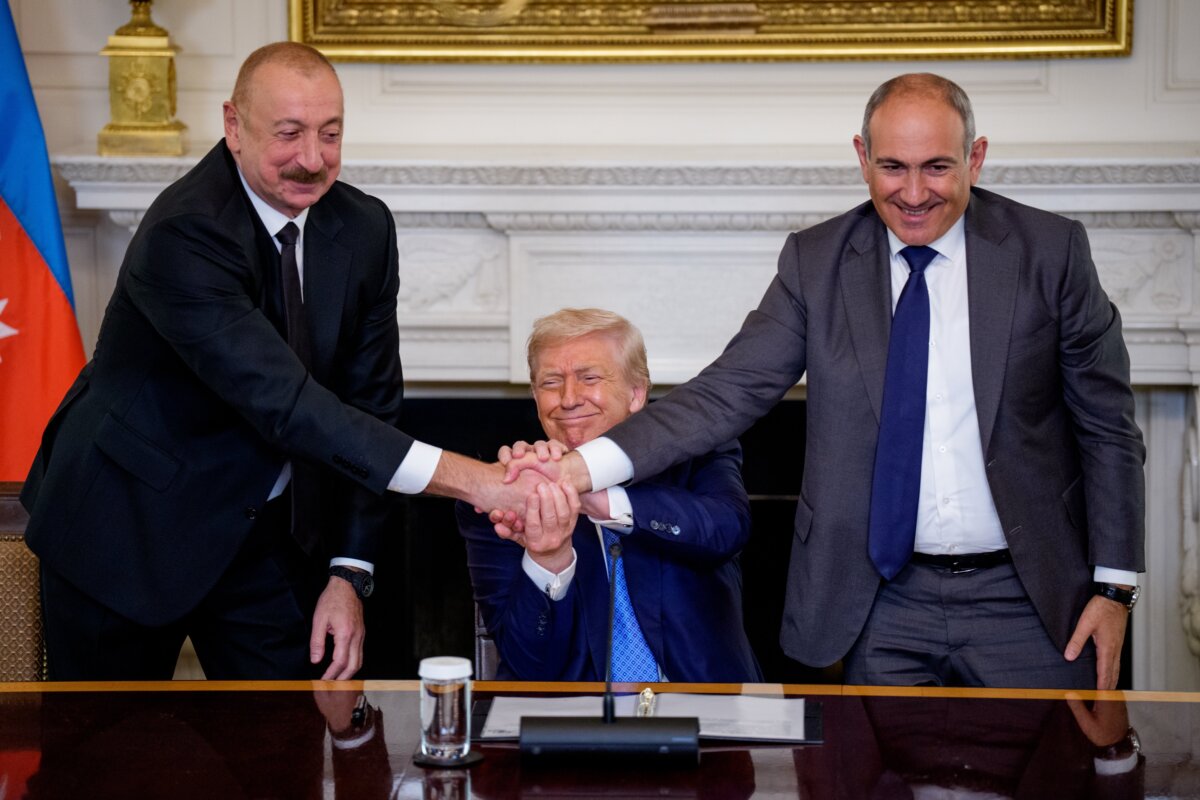

U.S. President Donald Trump hosted the leaders of Armenia and Azerbaijan at the White House on Aug. 8, where they signed joint declarations ending decades of conflict and paving the way for a transit corridor through the South Caucasus region.
Dubbed the Trump Route for International Peace and Prosperity (TRIPP), the planned corridor will traverse southern Armenia just north of the Iranian border.
Here’s the background to the long-running conflict—and what the new transport corridor could mean.
4 Decades of Conflict
Since before the fall of the Soviet Union in 1991, Azerbaijan and Armenia, two small states in the South Caucasus region, have remained implacable enemies.
The people of Azerbaijan are ethnically Turkic and have historically adhered to Shiite Islam. Armenians are an Indo-European people, the vast majority of whom are Christian.
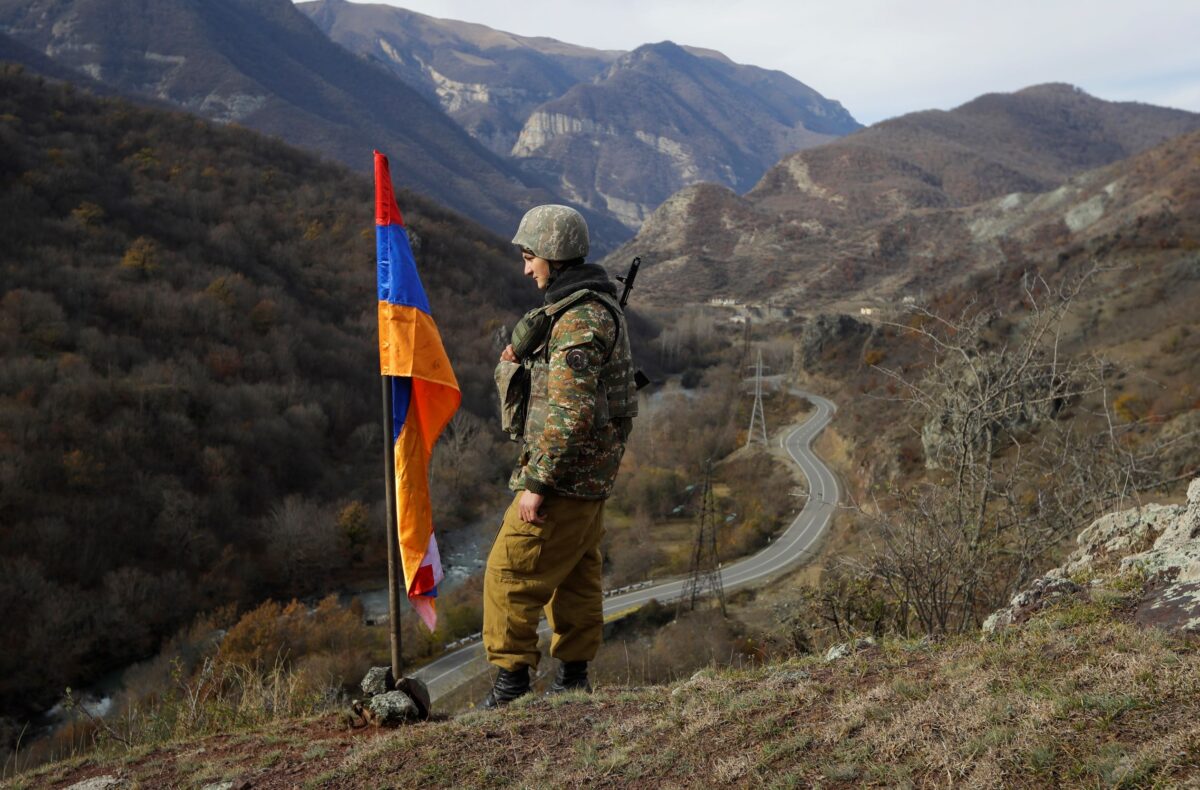
Within the past four decades, the two former soviet republics have fought two major wars—and countless skirmishes—over the mountainous region of Nagorno-Karabakh, known as Artsakh in Armenian.
While Nagorno-Karabakh has long been internationally recognized as part of Azerbaijan, it was, until recently, populated mostly by ethnic Armenians.
Following a war that lasted from 1988 to 1994, Armenia captured Nagorno-Karabakh from Turkey-supported Azerbaijan, leading to the expulsion of the region’s Azerbaijani inhabitants.
Armenia remained in control of Nagorno-Karabakh until 2020, when Azerbaijan, with Turkish support, retook most of the region in the Second Nagorno-Karabakh War.
The six-week conflict, in which thousands of soldiers from both sides were killed, ended with a cease-fire brokered by Russia, which has historically viewed the South Caucasus as its backyard.
In 2023, Azerbaijan staged a 24-hour offensive that brought Nagorno-Karabakh under its full control, prompting a mass exodus of ethnic Armenians from the region to next-door Armenia.
Since then, the two countries have sought to reach a final settlement aimed at ending hostilities once and for all and demarcating their 620-mile shared border.
In March, Armenia and Azerbaijan both announced that they had agreed on the text of a possible peace deal.
However, Baku refused to sign any agreement until Armenia changed its constitution to remove language that refers to the unification between Armenia and Nagorno-Karabakh.
Russia’s Backyard
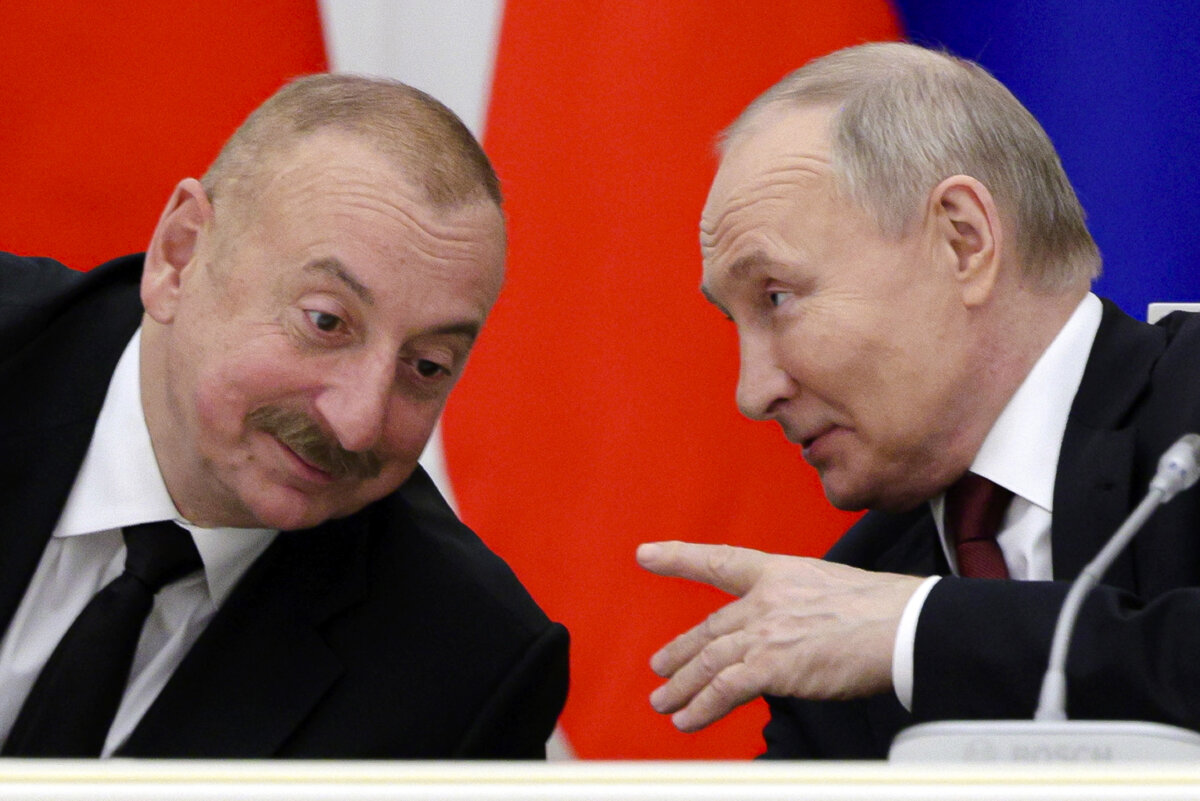
Despite their historical rivalry, both Armenia and Azerbaijan have, until recently, had good relations with Russia, which shares a 210-mile border with Azerbaijan and has often mediated between the two regional adversaries.
Both countries are members of the Commonwealth of Independent States (CIS), a Moscow-led regional bloc made up of nine former Soviet republics.
Armenia is also a longstanding member of the Collective Security Treaty Organization (CSTO), a six-nation security bloc led by Russia, and Moscow maintains a sizable military base in Gyumri, Armenia.
Armenia is also a member of the Eurasian Economic Union (EAEU), an economic confederation of five Eurasian states, including Russia, with which Yerevan maintains significant trade relations.
Unlike Armenia, Azerbaijan is not affiliated with either the CSTO or the EAEU.
In early 2022, only two days before Russia invaded eastern Ukraine, Moscow and Baku inked a political-military agreement, which, Azerbaijani President Ilham Aliyev said at the time, elevated bilateral ties to the “level of an alliance,” according to the Azerbaijan State News Agency.
Armenia’s Westward Tilt
Despite their longstanding affiliations with Russia, Armenia and Azerbaijan have both recently taken steps indicating a desire to leave Moscow’s orbit.
In 2024, Armenia suspended its participation in the Russia-led CSTO, citing the organization’s alleged failure to come to its aid during Azerbaijan’s 2023 offensive—a claim Moscow rejects.
In January, Yerevan signed a strategic partnership deal with Washington, which Armenia’s foreign minister said on X at the time was “essential for navigating the complex geopolitical landscape.”
Two months later, Armenia’s parliament approved a bill paving the way for possible EU accession—something Moscow has said was incompatible with its current membership in the EAEU.
However, these policy changes have not gone unchallenged by Armenian Prime Minister Nikol Pashinyan’s domestic critics, many of whom oppose his pro-Western stance and accuse him of making unacceptable territorial concessions to Azerbaijan.
In June 2024, Yerevan saw several days of anti-Pashinyan protests led by a prominent Christian archbishop who, along with his supporters, demanded the prime minister’s resignation.
Last month, the archbishop was detained on charges of plotting a coup against Pashinyan’s government, drawing a furious reaction from Armenia’s influential Apostolic Church.
Pashinyan, whose popularity has reportedly waned since taking office in 2018, will face tough parliamentary polls next year against opposition groups.
Baku, Moscow Fall Out
Russia’s relations with Azerbaijan have also been strained since December 2024, when an Azerbaijani passenger jet crashed while flying from Baku, Azerbaijan, to Grozny, Russia.
Azerbaijan insists the aircraft was struck—albeit accidentally—by Russian anti-aircraft fire, causing it to crash in Kazakhstan, killing 38 of the people aboard.
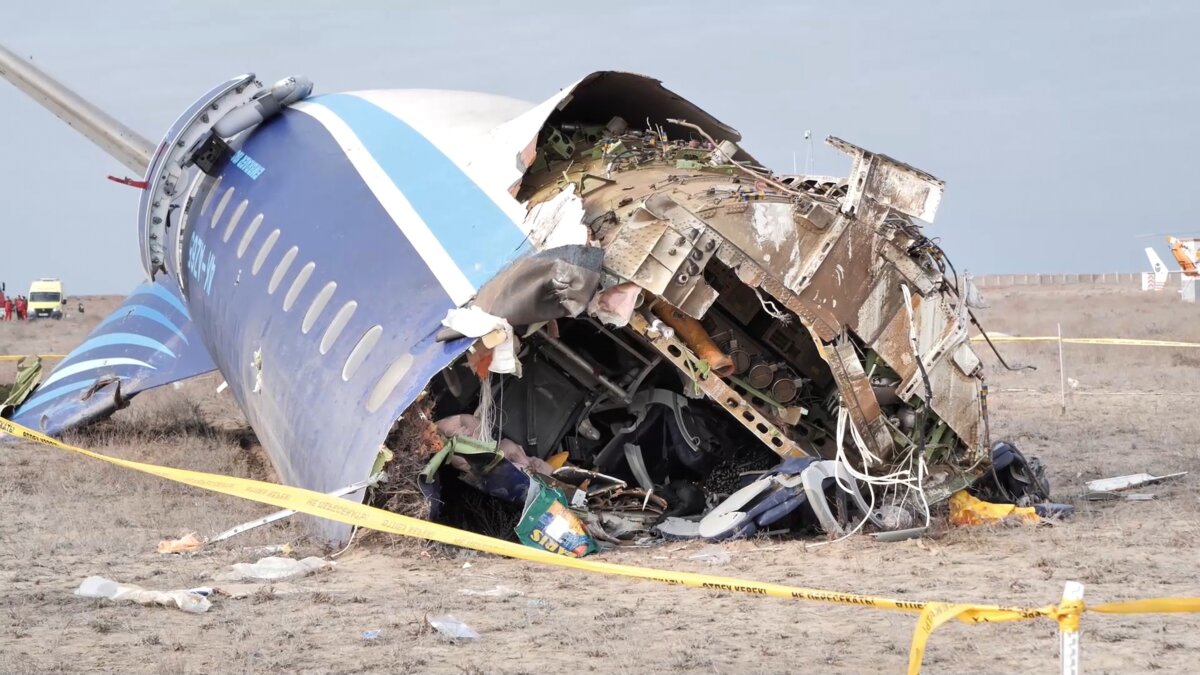
While Russian President Vladimir Putin has voiced regret for the “tragic incident,” he has stopped short of acknowledging Russian responsibility, to the frustration of Baku.
Relations took a turn for the worse last month, when several Russian nationals, including two Sputnik journalists, were arrested in Azerbaijan on a range of charges.
The crackdown was seen as retaliation for the arrest of a group of ethic Azerbaijanis, two of whom died in police custody, in Yekaterinburg, Russia, for suspected involvement in organized crime.
In response to the arrests, Baku has taken other retaliatory measures, including the cancellation of Russian cultural events in the country.
In a further sign of diplomatic friction, Baku declined to send a representative to a meeting of the CIS Economic Council, which was held in Moscow on July 18.
The next day, Aliyev repeated his demand that Russia acknowledge its alleged role in last year’s downing of the Azerbaijani passenger jet.
“We know exactly what happened—and we can prove it,” he told reporters.
In a move likely intended to send a further signal to Moscow, Aliyev also told reporters that Ukraine should “never accept occupation.”
The ‘Zangezur Corridor’
Proposals for a transit corridor linking Azerbaijan to Nakhchivan—through Armenia’s southern Syunik province—have been raised intermittently for the past five years.
The scheme was first floated by Turkey and Azerbaijan, who referred to it as the “Zangezur Corridor,” in the wake of the Second Nagorno-Karabakh War.
Turkey, which shares a 10-mile border with Nakhchivan, views the corridor as a means of projecting its influence eastward by creating a land bridge to Azerbaijan and on to the Caspian Sea.
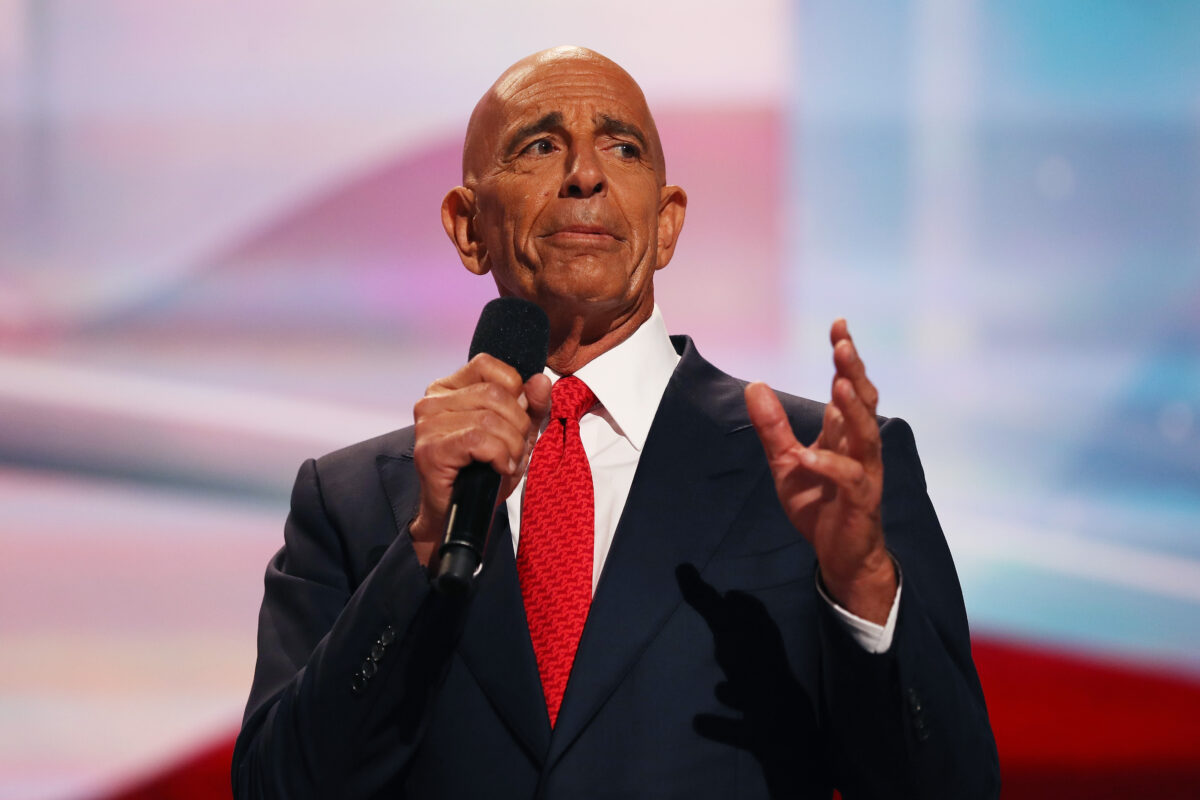
Last month, Thomas Barrack, Washington’s ambassador to Turkey, suggested that the United States could lease the proposed corridor for 100 years.
“Give us the 32 kilometers of road on a hundred-year lease, and you can all share it,” Barrack told reporters on July 11.
Five days later, Pashinyan confirmed that the proposed transit route could take the form of a “joint Armenian–American enterprise.”
“The proposal is from the [United States] and we are discussing it,” he said in remarks carried by local media outlets.
The reports of a U.S. role in the transit route, which will run along the Iran–Armenia border, drew criticisms from both Tehran and Moscow.
Ali Akbar Velayati, an adviser to Iran’s supreme leader, said in remarks cited by state media Tasnim News Agency that the route would cut Iran off from the South Caucasus and “impose a land blockade on Iran and Russia in the region’s south.”
In recent statements cited by TASS state news agency, the Russian Ministry of Foreign Affairs repeated claims that the West was seeking a “foothold” in the South Caucasus region with the aim of igniting a “geopolitical confrontation.”
The Associated Press and Reuters contributed to this report.
 Friends Read Free
Copy
Facebook
Tweet
Friends Read Free
Copy
Facebook
Tweet