As concerns grow in Canada over cyberbullying, mental health issues, and possible links between online content and real-world violence, the provinces are increasingly looking to Australia’s ban on social media for minors as a possible model.
But for Australia’s experiment—praised by some as the next great public health intervention and criticized by others as unworkable government overreach—the evidence is still emerging.
Manitoba’s government said last month it plans to prohibit children under the age of 16 from using social media and artificial intelligence chat platforms, while Saskatchewan, Alberta, and Ontario have all expressed openness to similar measures. Delegates at the federal Liberal convention in April also backed a non-binding motion supporting a national social media ban for youth under 16, while the federal government has said it’s looking into the issue.
And public support for tougher restrictions looks strong. An Angus Reid poll released in late March found that 75 percent of Canadians support a complete ban on social media for children under 16, citing concerns ranging from anxiety and cyberbullying to misinformation, radicalization, and exposure to graphic content.
The debate has gained renewed attention in the wake of February’s mass shooting in Tumbler Ridge, B.C., after OpenAI acknowledged it erred in failing to alert Canadian authorities when shooter Jesse Van Rootselaar’s ChatGPT account was banned last year over internally flagged content involving detailed gun violence.
But some suggest Australia’s experience with a ban shows it may be much harder to enforce one than to approve it. Many minors there continue accessing banned platforms by exploiting weak age-verification systems, while critics warn that the restrictions fail to address deeper problems built into the social media platforms themselves, and that it should be parents that play a greater role rather than the government.
Australia’s Enforcement Challenge
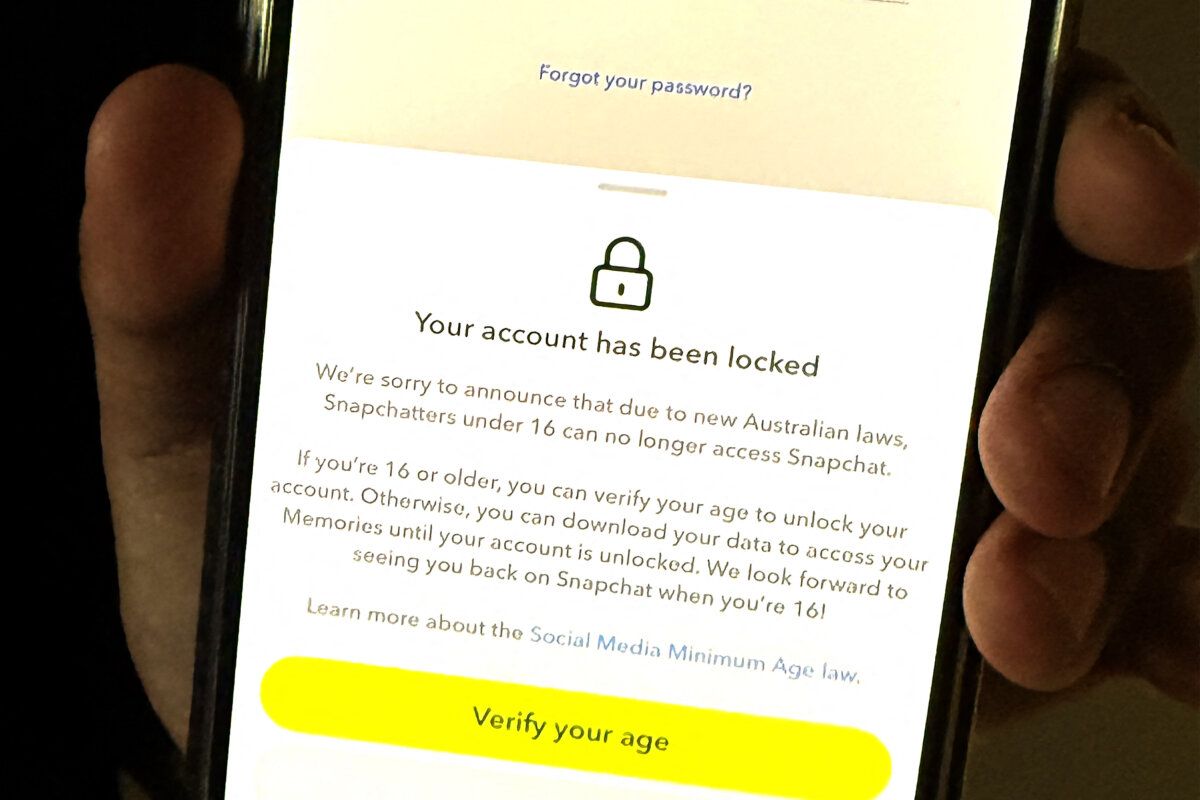
Australia enacted its ban last December, prohibiting children under 16 from maintaining active accounts on platforms such as Instagram, Facebook, Snapchat, and TikTok. The Australian law places responsibility on social media companies—not parents or minors—to enforce the restrictions, with potential fines of AU$49.5 million (about CA$49.2 million) for non-compliance.
Australian authorities say millions of accounts have since been blocked, but they acknowledge that many minors continue bypassing age-verification systems to access social media. Roughly 7 in 10 parents whose children had accounts on major platforms before the ban said their children were still using them after the restrictions took effect, according to a March 31 update from Australia’s eSafety Commissioner.
“The initial number count, it was 4.7 million accounts, which for a country of under 30 million people, is a lot,” Tama Leaver, a professor of internet studies at Curtin University in Perth, told The Epoch Times. “But then looking at the hard detail there, it looked like a lot of those accounts perhaps weren’t that active to start with.”
Leaver said one of the biggest challenges is that existing age-verification technology is often too imprecise to reliably distinguish between users who are only a year or two apart in age.
“For most of these tools, there is a level of variance of one to two years,” he said. “That’s absolutely useless if you want to tell the difference between a 15- and a 16-year-old.”
Leaver said Australian regulators are increasingly encouraging platforms to adopt what is known as a “waterfall” approach, where multiple age-verification methods are layered together in an effort to improve reliability.
Imperfect Bans or Busy Parents
The Australian experience has intensified a debate now taking shape in Canada: Are imperfect bans still better than leaving parents and children to deal with the risks of social media on their own?
David Gerhard, a computer science professor at the University of Manitoba whose research field includes “technology and society,” said the risks associated with children using social media justify stronger intervention despite enforcement challenges.
“The harms we’re seeing are things like mental health, anxiety, depression, isolation, negative self image, reduced sleep quality, reduced focus, concentration, addiction, cyberbullying, online predators,” Gerhard told The Epoch Times. “It’s a big, scary list.”
Gerhard said many parents feel overwhelmed trying to regulate their children’s online activity on their own.
“Parents have indicated that they want support for trying to protect their children from these services,” he said, comparing the debate to earlier public-health battles over seatbelt laws and smoking restrictions.
Gerhard said difficulties around age verification and implementation can be addressed as governments gradually refine the system.
“I don’t think we should let perfect be the enemy of good,” he said.
Curtin University’s Leaver, on the other hand, argued that bans risk treating the symptoms rather than the real problem.
For example, he said, some young people in rural areas of Australia have reportedly been contacting mental health crisis lines more often since the restrictions took effect because they feel more socially isolated.
Leaver also warned that social media bans may simply postpone exposure to online dangers rather than fixing the platform designs and algorithms that contribute to harmful behaviour in the first place.
“I think we need more meaningful regulation that actually forces the platforms to design their tools better,” he said, advocating instead for a “digital duty of care” model requiring companies to prove they had proactively identified and reduced risks before launching products to the public.
“What digital duty of care does is say: ‘No, you have to think about that in advance and have demonstrably tested your system to make it as safe as possible before it’s in the hands of young people, especially,’” Leaver said.
Former Canadian Radio-television and Telecommunications Commission vice-chair Peter Menzies also cautioned against believing government action alone will solve the problem.
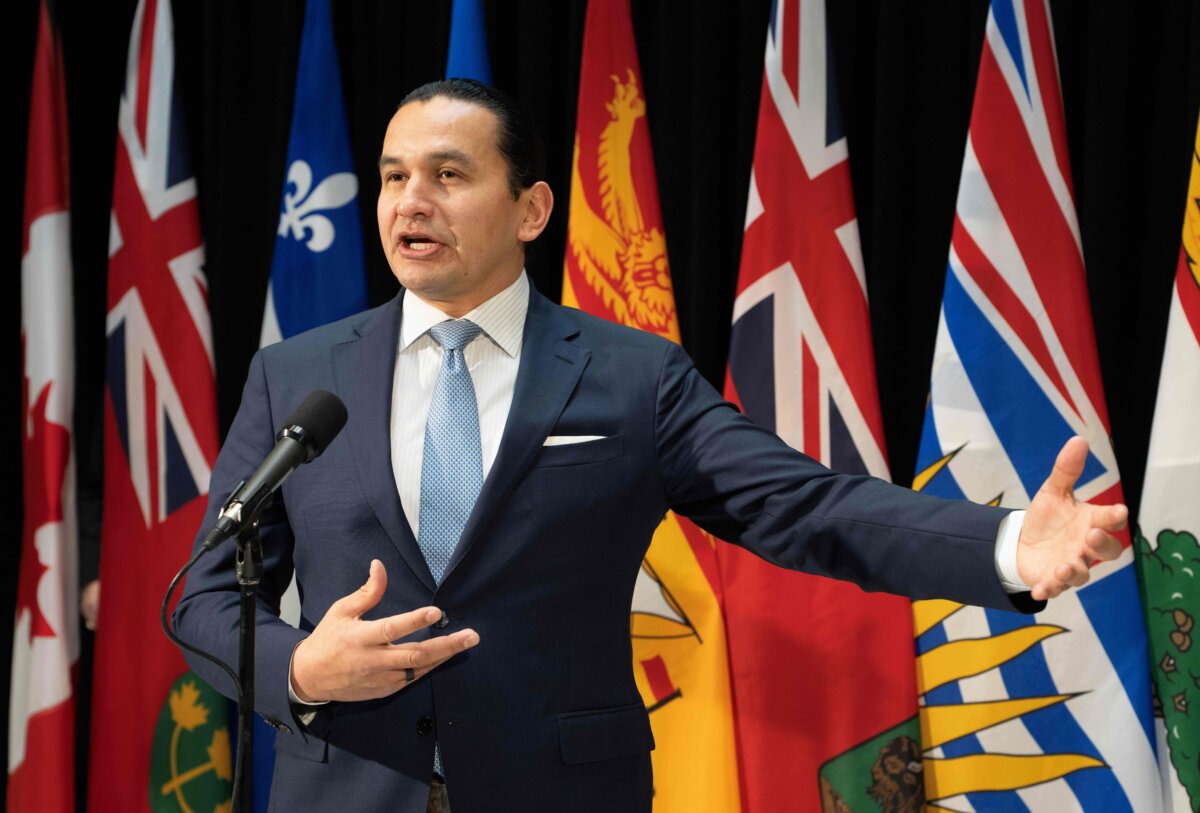
“Don’t assume that just because the government is going to do something that this problem is going to be solved and your kids are going to be safe,” Menzies said. He believes that parents should take a more active role in ensuring their children’s safety, rather than relying on the state to do so, which he says comes with several problems.
“It’s too easy in the name of something good, which is child safety, to do something bad in response,” he added, warning that governments could end up introducing restrictions that are too broad or don’t work.
Menzies also raised concerns about Canada developing a confusing patchwork of provincial rules if multiple jurisdictions pursue their own legislation.
“You can’t have Manitoba implementing one set of laws on Facebook, and Nova Scotia doing another, and Saskatchewan doing another,” he said.
Leaver echoed those concerns, noting that Australia’s proposal originally emerged at the state level before being implemented federally to avoid conflicting regional systems.
For her part, Australian eSafety Commissioner Julie Inman Grant acknowledged that the reforms are unlikely to produce immediate results and said meaningful cultural change would take time after “20 years of entrenched social media practices.”
“Durable, generational change takes time—but these platforms have the capability to comply today and we certainly expect companies operating in Australia to comply with our safety laws,” Grant wrote.
Will Bans Actually Work?
For Canadian policymakers, Australia’s experience has highlighted two unresolved questions: whether social media bans can meaningfully reduce youth access to platforms, and whether those restrictions actually improve mental health, academic performance, and other areas linked to heavy social media use.
At least for now, Leaver said, the answers remain unclear in the case of Australia.
“It’s actually really hard to make any concrete claims about success or not at this point. I think it will be years, not months, before we can actually say anything meaningful on that front,” he said.
Leaver added that Australia’s social media restrictions remain, in many ways, a live test.
“Just because Australia has put a ban in place doesn’t mean a ban can or will work,” he said. “It simply means that we’re running the experiment.”
 Friends Read Free
Copy
Facebook
Tweet
Friends Read Free
Copy
Facebook
Tweet