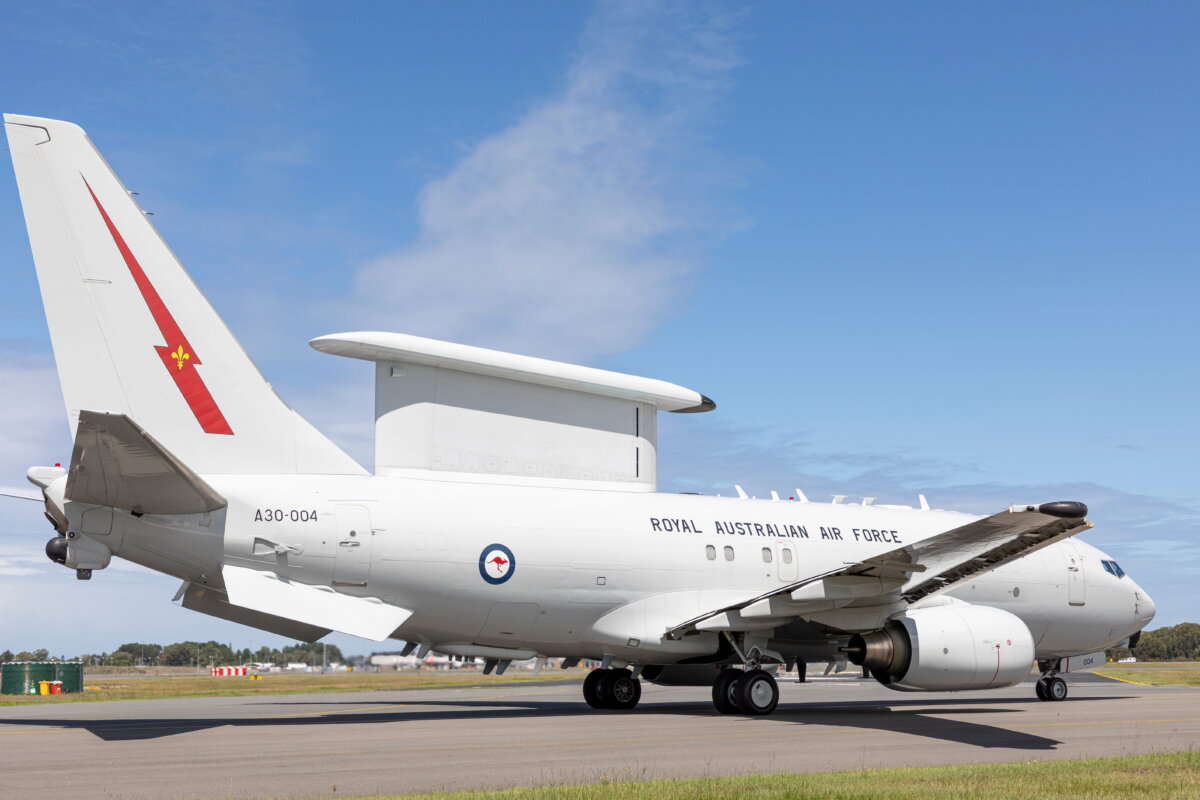

Despite the ongoing ceasefire, Australia will extend the deployment of its E-7A Wedgetail surveillance aircraft and up to 85 Australian Defence Force personnel in the Middle East beyond its initial four-week commitment.
“The Wedgetail will be staying in the region for a period of time,” Prime Minister Albanese said at a press conference in Brisbane on April 9.
“That extension was something that, in fact, I signed this morning, after that was agreed at the National Security Committee,” he told reporters.
The aircraft was deployed at the request of the United Arab Emirates a month ago to help protect airspace and civilians following retaliatory attacks by Iran that targeted several Gulf states.
The original deployment was due to expire this weekend. Albanese confirmed the extension when questioned but did not say how long the mission would continue for.
Defence Minister Richard Marles has previously said the Wedgetail was providing intelligence to the Combined Air Operations Centre in Qatar, with data accessible to the United States.
Australia has maintained the deployment is defensive and aimed at supporting regional partners rather than joining offensive operations.
Marles has described the E-7A Wedgetail as one of the world’s most advanced airborne surveillance platforms, saying its current role mirrors previous operations in Europe.
“And we are one of the leading nations in the use of the E7 what this aircraft will be doing is very similar to the role that it has played in recent times from Poland in respect of the defence of Ukraine.”
The Albanese government has repeatedly stressed Australia will not take part in offensive military action in the Middle East, instead framing its role as one focused on stability and support.
The government has attracted repeated criticism from U.S. President Donald Trump, who accused key allies of not contributing to securing the safety of commercial shipping lanes through the Strait of Hormuz.
“They haven’t helped at all,” Trump said at a media conference on April 7.
“It’s not just NATO. You know who else didn’t help us? South Korea didn’t help us. You know who else didn’t help us? Australia didn’t help us. You know who else didn’t help us? Japan.”
 Friends Read Free
Copy
Facebook
Tweet
Friends Read Free
Copy
Facebook
Tweet