
Australia’s migration system needs an overhaul as current volumes are dragging down the country’s living standards, a parliamentary committee has been told.
During an inquiry into the value of skilled migration to Australia, Jane O’Sullivan, academic and executive member of Sustainable Population Australia (SPA) questioned the current program.
The SPA is an environmental charity advocating for the stabilisation of population growth.
“Australia’s population can’t grow forever, and the lower the population, the better for our quality of life,” the University of Queensland researcher told the Joint Standing Committee on Migration last week.
“So why persist with a rapid population growth strategy that’s not sustainable and causes more problems than it fixes?”
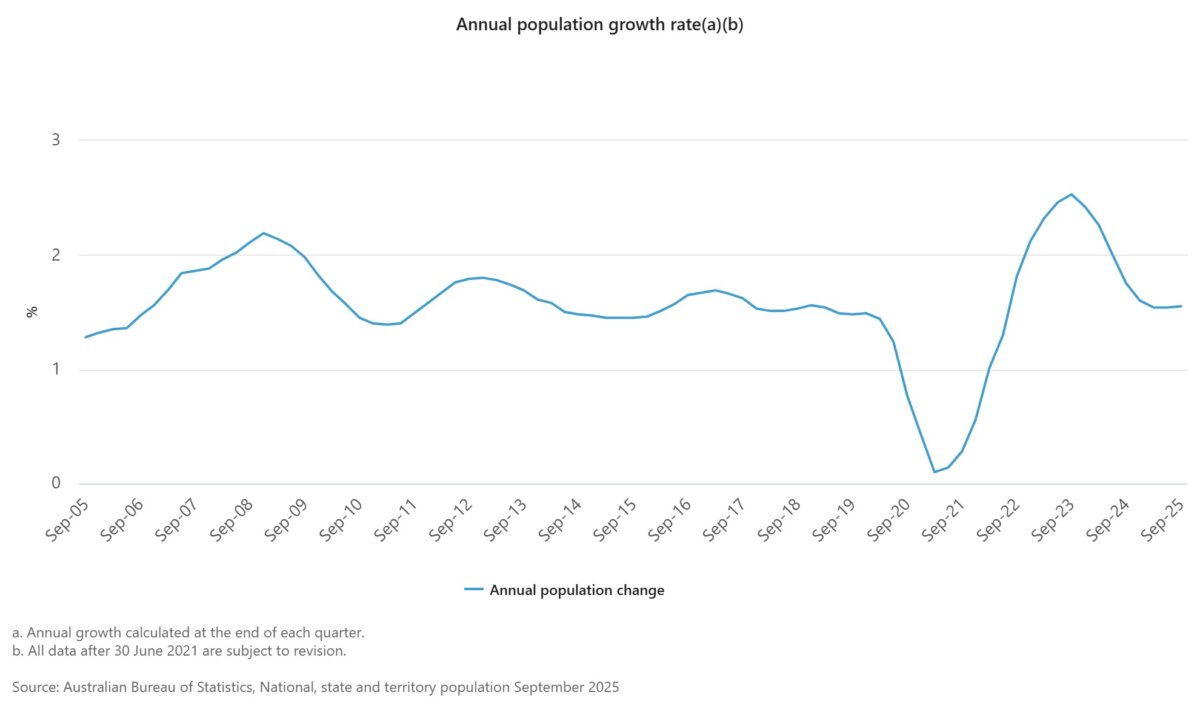
In its submission (pdf), the SPA pointed out that Australia had maintain a stable average immigration rate of 80,000-90,000 per year between WWII and 2005.
In comparison, the country has now lifted that rate to about 185,000 a year, a slight reduction from recent years.
The SPA argued that the impact of migration needed to be viewed through a broader lens and while skilled migrants do pay taxes and contribute to government coffers, there was an additional cost.
The group estimates federal and state governments are spending $150,000 per migrant for additional infrastructure.
“While population growth tends to increase GDP, it tends to lower GDP per capita. Tax revenue does not rise in proportion to population, since lower workforce participation and suppressed wages mean lower tax yield per resident. In contrast, government expenditure rises disproportionately due to the increased infrastructure costs,” it said.
“It mainly boosts [GDP] by increasing debt, because the more houses you build, the more mortgages there are, but then we’ve got a higher proportion of heavily indebted households who are constraining their consumption in all sorts of other areas, which suppresses GDP. So in the long run, it’s not a win at all.”
Non-Monetary Costs to Society
O’Sullivan also pointed to non-monetary costs including the loss of natural habitats and access to green space as building rates intensify.
“Long commute times are traded off against cramped apartment living. Governments cut services to fund infrastructure, causing hardship for many. For others, stable employment becomes harder to find as temporary migrants flood the job market.”
Her comments come as the Treasury predicts about 1 million new migrants arriving in Australia by 2028.
Migration has been a political flashpoint and is a major driver behind the conservative-leaning One Nation’s popularity, resulting in the party winning seven seats at the South Australia state election and the federal Farrer by-election.
One Nation pledges to cap migration at 130,000 per year citing strain on infrastructure and social cohesion—the party’s popularity has forced the centre-right Liberal Party to adopt its own tougher stance on migration.
SPA also published a new discussion paper on Australia’s water security, arguing that migration is exacerbating the issue.
“All major cities and many regional towns are already struggling with water supply issues,” O’Sullivan said, “And the major cities are resorting to desalination plants, which are very expensive, very environmentally impactful, and very technologically dependent means of providing an essential component of life.”
Some Groups Exaggerate Need for Migrants
Moreover, the SPA argues that “some groups,” including employers, exaggerate the need for migrants because they have a vested interest in high rates of population growth.
“Just bringing in skilled migrants because on paper it looks like they might be able to fill some skill shortages—but we know from experience that they never do—is a pretty silly strategy,” she said.
“So if we require them all to be employer-sponsored, then if there [are] genuine skill shortages and [employers] need to access workers from overseas, let them [do so], as long as they’re willing to pay a competitive salary that they would otherwise [pay] an Australian for.”
Migrants Lack Australian Experience
The SPA also argued that while Australian employers often require experience from job seekers, new migrants cannot provide this because they lack Australia-specific experience.
O’Sullivan noted that changes in the structure of the economy over the past few decades have narrowed entry pathways into certain jobs for young Australians and decreased the pipeline of skills.
“The lack of trades really reflects structural problems in apprenticeship programs, and I know the government’s done a number of things to help that along, but it’s still not enough,” she said.
“Migrants have been underrepresented in the construction industry, so the migration program has been adding to demand for housing more than it’s been filling those shortages in construction.
“Australia has around 9 percent of its workforce in construction, and the OECD average is closer to 6 [percent], so we already have a very high capacity for building houses compared with most other countries.”
 Friends Read Free
Copy
Facebook
Tweet
Friends Read Free
Copy
Facebook
Tweet