
Australia is set to join a snap summit with other world leaders on re-opening the Strait of Hormuz amid pressure from the Trump administration.
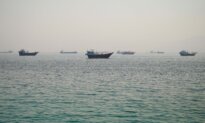
The Strait of Hormuz is a narrow sea passage between Iran and Oman that links the Persian Gulf with the Gulf of Oman and the Arabian Sea—and it accounts for about one‑fifth of global oil and liquefied natural gas traffic.
However, after the U.S. and Israel launched surprise strikes against Iranian military and nuclear targets, the regime responded by shutting down traffic through the Strait.
After hitting thousands of targets, U.S. President Donald Trump put out a request to NATO allies for assistance with securing commercial passage, with most refusing.
UK Prime Minister Keir Starmer even went so far as to say his government would seek “closer ties with Europe” instead of the United States.
“This is not our war. We will not be drawn into the conflict. That is not in our national interest,” he said at a televised press conference in London.
Australia Has Interest in Strait: Marles
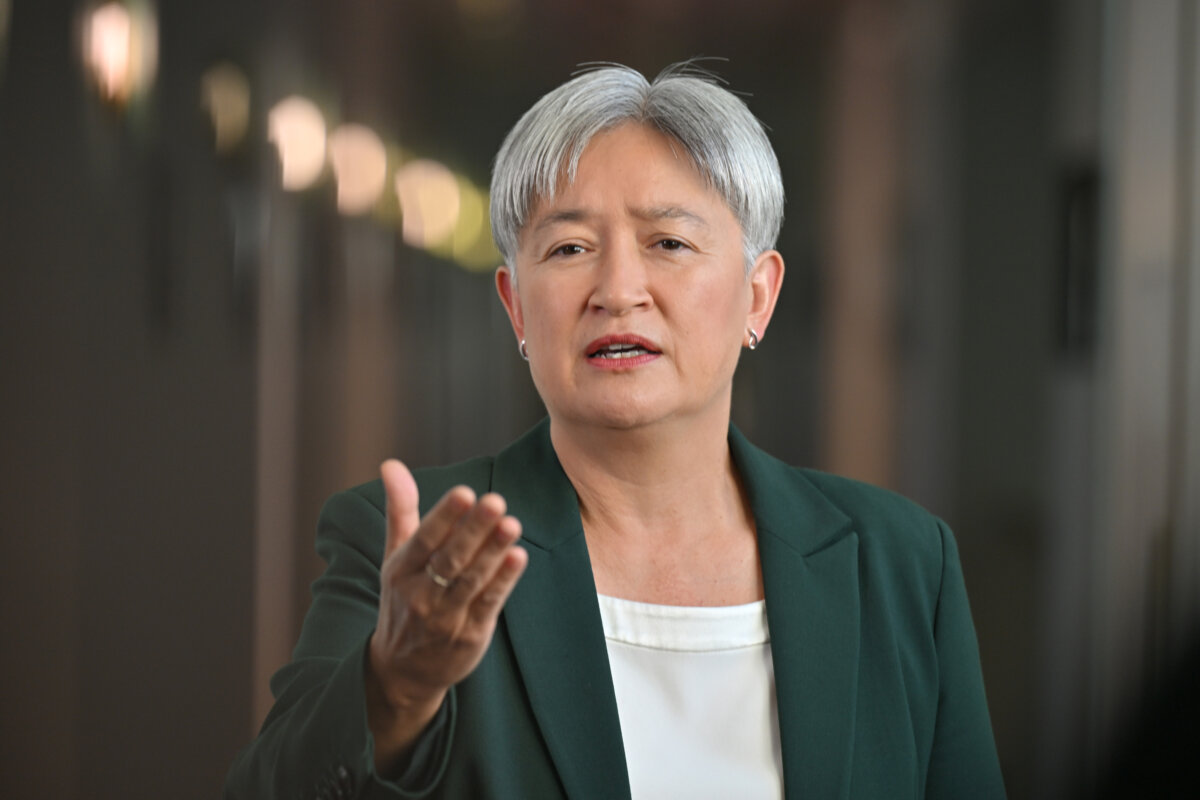
Australia’s Foreign Minister Penny Wong said she would meet with her counterparts from 35 different nations including the UK, France, Germany and Japan in a virtual meeting on April 2 (AEST).
Defence Minister Richard Marles said governments would assess how they could facilitate a return of oil shipments through the Strait.
“It follows on from Australia signing up to the UK-led statement of more than a week ago in respect of the Strait of Hormuz—that statement gives a sense of where we’re at,” he told ABC.
“I mean, obviously all of those countries and very much Australia have an interest in seeing the Strait of Hormuz opened as soon as possible.
When asked what Australia could do, Marles said it depended on what conditions allowed.
“I’m reluctant to speculate in detail about all that other than to say our E7 Wedgetail is in the region right now and it’s doing important work in terms of contributing to the defence of the countries of the Gulf, in particular, the UAE,” he said.
Marles said Australia will “work through” with friends and allies to see what could be done, but did not confirm or deny navy activity in the region.
Fuel Prices Sky High
The announcement comes as the latest weekly fuel prices report from the Australian Competition and Consumer Commission (ACCC) showing fuel prices continue heir ascent across the nation.
On March 25, the highest priced fuel in a major city was reported in the Tasmanian capital of Hobart, where it was selling for up to $2.57 cents per litre—an increase of 22 cents a litre from the week before—while Brisbane had the lowest priced fuel at $2.50 a litre.
The Australian government has so far halved the fuel excise in an effort to rein in costs equating to about 26 cents per litre.
On April 1, the government also passed the Export Finance and Insurance Corporation Amendment (Strategic Reserve) Bill 2026 through parliament, giving it more power to secure fuel and other strategic materials including fertiliser.
 Friends Read Free
Copy
Facebook
Tweet
Friends Read Free
Copy
Facebook
Tweet