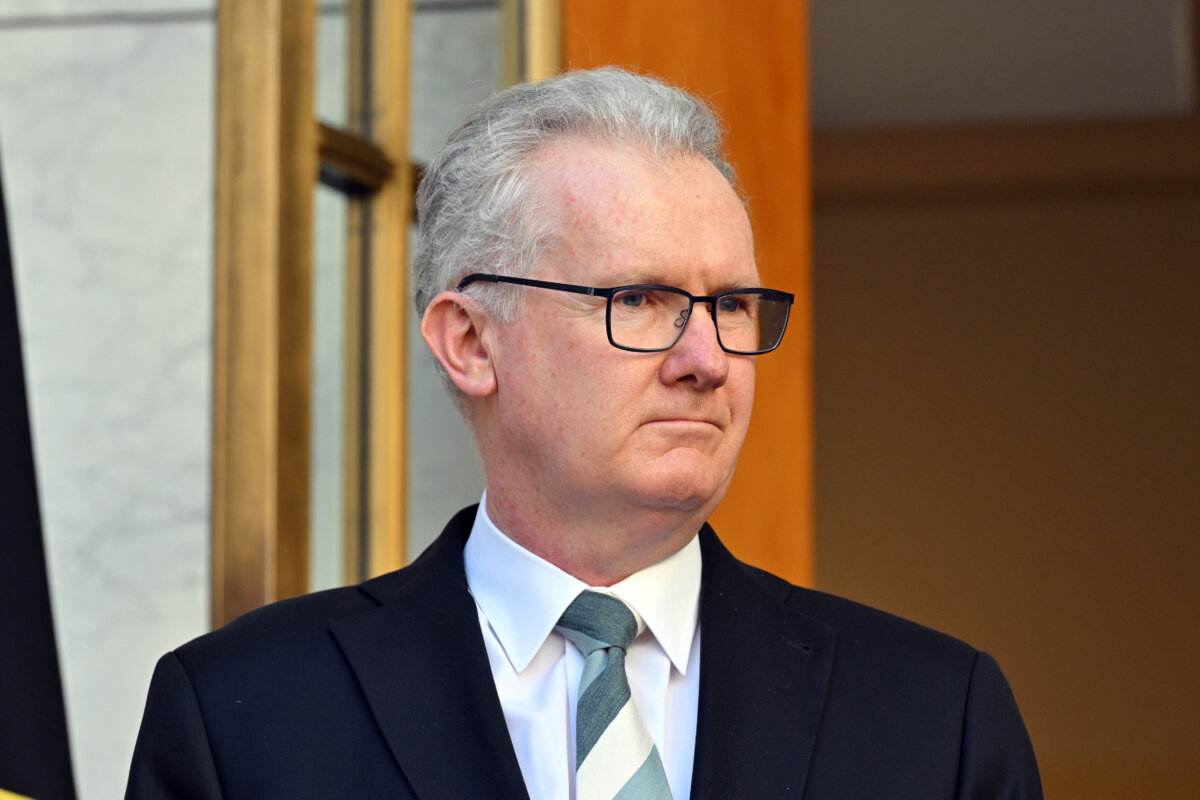

Tens of thousands took to the streets over the weekend calling on the Albanese Labor government to slowdown the migration intake.
A day later Canberra revealed the permanent migration program to the country will stay at 185,000 for the 2025–26 year, the same as last year.
Home Affairs Minister Tony Burke said the decision was not about giving in to the rallies, but about listening to the states and territories.
“Consultations recommended maintaining the size and composition of the program, with a focus on skilled migration,” Burke said in a statement.
“The Department of Home Affairs has been processing visas based on last year’s level, so there has been no disruption to the delivery of the program.”
In parliament, Prime Minister Anthony Albanese rejected claims from MP Bob Katter, who had told a Townsville rally that 400,000 people were entering the country each year.
“I’m not sure what the basis of that is,” Albanese said, noting official data shows a 37 percent fall in net overseas migration.
He used the moment to underline his government’s philosophy.
“People in this country voted for a government that would understand that modern Australia was a different nation than it was under the White Australia policy. Diversity is a strength in modern Australia,” he said.
Data from the Australian Bureau of Statistics revealed an estimated net increase of 446,000 migrants in 2024 with about 207,000 being international students—not permanent visitors, but still increasing demand for basic services like public transport and rental accommodation.
Anger in the Streets
In city after city, demonstrators marched on Aug. 31 calling for a slowdown in the migration intake.
Adelaide recorded the largest turnout, with police estimating around 15,000. Sydney and Melbourne each saw more than 5,000 join in.
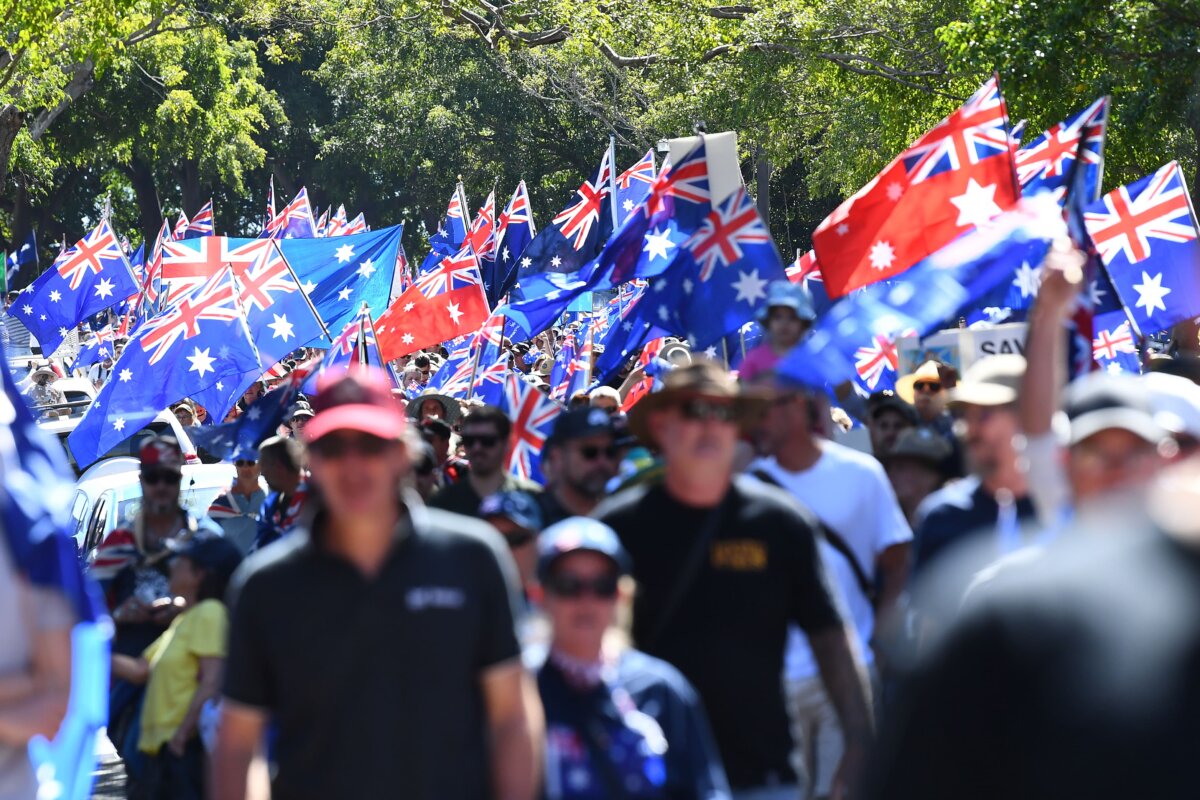
Some said they marched to protect their children and grandchildren from what they saw as runaway migration that state governments were ill-equipped to handle. Others expressed frustration at rental prices, long hospital queues, and the sense that new arrivals were competing for already limited resources.
Not all were against migration entirely. Several marchers said they favoured a smaller, well-managed intake. Others wanted stricter checks on people arriving from countries with values very different to Australia’s.
In response, Shadow Minister for Immigration Paul Scarr said Labor’s announcement did not assuage concerns around the current intake.
“Labor’s own migration strategy review, released in March 2023, called for long-term planning that supports stable and predictable population growth. It recommended settings that would allow governments to plan properly for housing, infrastructure, and services. More than two years later, Labor could not even release the permanent migration program on time,” Senator Scarr said.
“This failure is compounded by a record of wildly inaccurate forecasts. In its first budget, Labor estimated net overseas migration of 235,000 in 2022–23. The actual result was 528,000. In that same budget, Labor forecast the same figure—235,000 in 2023-24—but the outcome was 446,000.”
Who’s Coming to Australia?
Australian Bureau of Statistics data shows India has now overtaken China as the top source of migrants.
The top five countries of birth for arrivals in 2023–24 were India, China, the UK, New Zealand and Australia itself. Migration from China has been falling since 2017, well before the pandemic.
In contrast, India has experienced a consistent rise, a trend linked to favourable policies, strong bilateral relations, and its burgeoning skilled workforce.
Australia’s skilled migration programs have also favoured Indian professionals, who generally have high levels of English proficiency and advanced qualifications.
In 2022-23, Indian nationals received 25.5 percent of the 142,344 skill stream visas, compared to just 9.5 percent for Chinese nationals.
 Friends Read Free
Copy
Facebook
Tweet
Friends Read Free
Copy
Facebook
Tweet