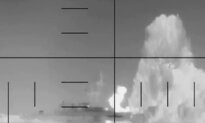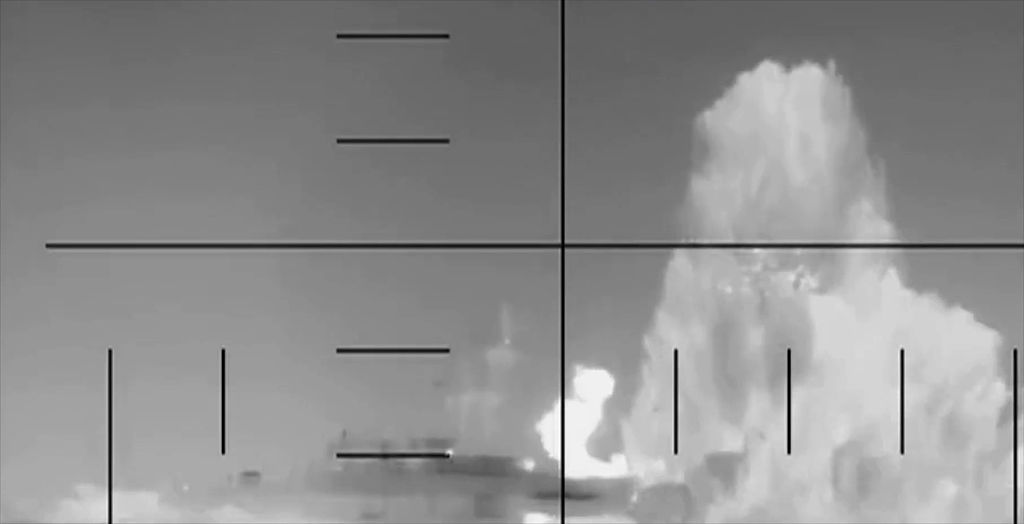
The three Australian submariners seconded to the Los Angeles-class nuclear attack submarine, USS Charlotte, played an active role in sinking an Iranian Navy frigate in the Indian Ocean, defence officials revealed.
The attack took place on March 4, 2026, in international waters about 20 nautical miles off the coast of Galle, Sri Lanka.
The IRIS Dena was returning to Iran after participating in multinational naval exercises in India when it was struck by two Mark 48 torpedoes, causing it to sink rapidly.
“An American submarine sank an Iranian warship that thought it was safe in international waters,” U.S. Secretary of War Pete Hegseth told a press briefing the same day. “Instead, it was sunk by a torpedo—quiet death.”
Until Defence officials were questioned by Senators James Paterson and David Shoebridge, it had been suggested that Australian personnel remained in their bunks during the incident.
This was based on the fact that Prime Minister Anthony Albanese told Sky News, “I can confirm also, though, that no Australian personnel have participated in any offensive action against Iran.”
Opposition defence spokesperson Senator James Paterson asked Chief of the Defence Force Admiral David Johnston what the three personnel during an estimates hearing last week the role Australian sailors played.
“There’s been some quite damaging public speculation after this disclosure that Australian submariners were hiding in their mess, or hiding in their beds or whatever,” Paterson said. “I don’t think that’s conducive to a good alliance relationship, and the delivery of AUKUS.”
He asked Hammond for clarification.
“That assertion, which was made by a commentator whilst the submarine was still at sea, is false,” Hammond stated.
“It is insulting, and, in my view, it shows a complete lack of understanding of what submarines on operations actually do. No one is asleep in their bunk when a submarine is involved in activities such as that.
“As the CDF [Chief of the Defence Force] indicated, their duties were defensive in nature, and they were standing by their designated stations alongside their shipmates.”
“[But] there’s no pacifists on a nuclear submarine, everyone’s contributing to its ability to have offensive effects, right?” Paterson asked.
“Some people are central to the offensive nature of the capability. Some are central to the defensive nature of the capability,” Hammond replied. “Our people were on board to train and gain experience. They weren’t involved in the offensive operations.”
Junior Personnel
Asked later in the hearing by Greens Senator Shoebridge what the Australian seamen had been doing, Johnston said: “What they were doing was maintaining the authorities that they were given, which is to ensure their activities are consistent with policies, procedures, and international law requirements that we had provided to them.”
“The submarine was engaged in the process of sinking an Iranian vessel, and then leaving the survivors to drown,” Shoebridge asserted. “While that happened, what were the Australian personnel doing?”
“These are very junior personnel in training positions,” Hammond replied.
“They’re assigned stations for an activity like this, including being ready to defend the ship, so damage control activity if the submarine was counterattacked. That is defensive readiness consistent with our rules of engagement for self-defence.”
Shoebridge then suggested that every crew member was instrumental to the submarine’s operations.
“So is that where you’re drawing the line?” he asked. “They were part of the operation to sink the vessel, but because they were directly [involved in] a weapon system, you say they’re ‘defensive.’ Is that really what you say now?”
“I’m intimately familiar with submarine operations,” Hammond replied. “I don’t accept the characterisation. There are a number of different roles. We’re very, very clear [about] the direction to our sailors serving in the United States Navy, that they are not to participate in hostile actions.”
The sinking of the Iranian destroyer is thought to have killed 104 people.
The ship was equipped with surface-to-air and anti-ship missiles as well as 10 naval guns and two anti-submarine torpedo launchers, but Iranian authorities claimed it was not carrying munitions at the time it was sunk, in keeping with the protocols for the event it had attended—something the United States Indo-Pacific Command has denied.
The incident was the first time a U.S. submarine had sunk an enemy warship with a torpedo since World War II, and the first combat engagement by a U.S. nuclear-powered attack submarine.
 Friends Read Free
Copy
Facebook
Tweet
Friends Read Free
Copy
Facebook
Tweet