


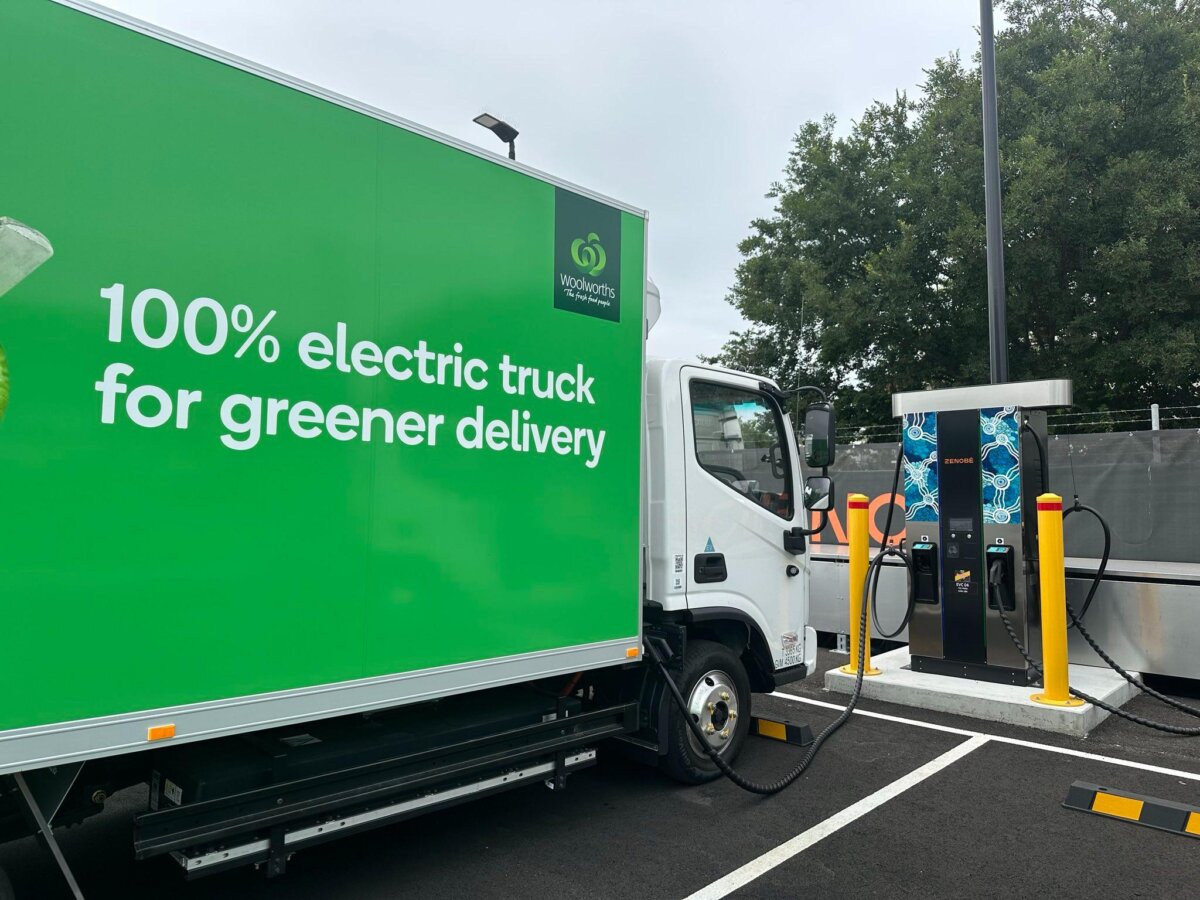
SYDNEY—Australia’s first off-site electric truck charging hub has launched in Sydney.
The facility was launched by Energy Minister Chris Bowen and Social Services Minister Tanya Plibersek, with the new hub set to host 22 DC fast chargers for up to 44 light commercial trucks.
An initial fleet of 60 battery electric delivery trucks will be leased to supermarket giant Woolworths by UK electric vehicle company Zenobe as part of the initiative.
“Decarbonisation is hard work,” Bowen said at the Sydney truck hub.
“It’s not an easy part of our journey. We are a big country alone and lots of big trucks, and they’re primarily fuelled by diesel, and we need them to drive long distances, and so this is a hard part of the journey, but we’re making some progress.”
Bowen said the quieter vehicles would put councils more at ease for their earlier and later travel times.
“We all know that these days, companies like Woolworths and others are delivering more and more to homes,” he said.
“They’re delivering to consumers across the board, and that means more trucks on the road, but we want them to be not only low emissions or zero emissions, but these things are lovely to drive, quiet, smooth, better communities, less noise … so this is win, win, win.”
The hub will eventually support other clients.
Plibersek said the fleet would lead to cleaner air in the city.
“This project shows what’s possible when government and industry work together,” she said.
“By supporting innovation like this, we’re creating a blueprint that can be replicated right across Australia.”
Bowen highlighted the benefit of less reliance upon overseas products.
“By backing large-scale charging and innovative ‘electric vehicle as a service’ models, we are making it easier for businesses to get out of imported diesel, into Australian electrons, and into vehicles that are cheaper to run and maintain over their life,” Bowen said at the Dec. 10 launch.
For several years, organisations like the Australian Trucking Association were calling on the government to support electric trucks as part of the nation’s net zero push.
In particular, the organisation highlighted previous shortages of emissions-reducing Chinese-supplied fuel additive AdBlue as well as reliance on Middle Eastern diesel fuels.
Previous government studies have identified potential risks with the switch to electric trucks, however.
One identified barrier was a sparse availability of high-capacity chargers and potential road maintenance and safety issues due to batteries increasing vehicle weight, particularly in trucks.
A 2025 report recommended the government allocate an additional $5 billion to upgrade truck roads and rest areas in order to better handle the mass of electric trucks.
Concerns were also identified around whether electric trucks would be too impractical due to potential long charging times and that “range anxiety” could increase due to potentially sparse charging ports.
Higher up-front costs and additional costs for charging infrastructure could also pose issues without adequate subsidy and regulatory support, the inquiry found.
Rebecca Zhu contributed to this article.
 Friends Read Free
Copy
Facebook
Tweet
Friends Read Free
Copy
Facebook
Tweet