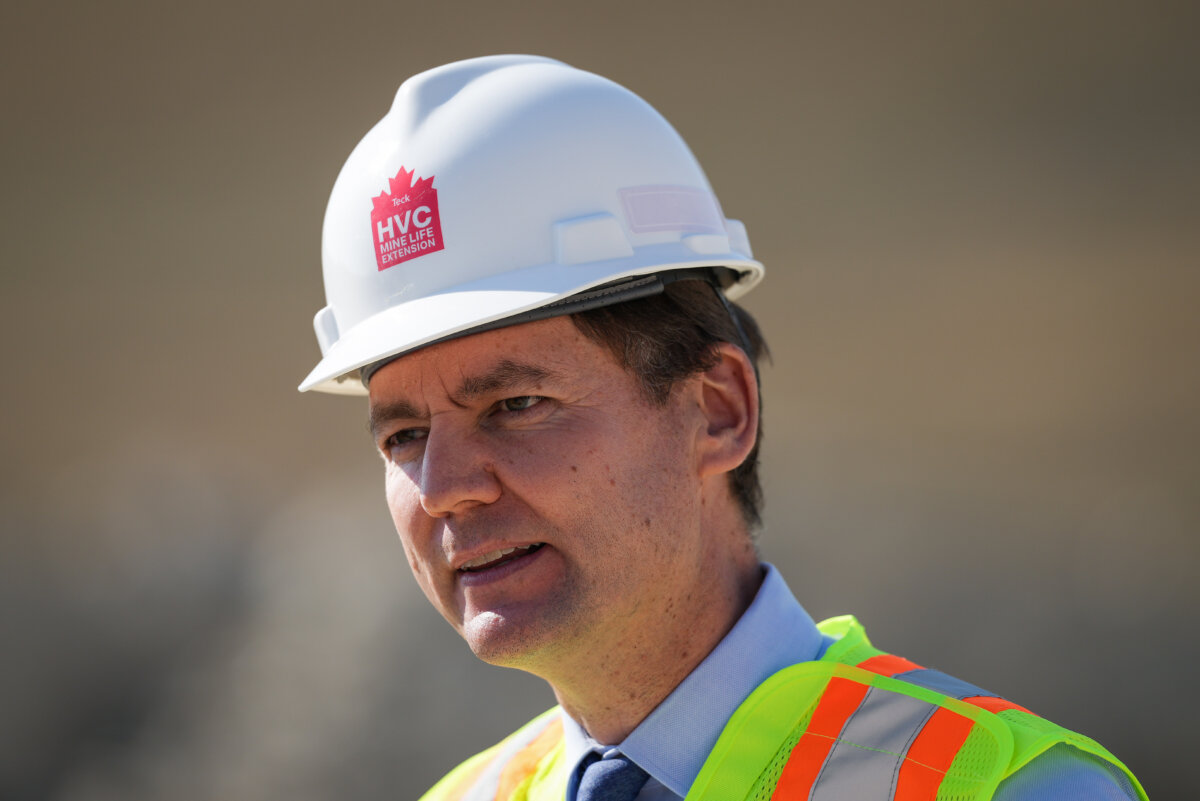

B.C. Premier David Eby is doubling down on his opposition to a pipeline proposal being prepared by Alberta, saying it’s a “fictional” project that is trying to use “wedge politics” and what he calls a Donald Trump style of politics for leverage.
Alberta Premier Danielle Smith said on Oct. 1 that her province will put $14 million toward developing a proposal for a crude oil pipeline to the B.C. coast and submit the plan to the federal Major Projects Office (MPO) by next May.
The MPO, created under the Carney government’s One Canadian Economy bill, pledges to fast-track approval for projects hand-selected by Ottawa if deemed in the national interest.
Smith said approval of the pipeline will be a test for Canada and an alternative way for Alberta to build a pipeline since Ottawa won’t remove legislation such as the B.C. north coast oil tanker ban that she says stand in the way of the oil and gas industry and private investment. Eby opposes repealing the ban, which was brought in by the Trudeau Liberals.
Smith said no private proponents for the pipeline have yet come forward due to existing “anti-pipeline laws” but added she is confident private operators will come forward if and when those regulations are bypassed and the project is approved by the MPO.
For his part, Eby said the lack of private proponents makes Alberta’s proposal unrealistic.
“What the Conservatives in Alberta are pushing is an entirely political creation in the lead-up to their election for wedge politics at the expense of British Columbia and Canada’s economy,” Eby said in a video posted to social media on Oct. 6, adding that B.C.’s Conservatives are also backing the “fictional” pipeline proposal for their own provincial political advantage.
“As all Canadians feel the impact of Donald Trump’s trade war, let’s not give in to those who aim to bring his politics here,” he added.
B.C. Conservative Leader John Rustad has said his party supports Smith’s proposal. “Premier Eby’s anti-pipeline stance will bring us more record deficits, closed hospitals, and people fleeing B.C. for better opportunities,” Rustad said on Oct. 3.
Alberta’s next provincial election must take place by October 2027.
Eby said the proposed pipeline would put “real B.C. projects” at risk if the pitch distracts from other priorities, and endanger the environment and First Nations land on B.C.’s shores.
In his Oct. 6 comments, Eby referenced “tens of billions of dollars” in major projects that are ready to begin construction in B.C. with First Nations approval, including two projects flagged on the major projects list for the MPO, namely the second phase of LNG Canada’s port at Kitimat, B.C., and expansion of the Red Chris mine in northwestern B.C. Eby said these projects will create “thousands of good, union-paying jobs” and “deliver prosperity for all of Canada.”
“Through these projects, we will drive the Canadian economy at a time when it’s under direct threat and attack by Donald Trump and those who seek to bring his harmful political project here to Canada,” Eby said. “The fictional Alberta bitumen pipeline project achieves literally none of these things.”
Canadian Unity
Eby’s emphasis on the benefits to Canada from B.C.’s projects come as some, including former Alberta Premier Jason Kenney, say the B.C. premier’s remarks threaten national unity. In an Oct. 2 social media post Kenney said Eby’s opposition to the pipeline undermines “rule of law” and is a bigger “threat to confederation” than Alberta separatists.
Kenney said Section 92(10) of the Constitution Act gives the federal government authority over “interprovincial infrastructure” including pipelines, pointing to the B.C. NDP’s attempt to regulate the Trans Mountain Pipeline, a move that was struck down by the Supreme Court in 2020.
Saskatchewan Premier Scott Moe also weighed in on Alberta’s pipeline proposal, saying on Oct. 6 that he backs it and that its success depends on the federal government.
“There is no B.C. coast, it’s Canada’s coast,” Moe said.
The pipeline proposal being developed by Alberta with guidance from Enbridge, South Bow, Trans Mountain and various industry leaders, aims to “break the logjam” in getting pipelines built, according to Smith, who added that it’s a “test of whether Canada works as a country.”
Alberta Deputy Minister of Energy Larry Kaumeyer said on Oct. 1 that the proposed pipeline would bring one million barrels of crude oil per day from Alberta to the B.C. coast, for export to the Asian market.
An alliance of First Nations on the North Pacific Coast issued a notice of opposition in an Oct. 1 statement. The Coastal First Nations – Great Bear Initiative said the pipeline proposal creates “the potential for a devastating oil spill” and has “no support from Coastal First Nations.”
In her remarks, Smith said the interests of indigenous peoples will be at the centre with a plan to “develop and lead an engagement plan in collaboration with First Nations across both provinces.”
Federal Energy Minister Tim Hodgson said on Oct. 2 that Alberta has the “right” to submit its pipeline proposal to the MPO but it must meet criteria for consideration and should be paired with a decarbonization plan.
 Friends Read Free
Copy
Facebook
Tweet
Friends Read Free
Copy
Facebook
Tweet