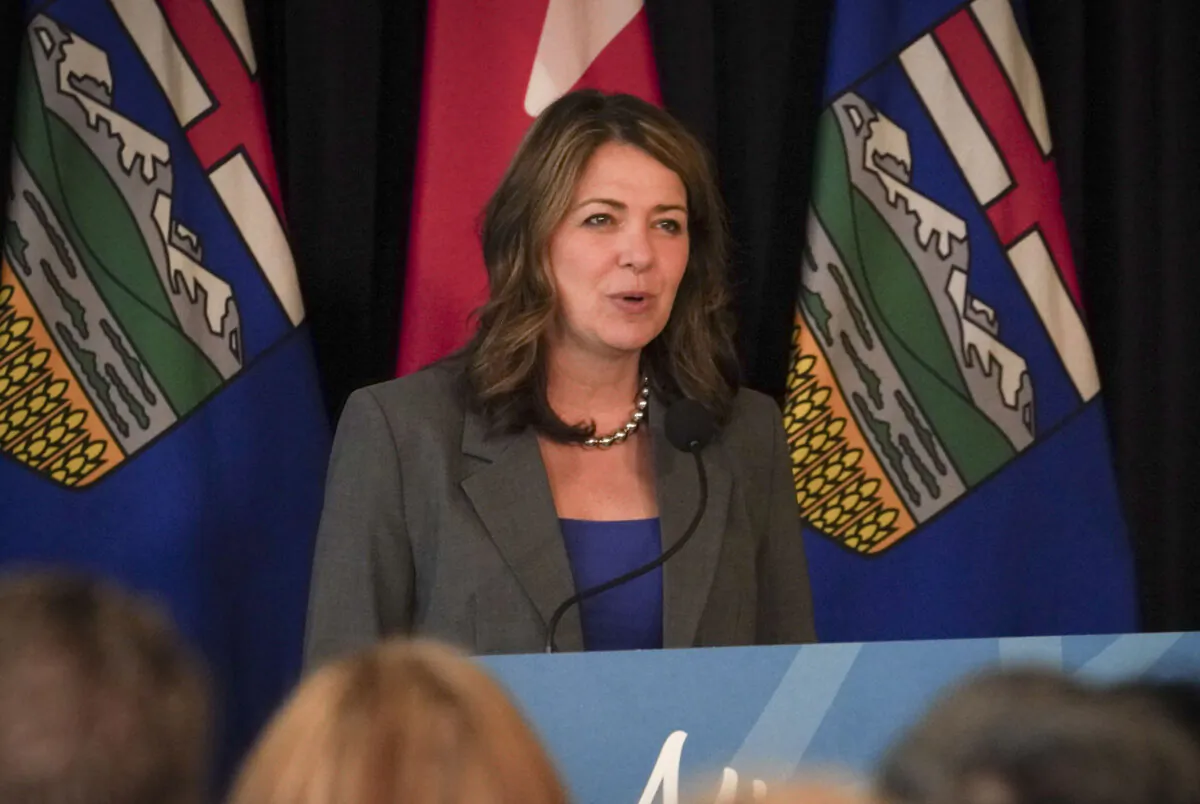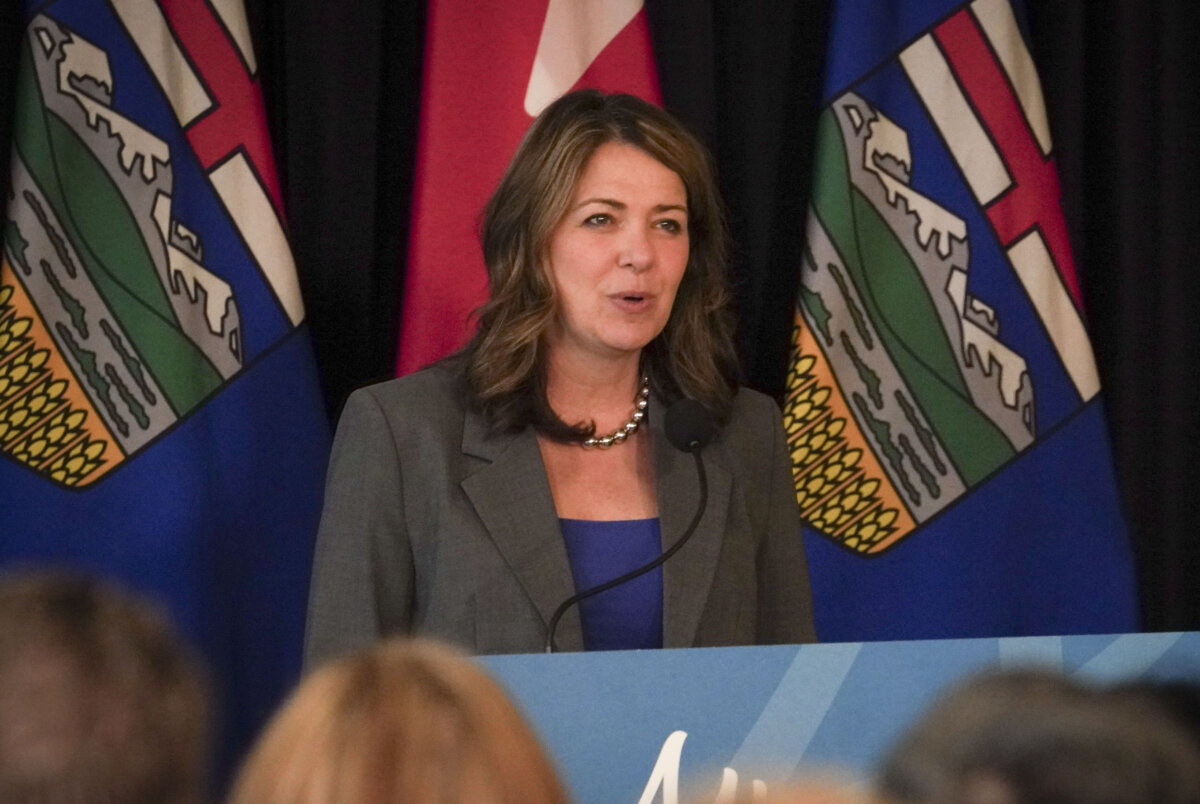

Alberta Premier Danielle Smith rattled her B.C. counterpart on Oct. 1 with a proposal to bypass what she calls regulatory barriers to building a new pipeline to tidewater, by pitching the project to the feds’ newly created Major Projects Office (MPO).
With the Alberta government itself acting as the project’s proponent in the proposal, B.C. Premier David Eby countered that nothing has changed, since there is still no private proponent prepared to build such a multi-billion dollar project.
Smith argues that Ottawa has ignored her calls to remove barriers to pipeline construction. She also pointed to the Building Canada Act, which gives the federal government the ability to designate hand-picked “nation-building projects” for priority treatment. She says her proposal to the MPO is aimed at reducing uncertainty for industry, by placing a pipeline on that priority list and allowing a private proponent to later take over.
The federal government says Alberta has every right to make the proposal. At the same time, Prime Minister Mark Carney has maintained that the approval of all sides and all premiers is also important. Meanwhile, such a desire to operate by consensus has raised the question of what action the feds would take should B.C. remain adamant in its opposition to new pipelines and to tankers off its coast.
Alberta’s Plan
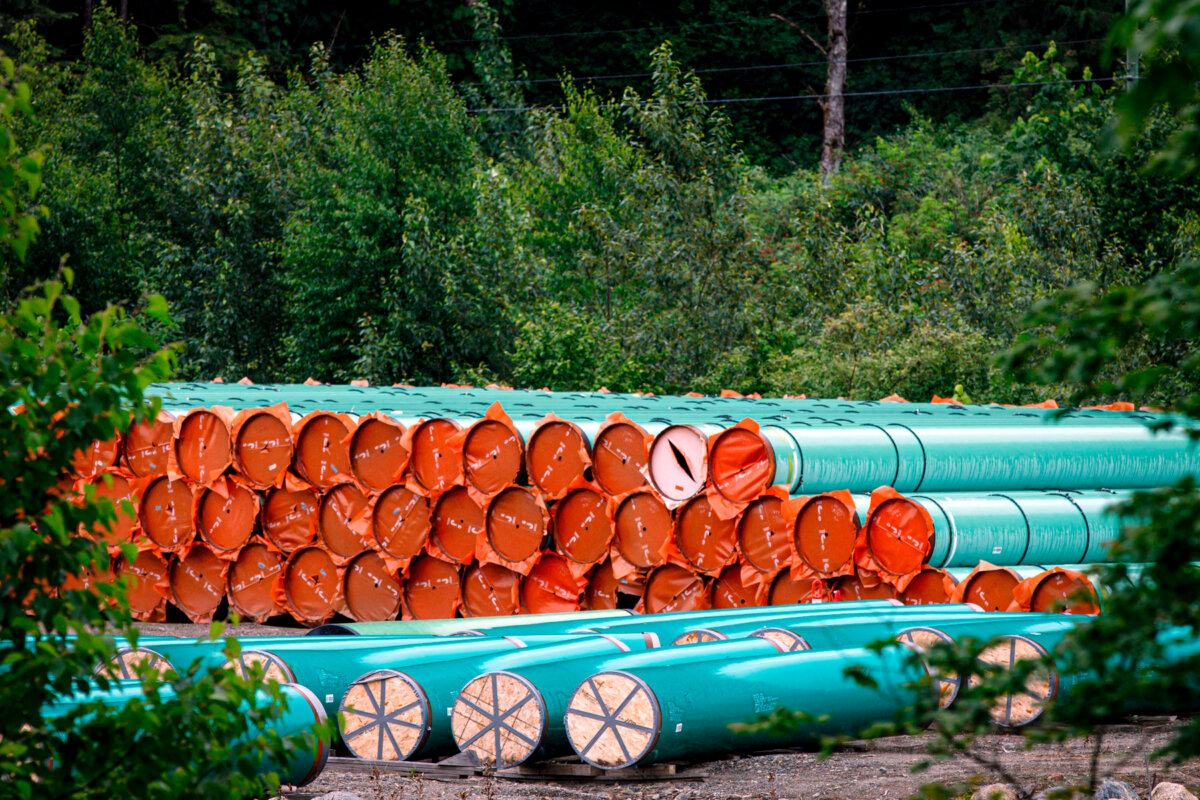
The MPO was created this summer under the newly passed One Canadian Economy Act, or Bill C-5, to allow the federal government to bypass certain laws and regulations in order to fast-track select projects. Ottawa announced the first set of projects it plans to expedite under this framework in September. The list did not include any pipeline projects, with the Liberal government saying there must first be a private proponent for such a project.
In putting Alberta forward as the lead proponent in developing a pipeline proposal to submit to the federal MPO next spring, and committing $14 million from the province, Smith says she wants to clear the regulatory roadblocks to shipping Alberta oil to the B.C. coast and from there to international markets. She says Canada’s current regulatory framework has driven away private interest and that her new initiative aims to attract private investors once the uncertainty created by the regulations is reduced.
In particular, Smith points to laws such as the Oil Tanker Moratorium Act, formerly known as Bill C-48, which bans tankers in areas of B.C.’s north coast, and the Impact Assessment Act, which imposes additional federal environmental regulations on major projects, along with proposed regulations on the oil and gas emissions cap, which is set to go into effect next year. Smith says such laws and regulations have effectively killed proposed projects such as the Alberta-B.C. coast pipeline project Northern Gateway and the cross-country pipeline project Energy East.
Smith says nine demands remain that she has called on Ottawa to address, including those laws and regulations, which are still hampering industry optimism and the desire of private investors and capital to get involved in new projects.
“The simple fact is that you will not see companies sink billions of dollars into new major projects unless the federal government overturns or overhauls its Trudeau-era anti-resource development policies,” Smith said during the Oct. 1 announcement of the pipeline proposal in Calgary.
“That includes the oil and gas emissions cap, which we know is a production cap; Bill C-69 [Impact Assessment Act], the ‘no more pipelines law’; and the tanker ban, which have made investment in new oil and gas projects extremely difficult.”
In taking the lead in crafting a proposal for the MPO, Smith said she hopes to “test” whether Ottawa will use its new framework to approve pipeline construction and give Alberta the pipeline to B.C. tidewaters, which it has been seeking for over a decade.
BC Premier Responds
B.C. Premier David Eby has consistently opposed lifting the oil tanker ban. He said on Oct. 1 that Smith’s pipeline plan is “not a real project” and is “incredibly alarming to British Columbians, including First Nations along the coast.”
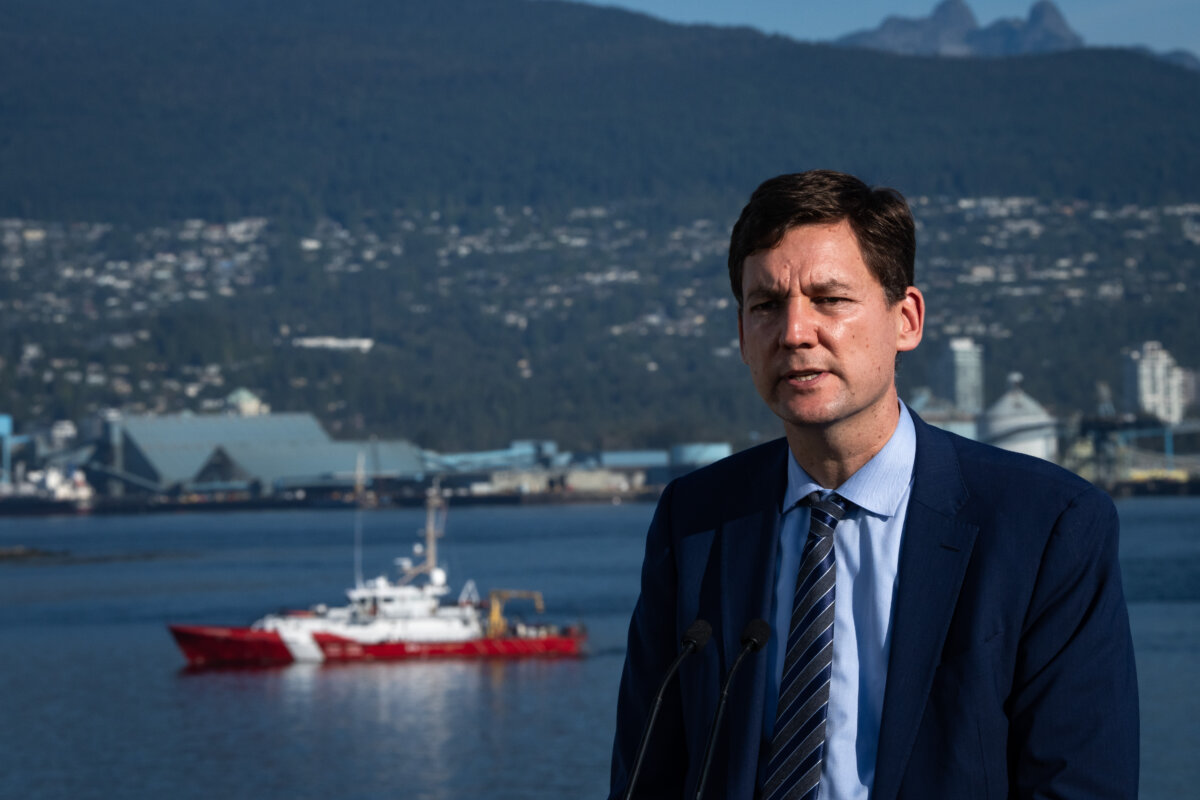
In reiterating his longstanding opposition to Alberta’s desire to see a pipeline approved to run to the B.C. coast, Eby said that the project won’t go ahead unless the federal government and Alberta “are committing billions of taxpayer dollars to build this project.”
Eby also said the pipeline proposal would be “at the expense of real private sector projects that are going to lift our economy and lift the national economy.”
His government has prioritized renewable energy and approval of projects that reduce carbon emissions, while accusing Alberta of using the MPO to play politics and to try to pressure Ottawa into lifting regulations that it wants gone.
Many of B.C.’s coastal First Nations have also signalled opposition to the pipeline plan, with Coastal First Nations-Great Bear Initiative President Marilyn Slett issuing a statement on Oct. 1 saying “once again” that “there is no support from Coastal First Nations for a pipeline and oil tankers project in our coastal waters” and that such a project creates “risk of a catastrophic oil spill.” The initiative is an alliance of First Nations on the North Pacific Coast.
Opposition to the Northern Gateway project brought together various First Nations groups, including the Yinka Déné Alliance, which said at the time in 2014 that the project would harm their ancestral lands and the environment. While some First Nations supported the proposed pipeline, the amount of opposition was a significant factor in leading to its failure.
Even if Smith obtained her wish and Ottawa lifted various laws impeding a pipeline to the B.C. coast, it’s unclear how opposition from First Nations would be handled. Indeed, indigenous consultation remains a key component of the MPO’s requirements for a project to move forward toward obtaining approval and breaking ground.
Smith has said indigenous consultations and investments are a fundamental component of her proposed plan.
Meanwhile, Saskatchewan is backing Alberta’s plan, with Premier Scott Moe saying the proposed project strengthens the nation’s economy.
“There is no B.C. coast. It’s Canada’s coast. There are no B.C. ports. There are Canada’s ports,” Moe said on Oct. 3. “I feel an equal owner in those ports as a Canadian.”
Ottawa’s Stance
Ottawa has not signalled any openness to lifting the tanker ban but has presented the One Canadian Economy Act and the MPO as a path forward for projects that adhere to five main criteria. These criteria refer to projects that boost Canada’s economy, grow its independence and security, are highly likely to succeed, are in the interest of indigenous peoples, and contribute to meeting Canada’s carbon emissions reduction goals.
Commenting Oct. 3 during an unrelated press conference in Montreal, Energy Minister Tim Hodgson said the MPO is willing to consider a pipeline proposal from Alberta, which has a “right” to bring it forward.
“They need to meet the five criteria we’ve laid out,” Hodgson said, adding that when it’s brought forward, “at that point, we’ll take a look at … where they are, and we’ll evaluate it at that time.”
Hodgson has previously said Alberta’s proposal would have to move forward in conjunction with the Pathways plan to build a carbon capture, utilization, and storage project to decarbonize crude oil leaving the province’s oilsands. In terms of future federal action in repealing laws such as the oil tanker ban, Hodgson said it’s too early to comment.
Specifically, regarding whether there might be any change in the oil tanker ban on B.C.’s north coast, Hodgson said, “It’s a hypothetical question right now, because there is no project before us.”
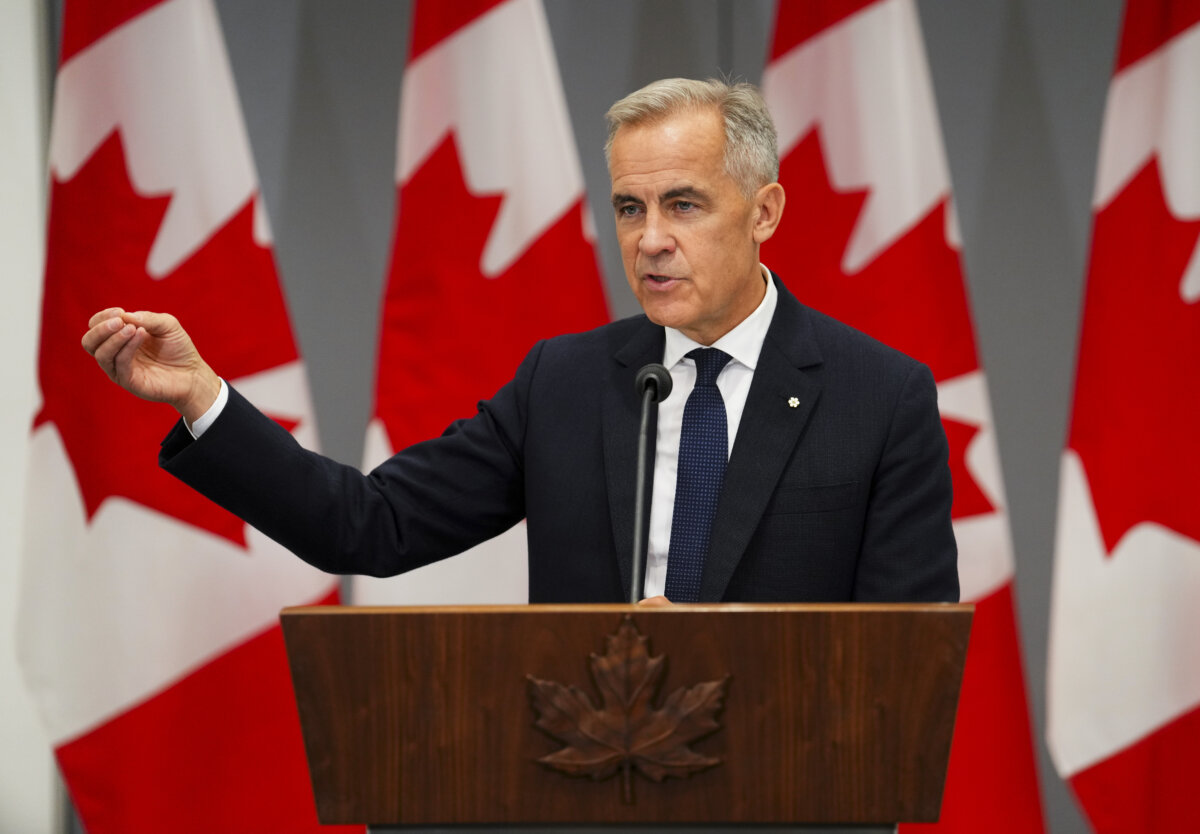
For his part, Carney has said that projects in the national interest approved by the MPO will not be imposed on any province and must be agreed upon by stakeholders.
In July, Carney said a new oil pipeline from Alberta to the B.C. coast was “highly likely” while attending a breakfast event at the Calgary Stampede.
“I am confident that my government will do everything we can so that those projects can be built,” he said. “The private sector is going to drive it. … We’ve got legislation, but we’ve also got the people in place at the federal level who can get things done.”
Industry Waits for Direction
Oil and gas industry players have expressed some optimism about shifts in the conversation over a pipeline. Enbridge CEO Greg Ebel said earlier this year that he’s “enthused” by what appears to be more openness to the oil and gas industry in Canada but that policy obstacles such as the oil tanker ban cause the industry to stay out of pitching a new pipeline.
“If the tanker ban’s there, why would you build a pipeline to the West Coast?” Ebel said in an interview with CTV on Oct. 2. “We are a company that invests and grows with our customers and we operate in jurisdictions that welcome us.”
Enbridge is one of three companies in the technical advisory group for Alberta’s new pipeline planning effort, along with South Bow and Trans Mountain. And Ebel is one of around 200 leaders in Canada’s oil and gas industry who signed a letter last month calling for creation of a simpler environmental assessment process and a rollback of laws and regulations such as the oil tanker ban.
The Canadian Association of Petroleum Producers has also said that laws such as the Impact Assessment Act and the oil tanker ban off the coast of B.C. must be repealed before the MPO will make a concrete difference in reopening confidence from the oil and gas sector to begin investing in new pipelines.
Ebel said it’s too early to be “definitive” about whether Enbridge would move forward as a private backer of Alberta’s pipeline proposal, but added that it would certainly “entertain” the idea if regulations such as the oil tanker ban are lifted.
“Capital will go to where the conditions are set. And today the conditions are not set for that pipeline to exist in Canada,” Ebel said.
In her Oct. 1 remarks, Smith said she is confident that private companies will come forward to build the pipeline once Alberta gets it to the approval stage.
The Road Ahead
Smith’s move to put Alberta at the head of a pipeline proposal comes amid trade tensions with the United States and growing demand for oil in international markets. With a poll in June conducted by Nanos showing that 73 percent of Canadians support building a cross-country pipelines, public support is high for Ottawa to approve a pipeline.
However, the objections from the B.C. government and the coastal First Nations, along with the existing laws and regulations that make a pipeline unfeasible, spell a long road ahead for Alberta’s proposal.
 Friends Read Free
Copy
Facebook
Tweet
Friends Read Free
Copy
Facebook
Tweet