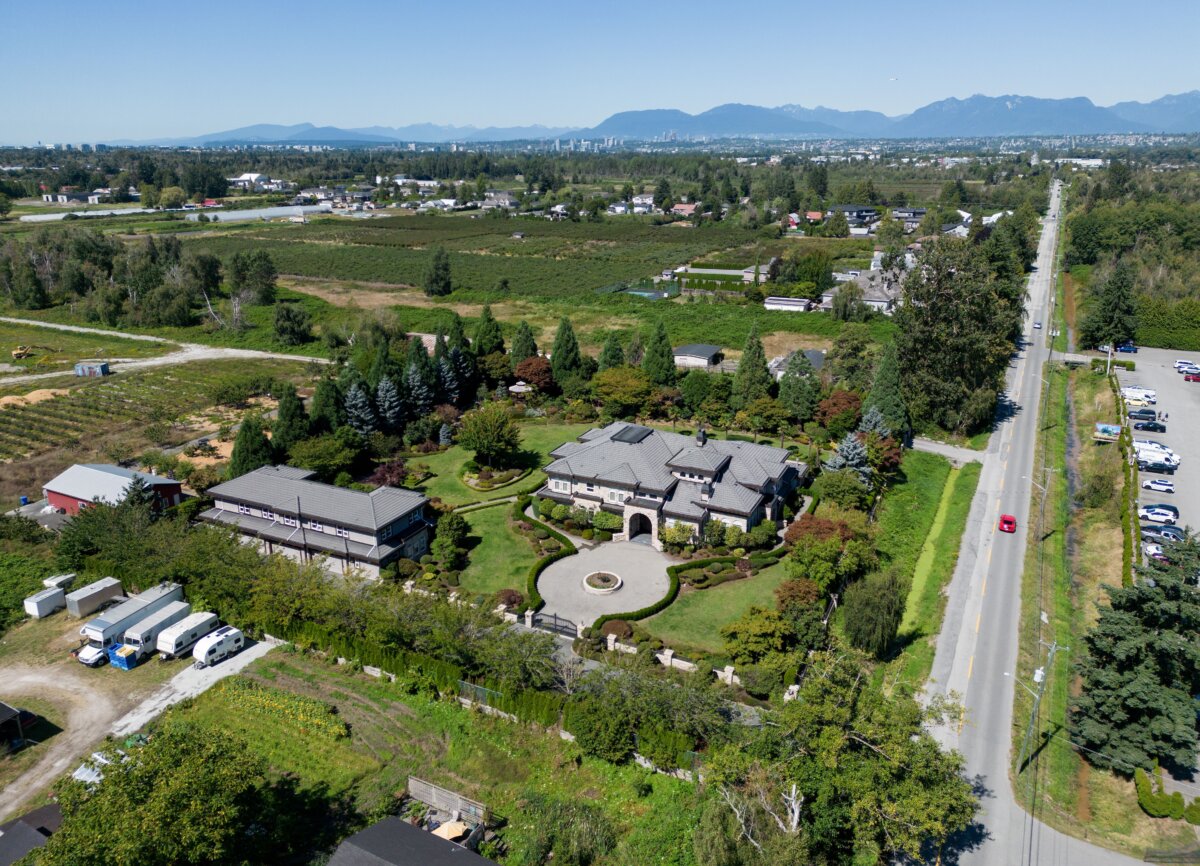

The Cowichan decision granting aboriginal title to an area in Richmond, B.C., has real estate industry leaders concerned about how uncertainty could affect the market in that region.
The Aug. 7 ruling recognizing Cowichan Nation’s aboriginal title to approximately 7.5 square kilometres of land in southeast Richmond has put the finality and binding nature of property transactions into doubt, B.C. Real Estate Association CEO Trevor Koot says.
The court ruling led to letters being sent out earlier this month to around 150 Richmond property owners saying the “validity” of their title to the land may be in question.
The court said Cowichan holds rightful title to the Crown land and municipal titles concerning the properties in question, owing to their historical presence on that land. The ruling found that title was historically transferred away from Cowichan in a way that was “invalid” and “unjustifiably infringed” on its rightful ownership. Justice Barbara Young issued a suspended sentence in the case, giving 18 months for the transfer to take place.
Koot told the Epoch Times the decision has stirred up doubts about the “absolute nature of fee-simple ownership.” Fee-simple ownership, commonly referred to as freehold ownership, provides the owner with unlimited and unrestricted rights to the property.
“The stability of British Columbia’s real estate market is built on one principle above all others: trust. Buyers, sellers, lenders, and governments rely on a shared belief that registered land title is accurate, transparent, and final,” Koot said in an emailed statement.
“Today, that trust is being questioned. Court decisions such as Cowichan Tribes v. Canada (AG) (2025 BCSC) have challenged perceptions about the absolute nature of fee-simple ownership.”
One reason for confusion arising from the Cowichan decision is its conclusion that aboriginal title is a “senior” interest that takes precedence over subsequent titles. In contrast, the Haida Gwaii “Rising Tide” agreement recognized Sept. 5 by the B.C. Supreme Court found that aboriginal title and fee-simple property rights can coexist without one having a superior claim.
The Cowichan decision, which cites Haida Gwaii, has led to uncertainty regarding the exact legal status of aboriginal title in British Columbia.
Challenges
B.C. and Ottawa are both challenging the Cowichan ruling. B.C. Attorney General Niki Sharma has said the dispute may go up to the Supreme Court of Canada because aboriginal and fee-simple title “cannot co-exist” simultaneously on the same land in their full forms.
B.C. Premier David Eby has also spoken against the Cowichan decision, saying it is leading to confusion and uncertainty about private property rights in the province.
The Cowichan Nation issued an Oct. 27 press release saying the decision does not make any claims on private property. It accused B.C. and the City of Richmond of creating unnecessary concerns about the ruling’s impact.
“We are a respectful people. We intentionally did not bring this case against any individual private landowners, and we did not seek to invalidate any of their land titles,” the Cowichan Nation wrote. “Richmond and British Columbia’s negative and erroneous messaging is provoking unnecessary fears. Their approach is inconsistent with the Court’s decision and is contrary to reconciliation.”
Realtor Phil Reigh of Stilhavn Real Estate Services said the Cowichan decision has led to a “wave” of increased scrutiny in the Vancouver market even though the immediate uncertainty still remains localized to the affected area of Richmond at Lulu Island.
“Its direct impact remains largely localized to the Lulu Island area for now,” Reigh said in an email to The Epoch Times. “The City of Richmond has warned homeowners within the claim zone of potential title uncertainty and encouraged them to seek legal advice. For the broader Vancouver market, this has prompted a wave of heightened diligence among buyers, lenders, and legal teams.”
Potential Impacts
Reigh said the fallout from the Cowichan decision could include “slightly” slower selling times as well as rules being tightened up on mortgages and slightly decreased sale prices.
“Properties directly within or adjacent to the claim area may experience slightly longer selling timelines, stricter lending and insurance conditions, or modest price adjustments as buyers account for perceived risk,” Reigh said.
“Even beyond Richmond, the ruling has raised general awareness of First Nations land title considerations, which may shape purchasing behaviour and market confidence in certain zones.”
The market is “unlikely” to be significantly impacted in the long term, however, Reigh said.
“The overall market is unlikely to experience any major decline as a result,” he said. “Instead, we’ll likely see price differentiation emerge: properties with clear, uncontested title will continue to command a premium, while those near claim zones may face temporary hesitancy until the legal and policy landscape becomes clearer.”
Reigh said buyers and sellers should always perform a legal review and confirm the title, while also ensuring transparency in all disclosures. For some buyers, he noted, the uncertainty could actually create the opportunity to gain access to more properties.
“For well-prepared buyers, this environment may even present opportunities—particularly in areas where others step back out of caution—allowing for negotiation leverage and better long-term positioning once the dust settles,” he said.
Koot said the B.C. Real Estate Association‘s role is to ensure that transparency and trust exists in the market and that a resolution of all pending uncertainties raised by the Cowichan decision is in everyone’s interest. The association is a professional organization representing more than 26,000 licensed realtors in the province and works with government, regulators and stakeholders to bolster transparency and the long-term viability of B.C.’s real estate market.
“The evolution of title in British Columbia is not about defending or discarding long-standing systems, but about renewing trust through understanding,” Koot said. “If trust remains the measure by which property systems are judged, both Aboriginal title and fee-simple title can find their rightful place within an ecosystem that honours the past, serves the present, and secures the future of land ownership in this province.”
 Friends Read Free
Copy
Facebook
Tweet
Friends Read Free
Copy
Facebook
Tweet