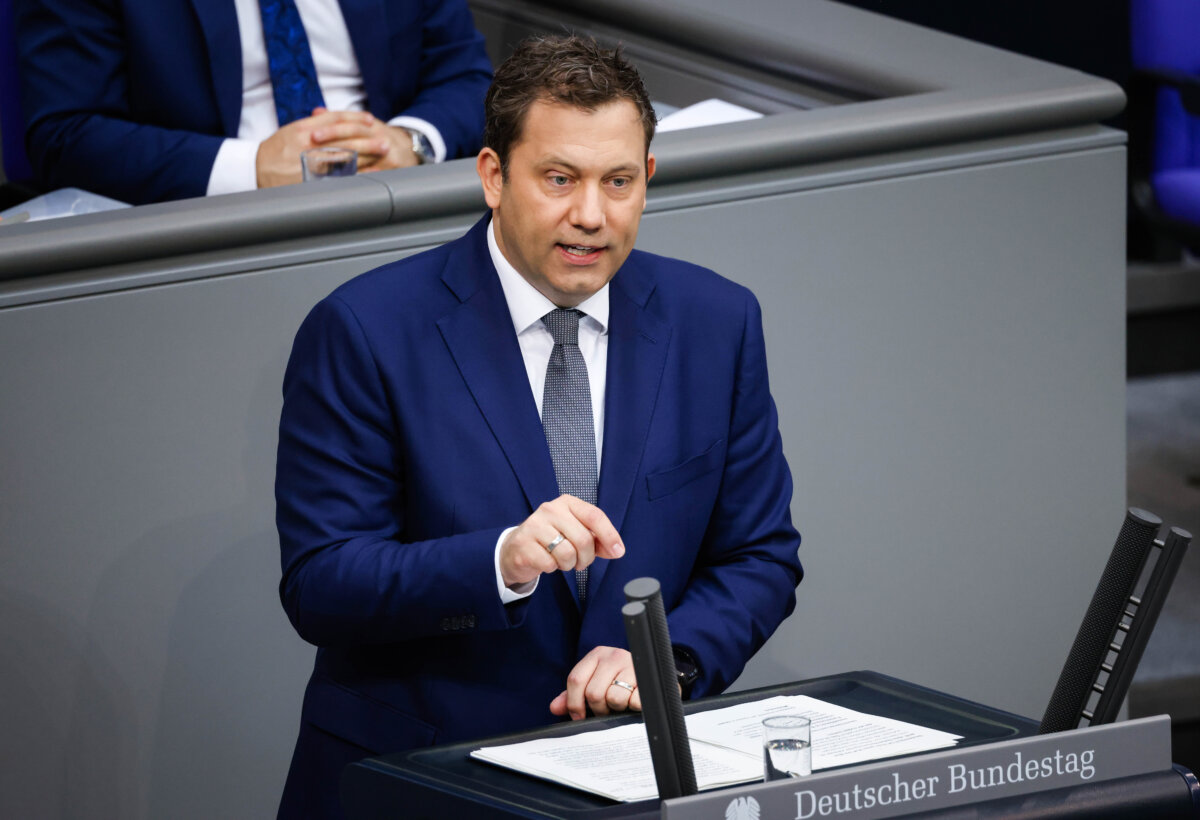

Berlin seeks to provide Ukraine with security guarantees in conjunction with Kyiv’s other European allies, German Vice Chancellor Lars Klingbeil said this week during his first visit to the Ukrainian capital.
“What’s important is that, in the end, there are security guarantees that ensure Ukraine is no longer attacked and that [Russian President Vladimir] Putin no longer dares to attack Ukraine,” Klingbeil told reporters in Kyiv on Aug. 25.
With a view to ensuring Ukraine’s long-term security, Klingbeil, who also serves as finance minister, called for strengthening Kyiv’s military and its ability to produce weapons domestically.
He said Germany was prepared to “assume responsibility” for providing Ukraine with security guarantees, but added that any decisions in this regard must not be taken “over the heads of Ukrainians.”
Klingbeil also said that a bilateral cease-fire should precede peace talks between the warring parties.
On Aug. 15, U.S. President Donald Trump held a landmark summit with Putin in Alaska, prompting speculation that some kind of peace deal could be imminent.
Moscow’s conditions for ending the conflict, which began with its 2022 invasion of eastern Ukraine, remain largely unchanged.
These include recognition of Moscow’s sovereignty over four regions it claims to have annexed (and which it now views as Russian territory), along with assurances that Ukraine will never join NATO.
In the event of a U.S.-backed peace settlement, Kyiv’s European allies want robust security guarantees that would serve to deter any future aggression by Russia against Ukraine.
In this regard, Kyiv’s Western supporters have made several proposals, but they have yet to agree on what form such security guarantees might take.
Last week, Trump said on his Truth Social messaging platform that “various European countries” could provide Ukraine with some kind of security guarantee—which he did not elaborate on—in “coordination” with the United States.
On Aug. 20, U.S. Vice President JD Vance told Fox News that regardless of what form such guarantees take, Kyiv’s European allies would have to assume the “lion’s share” of the burden.
Berlin Open to Sending Troops
If Russia ends up absorbing the four regions it claims as part of a broader settlement, some European capitals have offered to send troops to Ukraine to safeguard the country’s redrawn eastern border.
Britain and France have both said they are ready to put boots on the ground in post-conflict Ukraine as part of a self-styled “coalition of the willing” that also includes Germany.
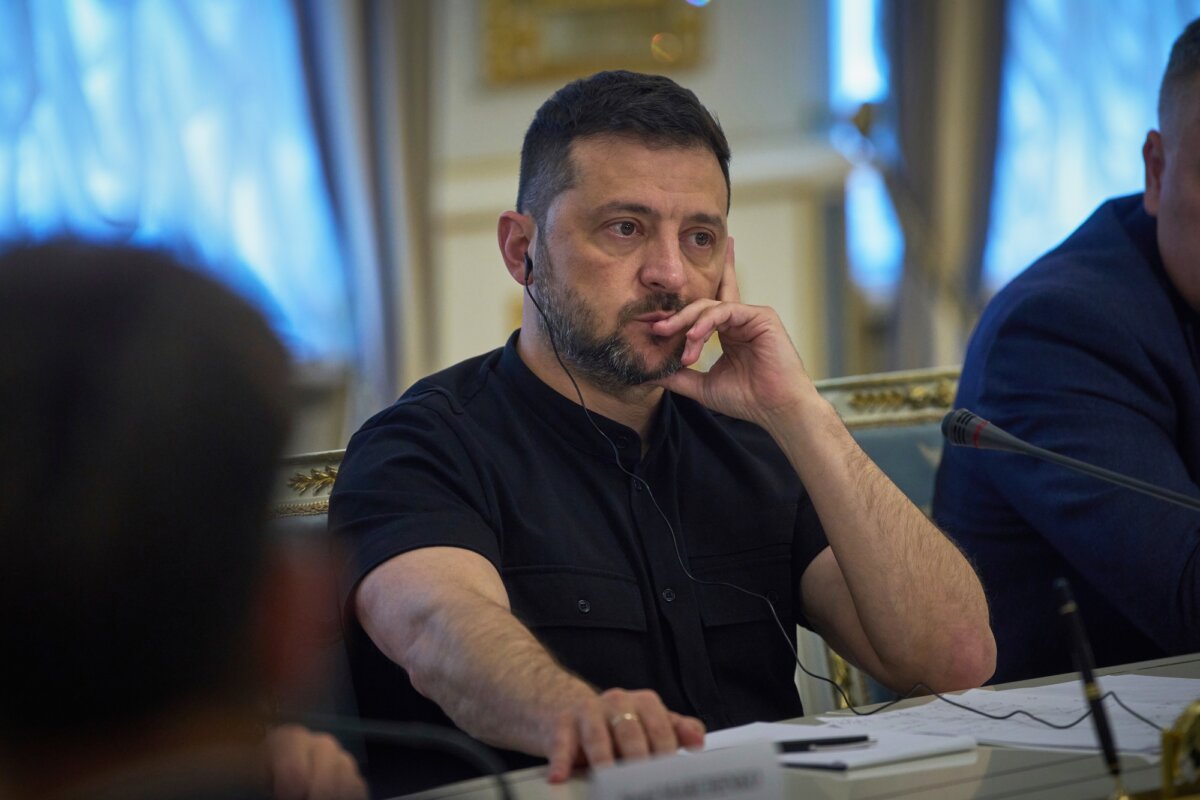
German Chancellor Friedrich Merz has also signaled support for Berlin’s possible participation in a troop-deployment scheme, but such a move would likely face stiff opposition—both from within and without his ruling coalition.
Col. Andre Wuestner, the head of Germany’s Armed Forces Association, recently said that his country, along with Britain and France, would each have to send at least 10,000 troops to Ukraine in order to pose a viable deterrent to Russia.
Meanwhile, the Trump administration has rejected the notion of sending U.S. troops, while Russian Foreign Minister Sergey Lavrov has stated that any deployment of Western forces to Ukraine would be “absolutely unacceptable for Russia,” according to state-run news agency TASS.
Upon his arrival in Kyiv, Klingbeil declared that strong guarantees of Western support were the best means of ensuring Ukraine’s long-term security and a lasting peace.
“To this end, we are coordinating closely internationally,” he said, going on to reassure Kyiv that it could “continue to rely on Germany.”
“Putin should have no illusions that Germany’s support for Ukraine could crumble,” added Klingbeil, who also leads the Social Democratic Party, which is part of Merz’s conservative-led coalition government.
“On the contrary. We remain Ukraine’s second-largest supporter worldwide and the largest in Europe.”
According to Germany’s finance ministry, Berlin has provided Kyiv with 50.5 billion euros ($59 billion) since Russia launched its initial invasion of eastern Ukraine in February 2022.
Reuters contributed to this report.
 Friends Read Free
Copy
Facebook
Tweet
Friends Read Free
Copy
Facebook
Tweet